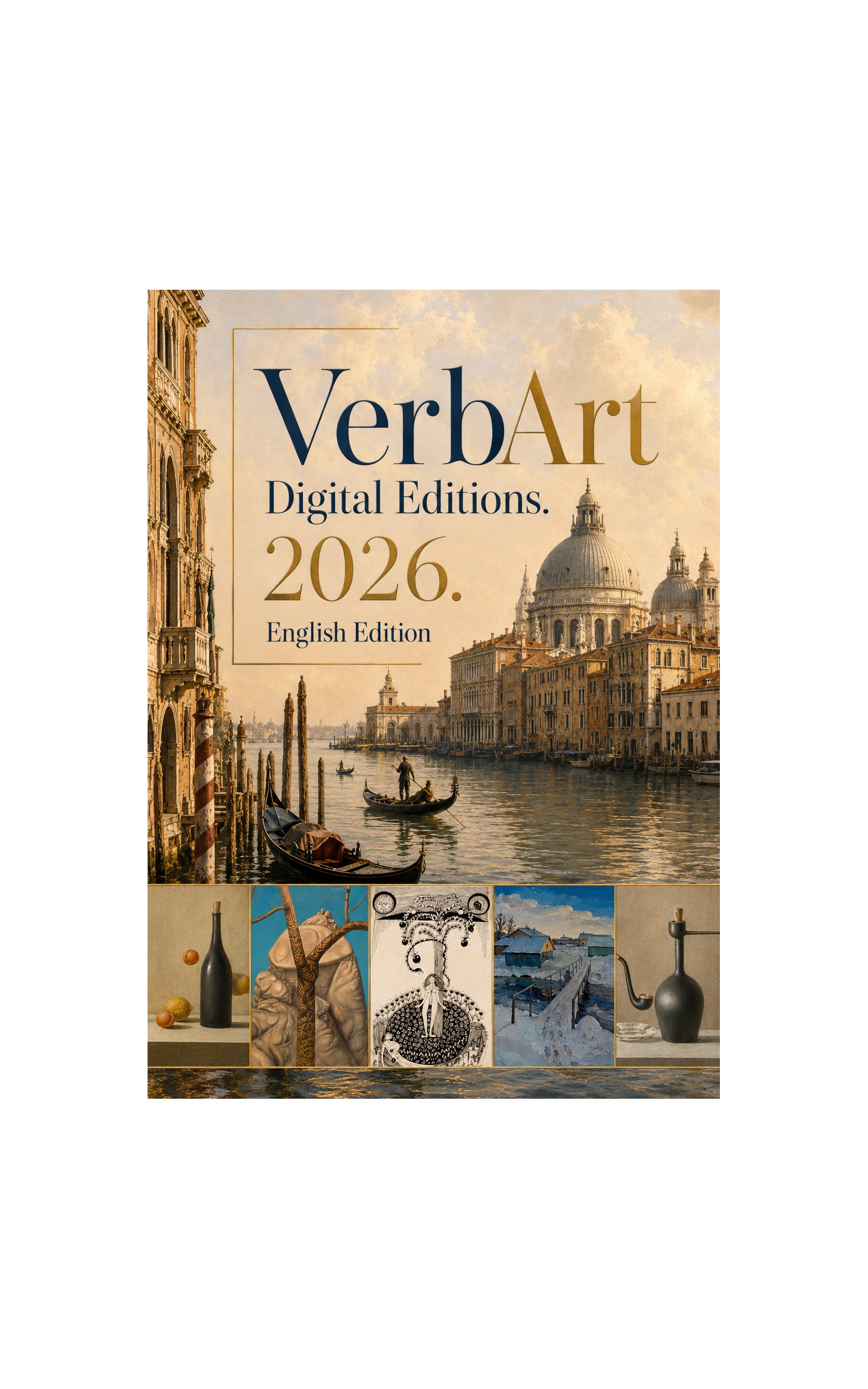
VerbArt Venice Digital Edition 2026 is a satellite project of the 2026 Venice Biennale, conceived as an independent publishing and digital statement on contemporary art from Russia and Kazakhstan. Its purpose is not to imitate an exhibition space, but to expand its meaning: to transfer artistic dialogue into a book, into the digital environment and into a long-term system of cultural memory, where a work does not disappear after the event ends, but continues to live, to be indexed, found, read and discovered by new viewers.
This project is dedicated to artists for whom art is not an episode in a biography, but a way of being. The book presents authors of different generations, schools, techniques and worldviews. Some turn to the painterly metaphysics of the object world, others to landscape as a form of memory and inner return; some work with myth, sacred themes, ethnic tradition and graphic symbolism, while others explore the anxieties of the present, digital reality, ecological catastrophe, and the fragility of nature and human consciousness. Together they create a polyphonic image of artistic time, in which personal experience becomes part of a larger cultural conversation.
The aim of VerbArt Venice Digital Edition 2026 is to show Russian and Kazakhstani contemporary art not as a peripheral phenomenon, but as an independent, deep and meaningful artistic environment. Here, not only names and exhibition achievements matter, but above all the inner necessity of creative work. Each participant is presented as an author with an individual theme, a plastic language, a biography and a personal measure of responsibility before the image. These artists do not merely make works; they live by art, return to it after professional trials, preserve family and ancestral memory through it, reflect on the history of place, and speak about human destiny, nature, faith, fear, hope and beauty.
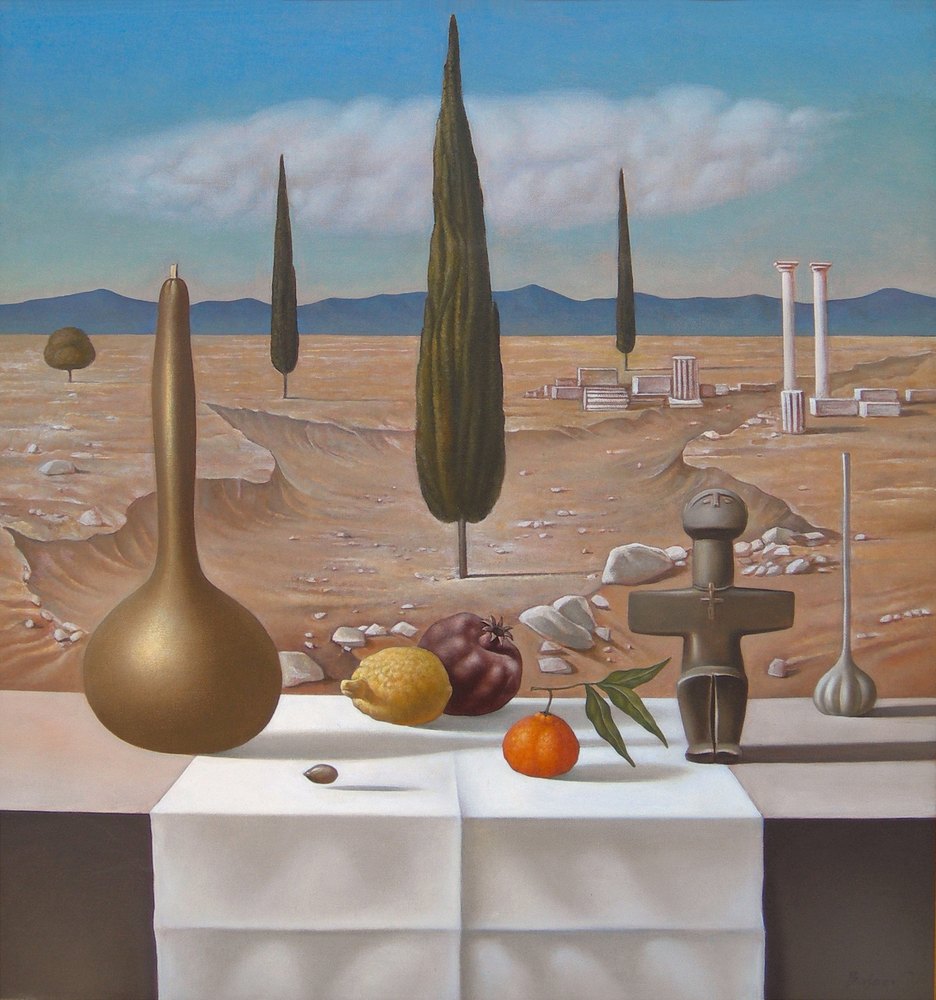
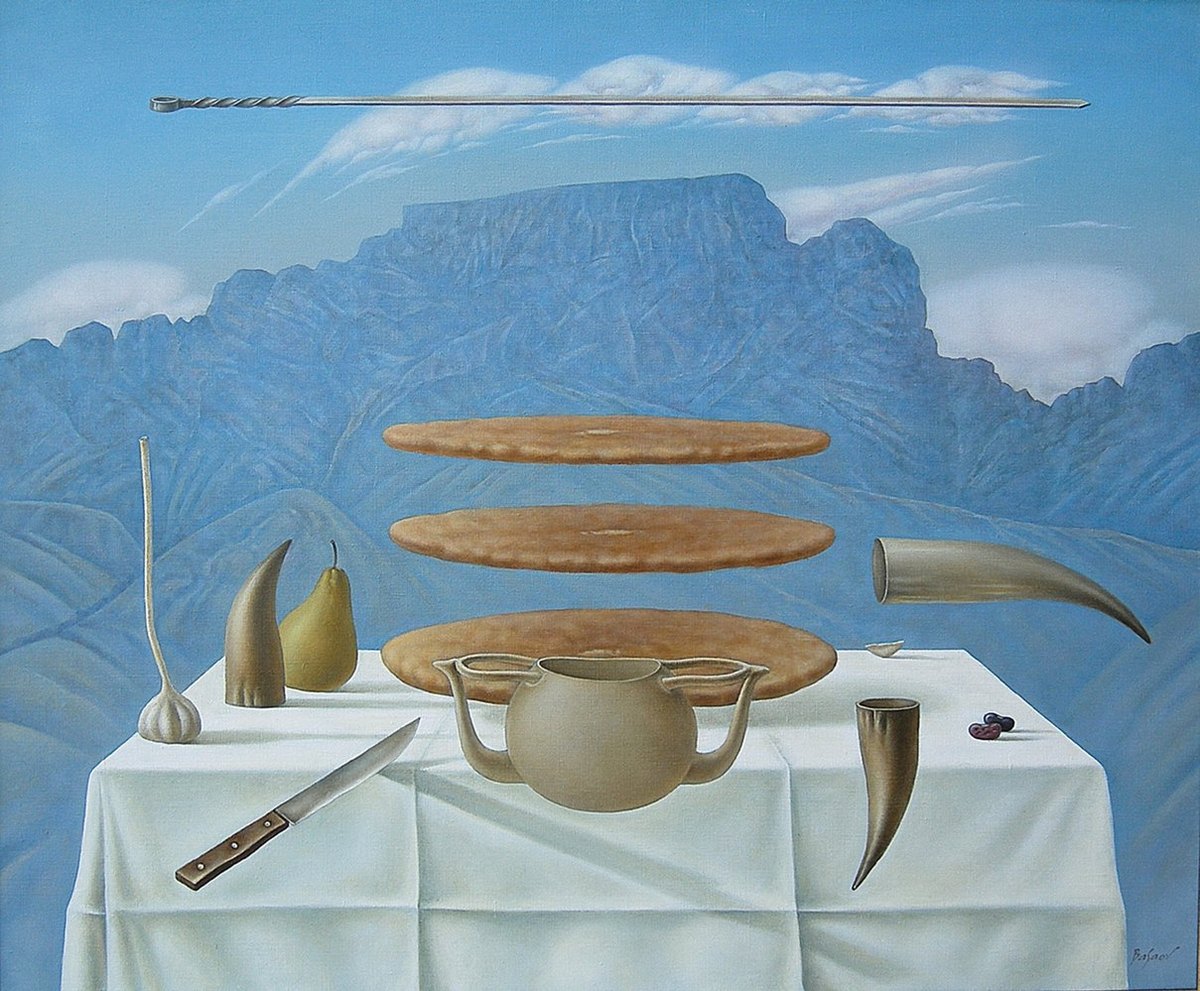
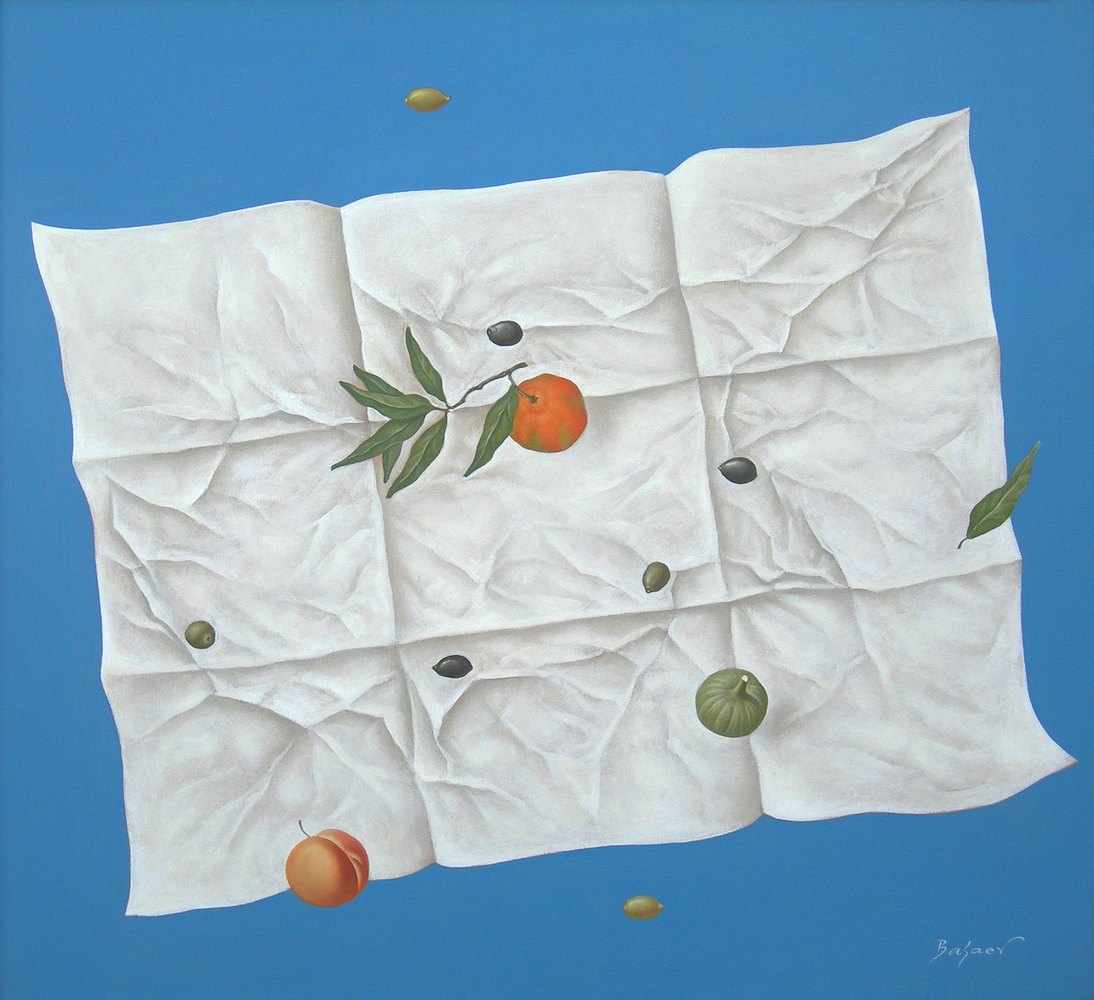
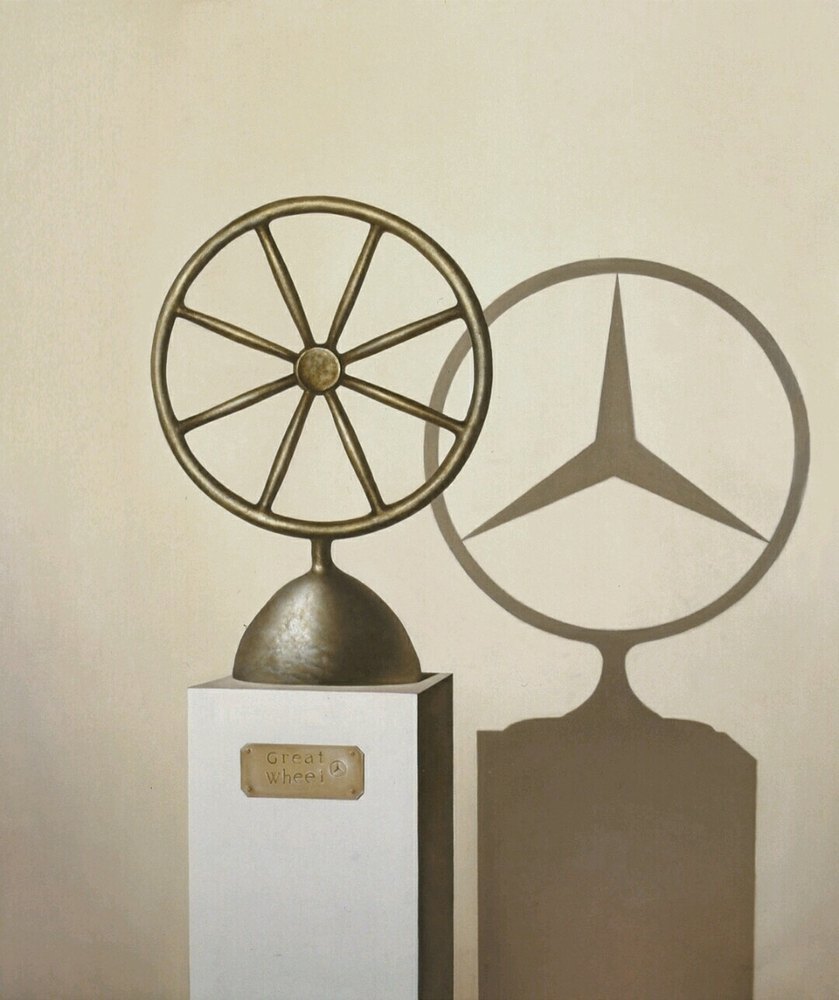
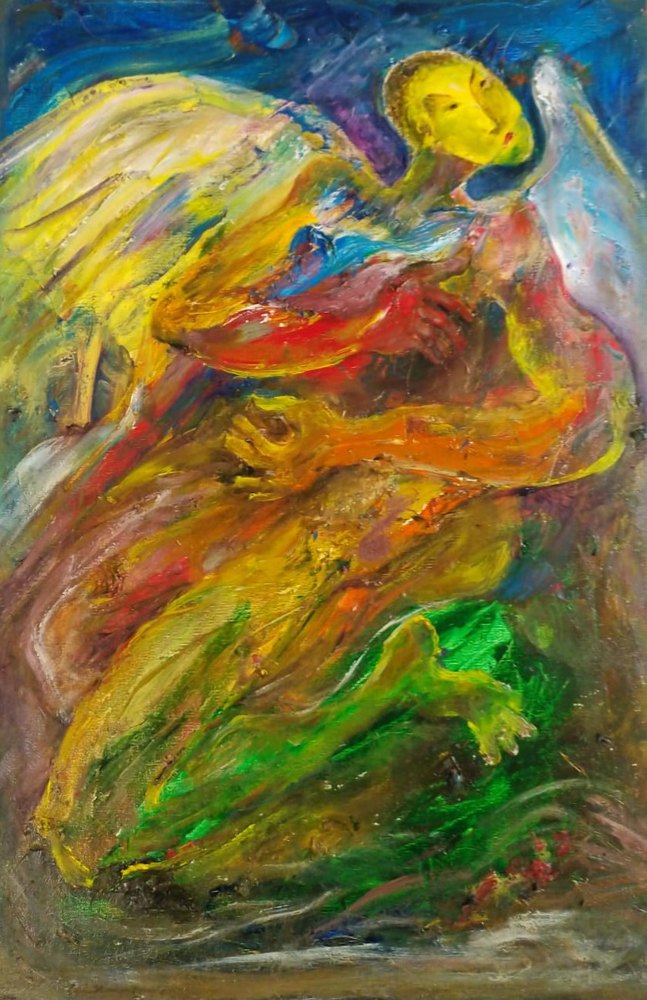
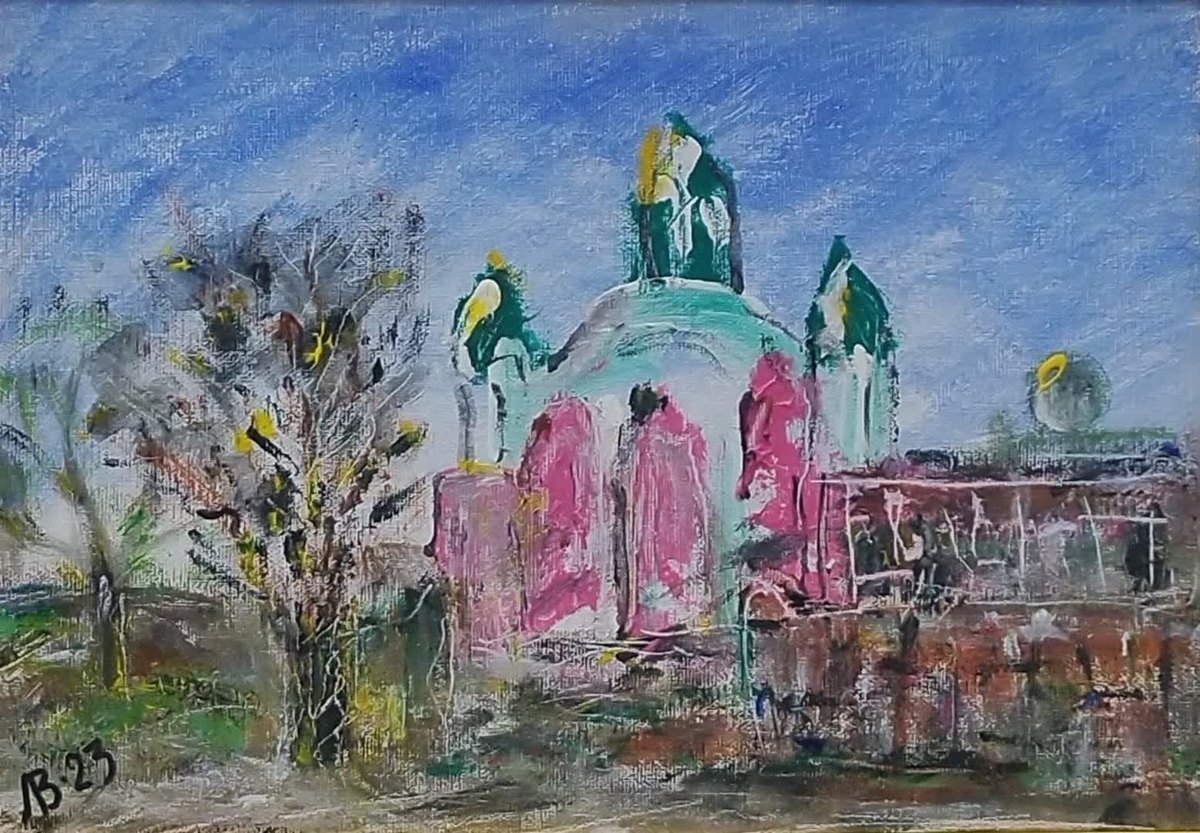
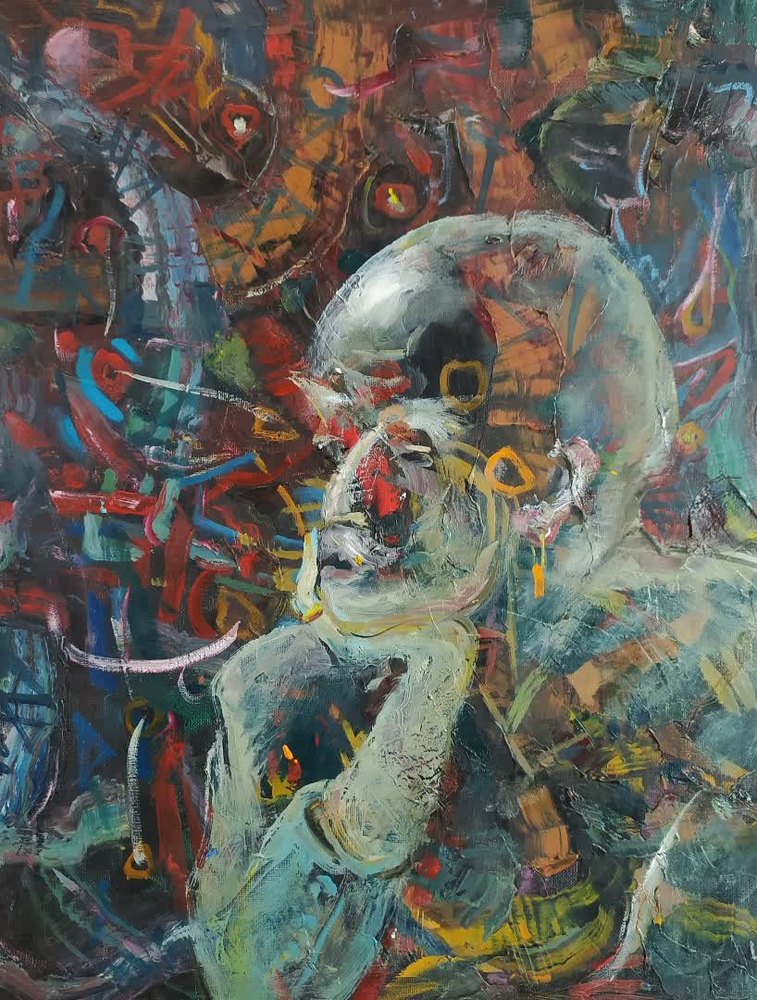
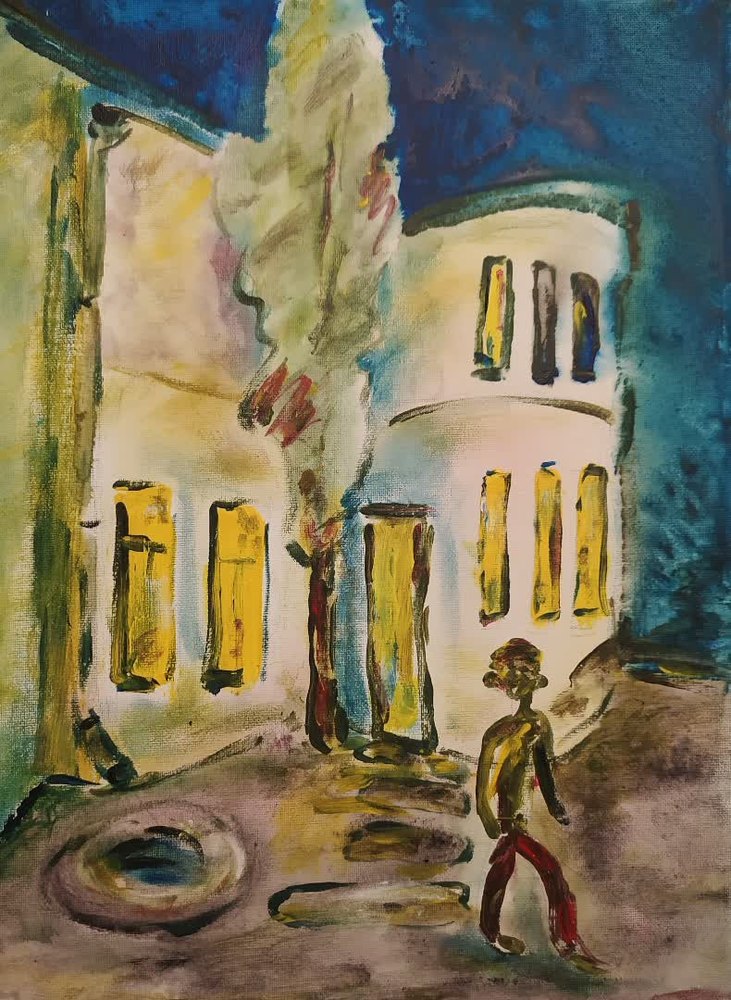
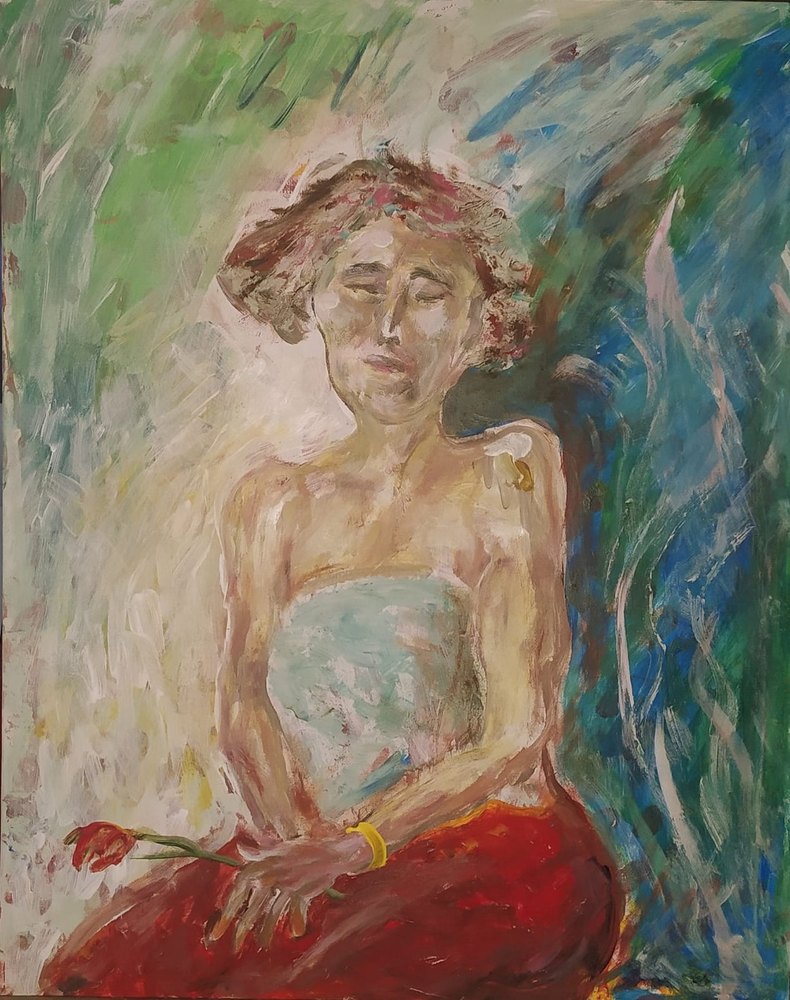
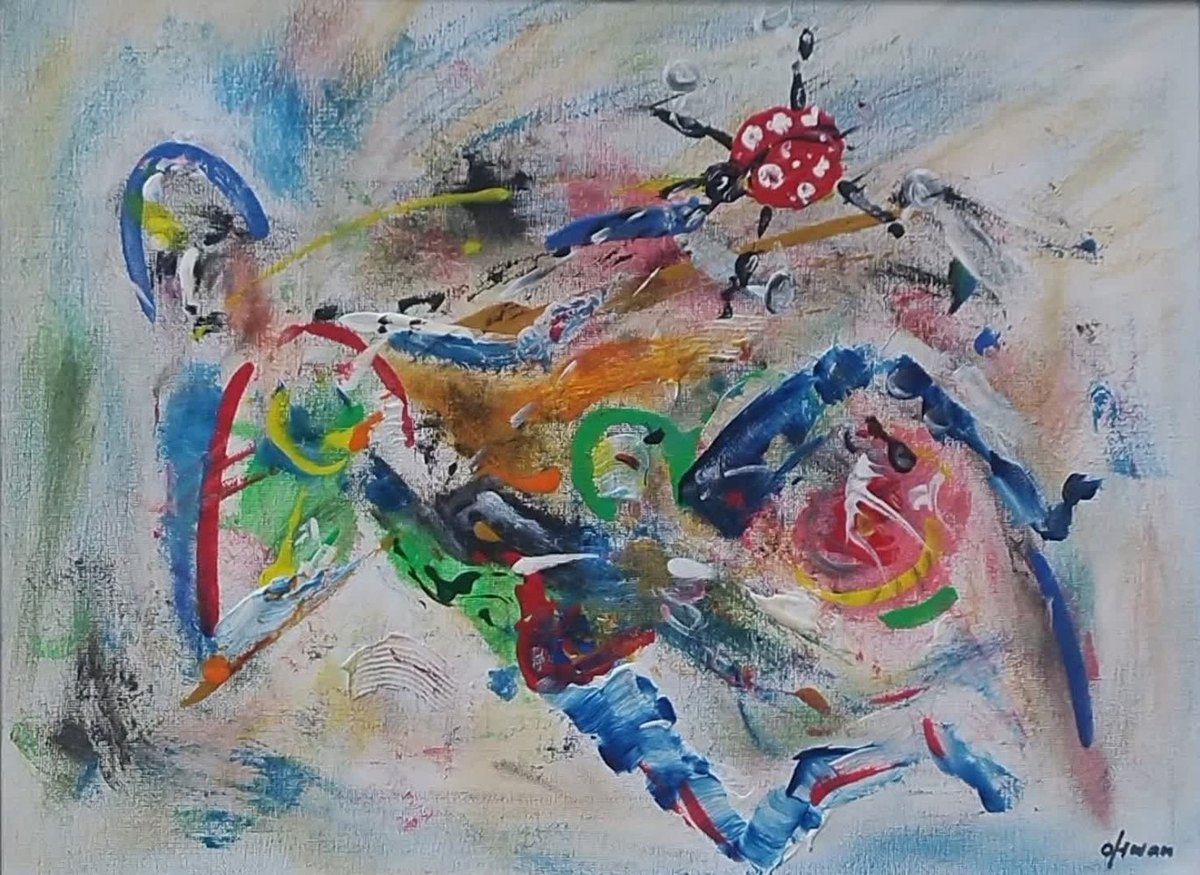
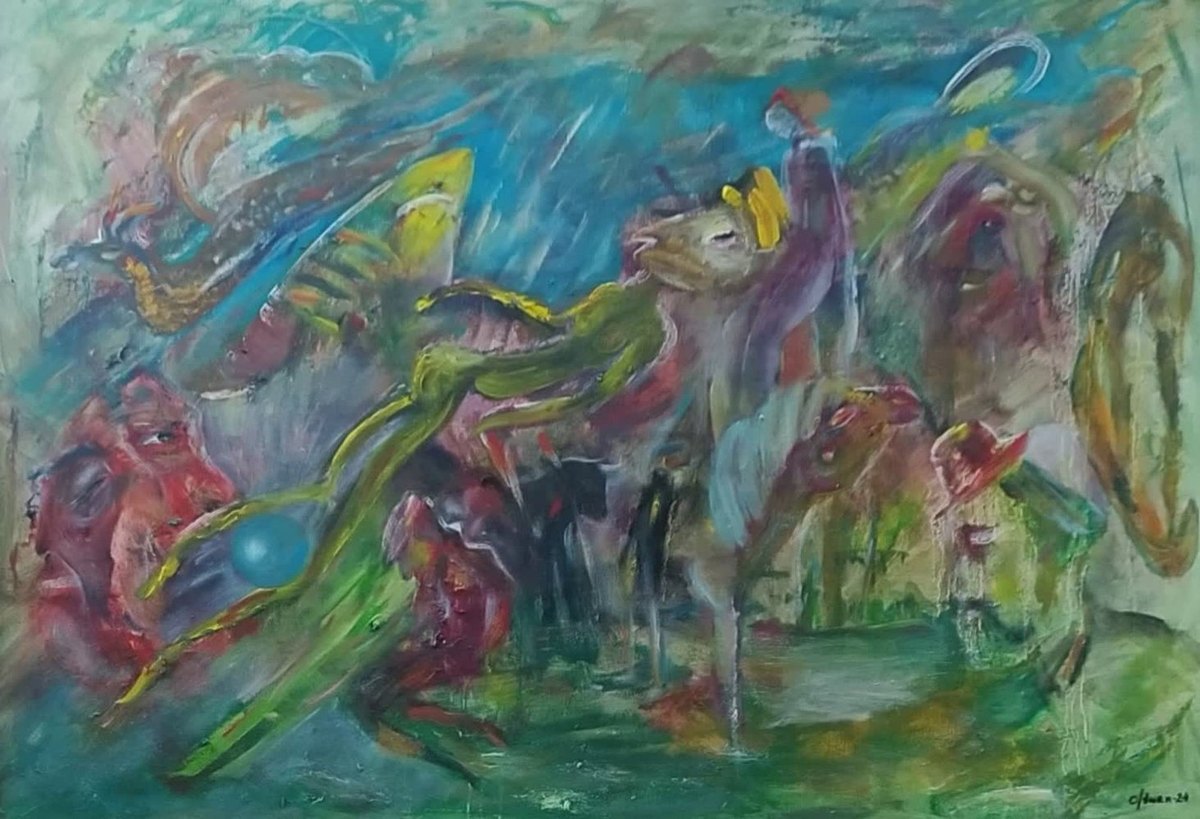
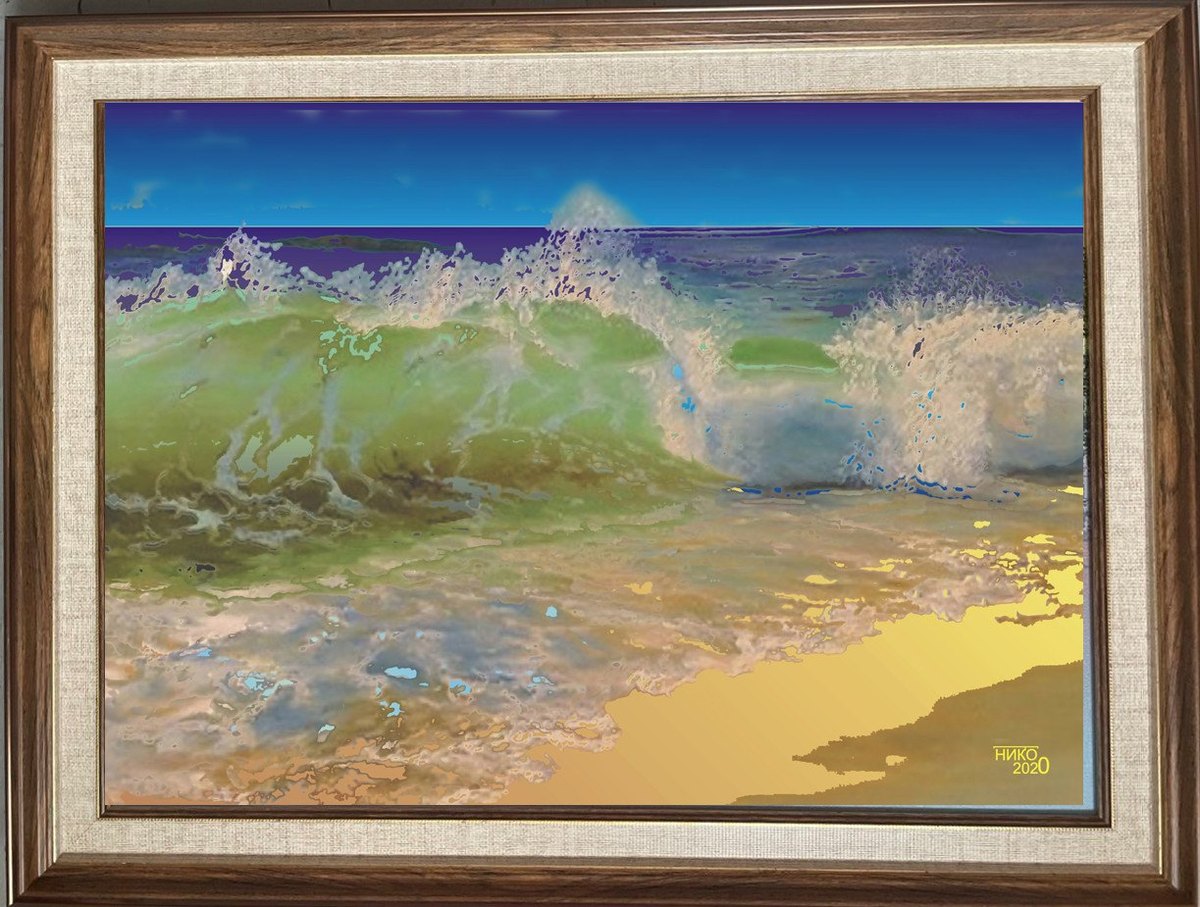
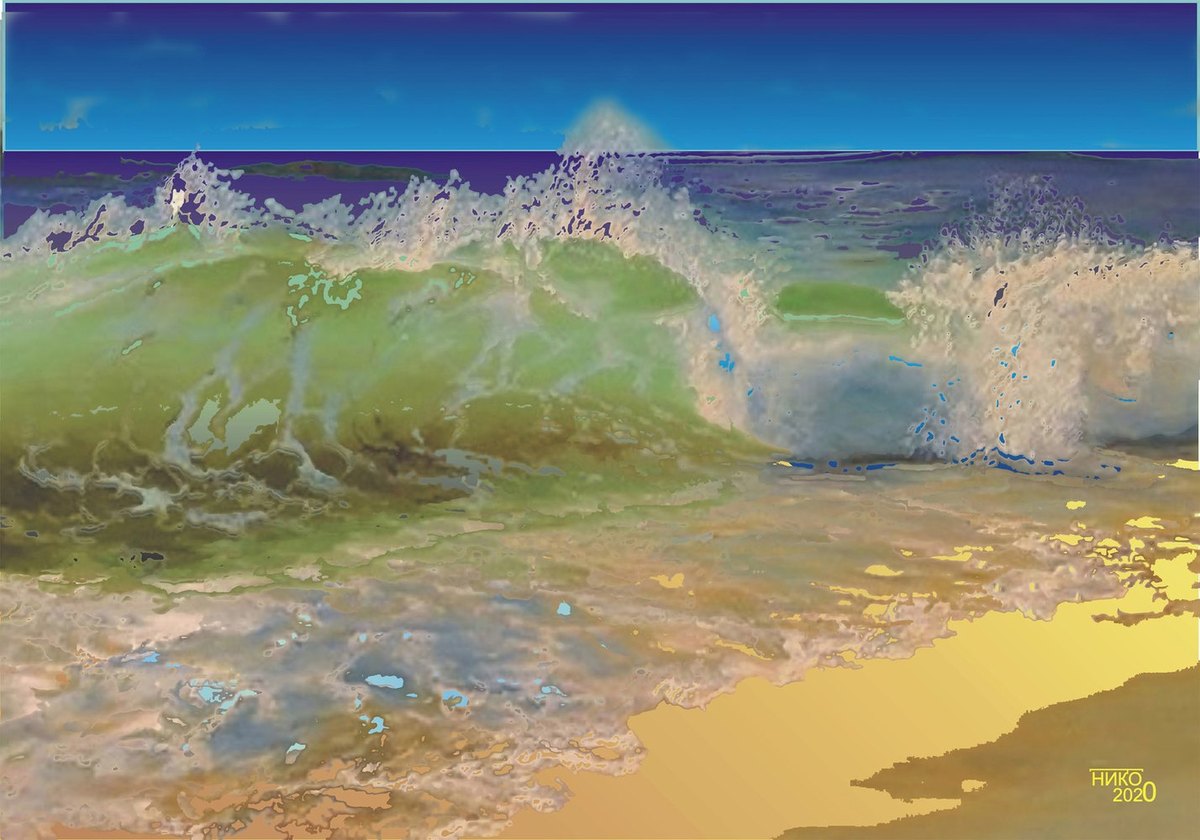
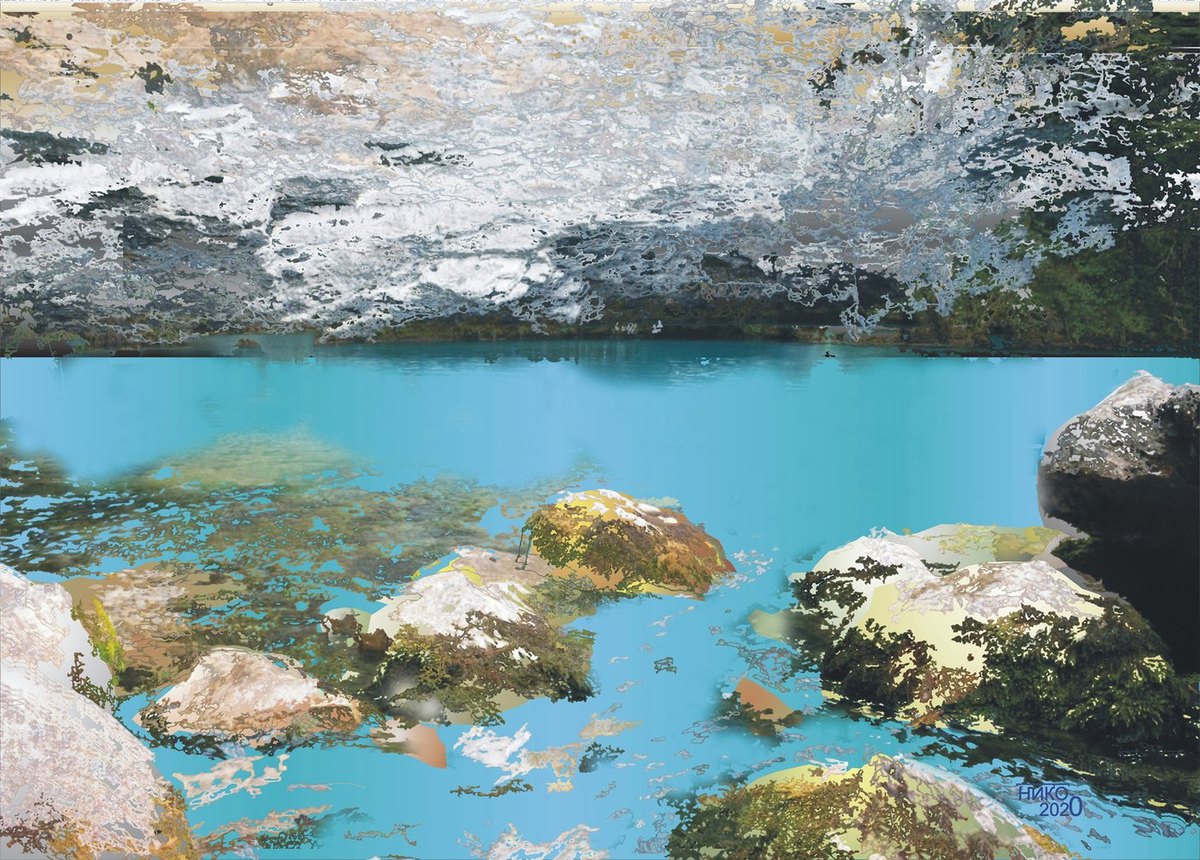
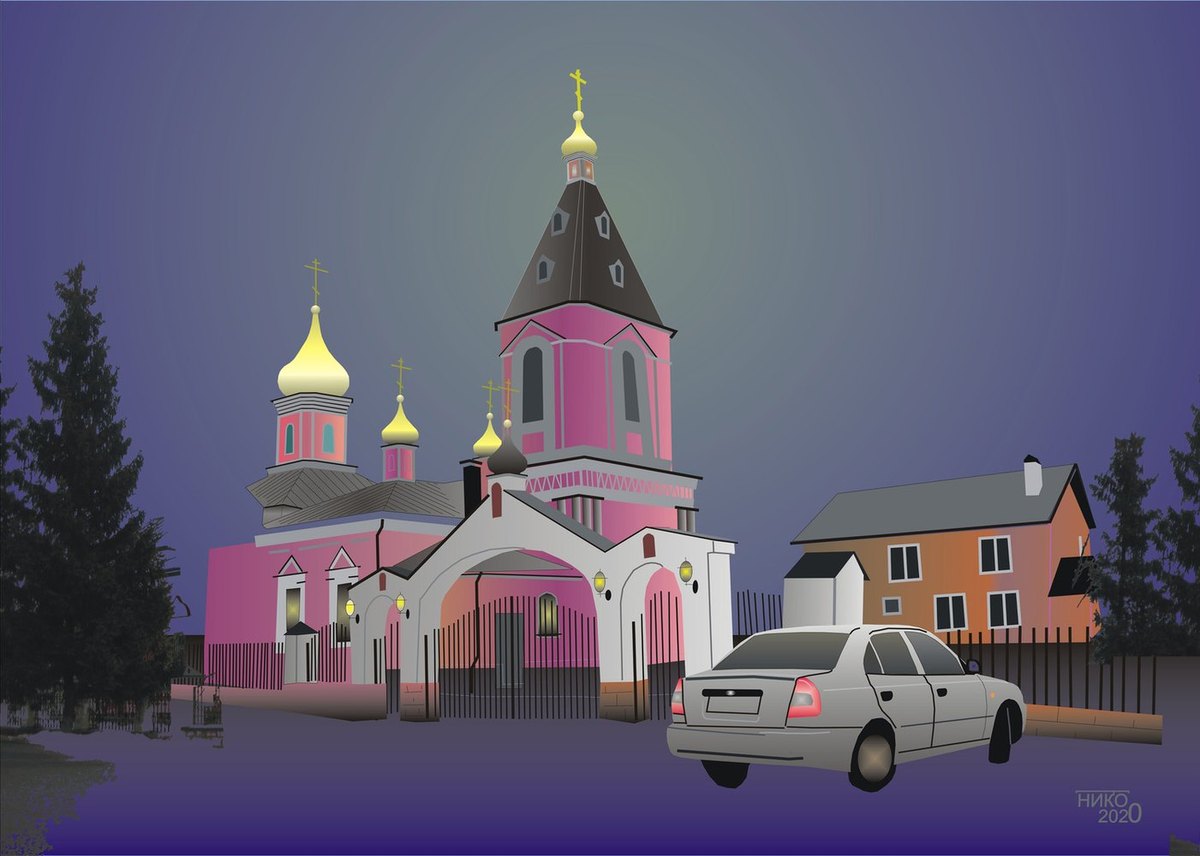
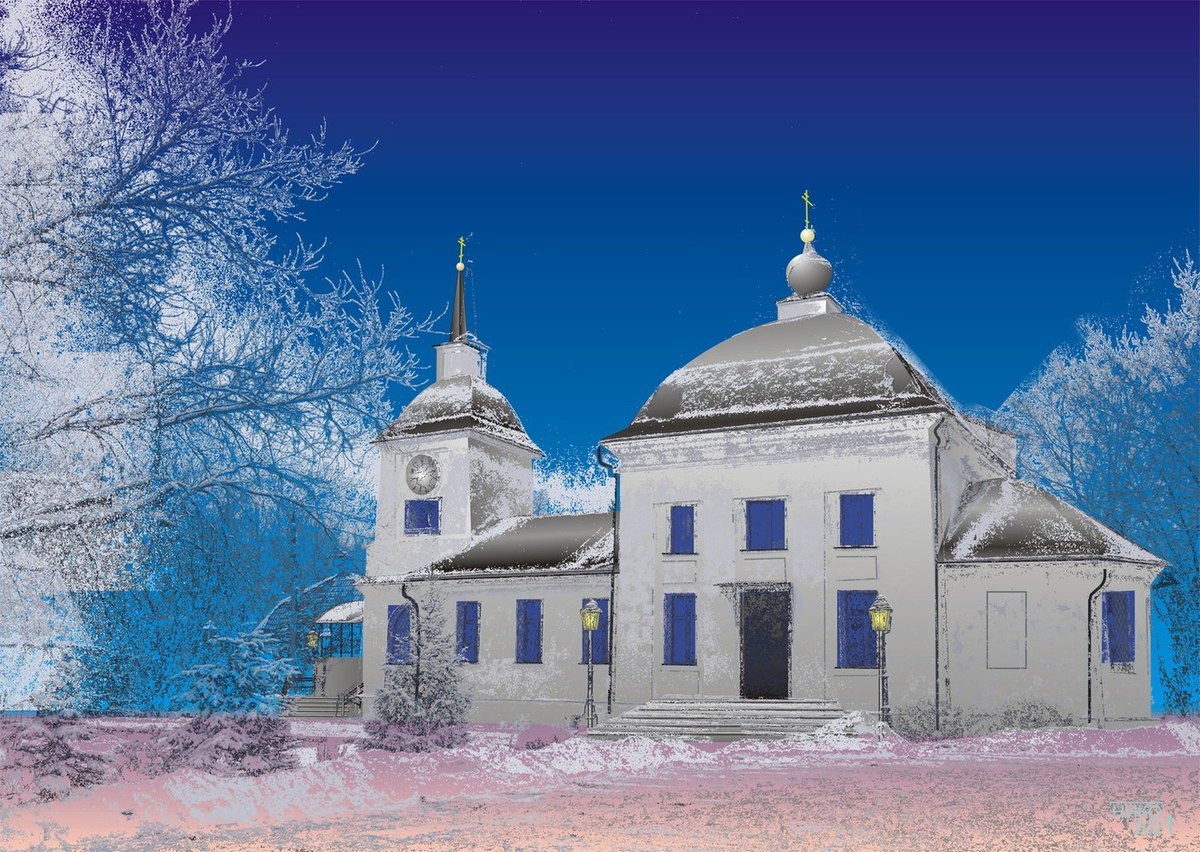
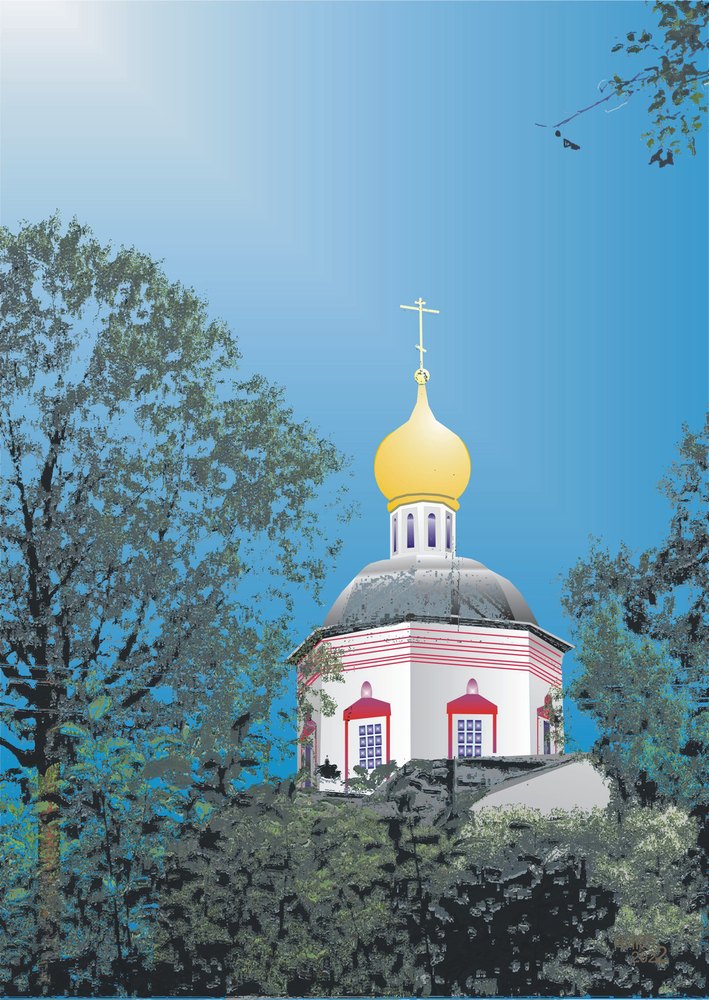
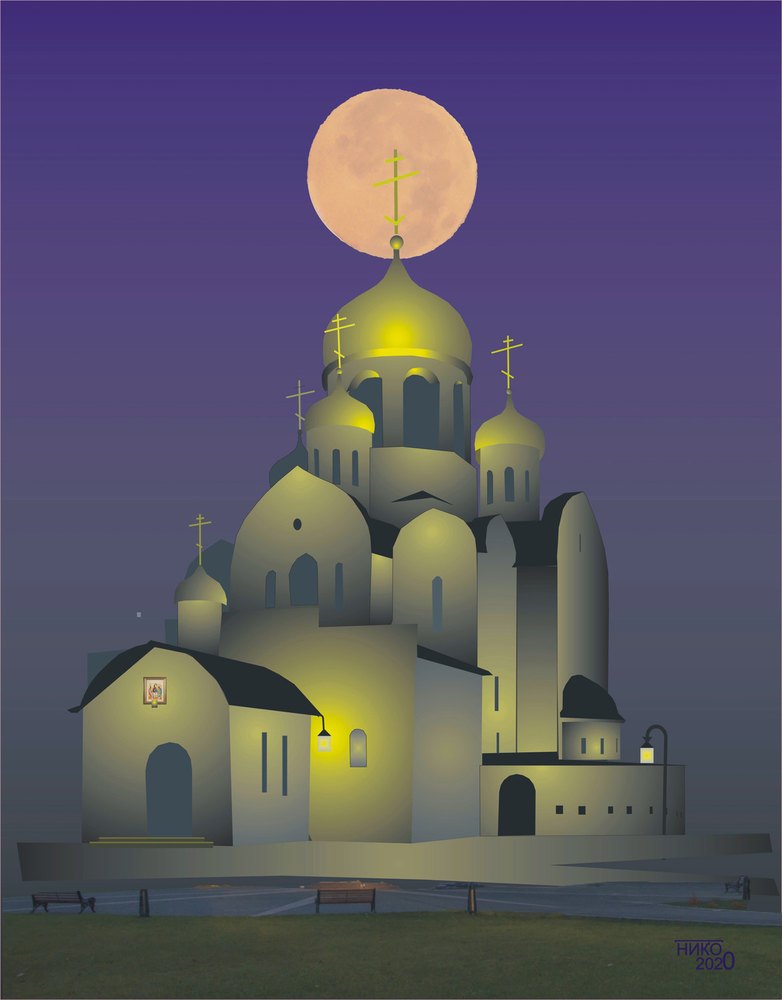
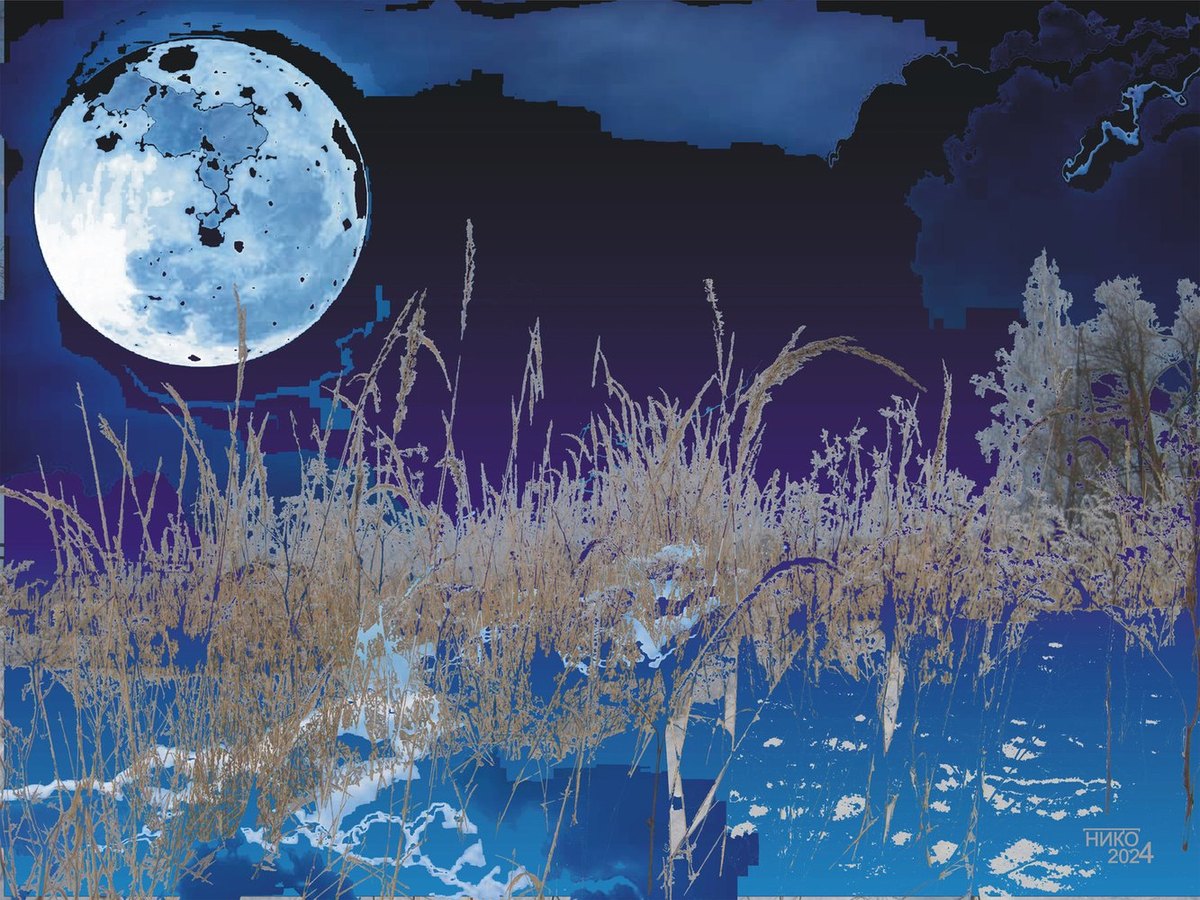
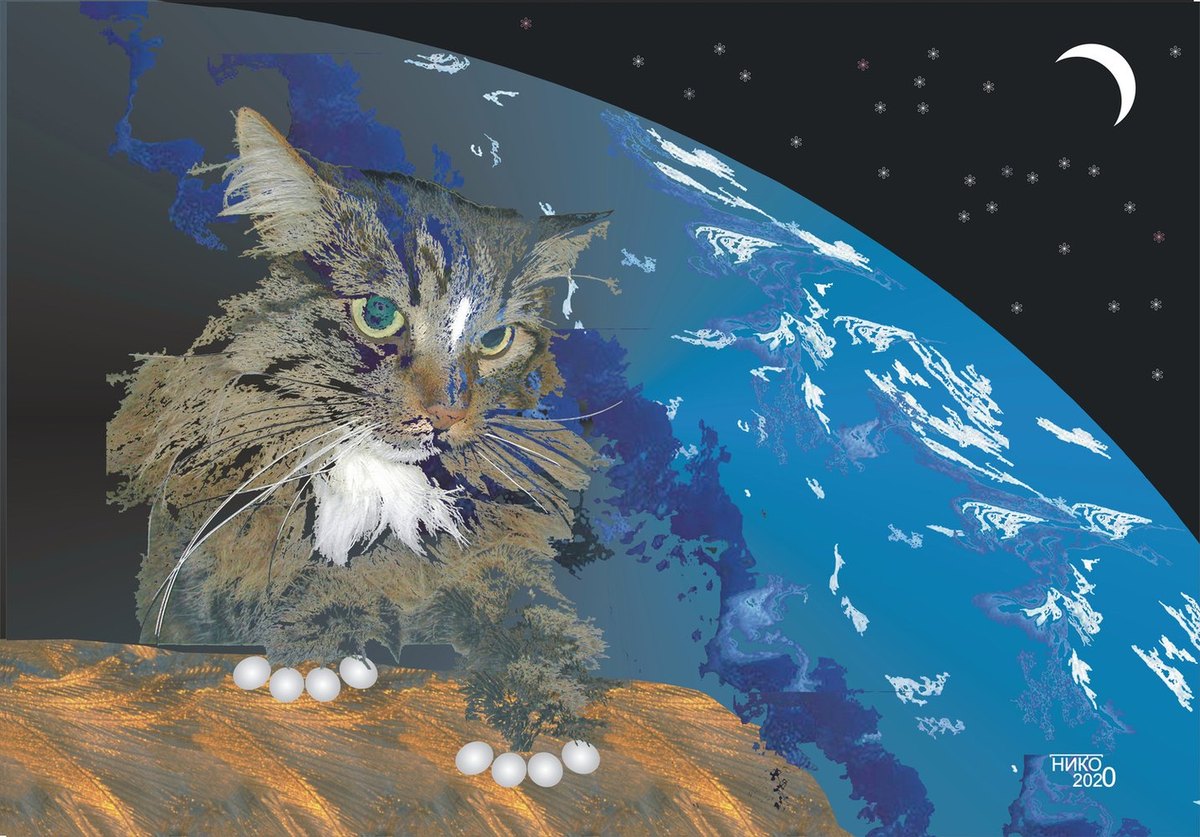
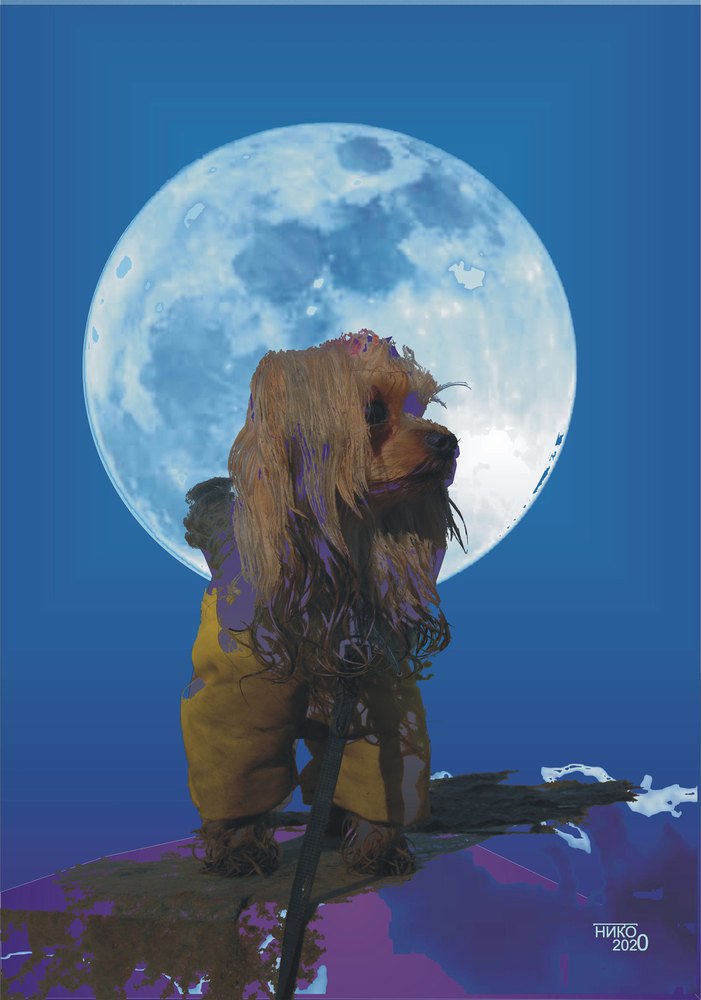
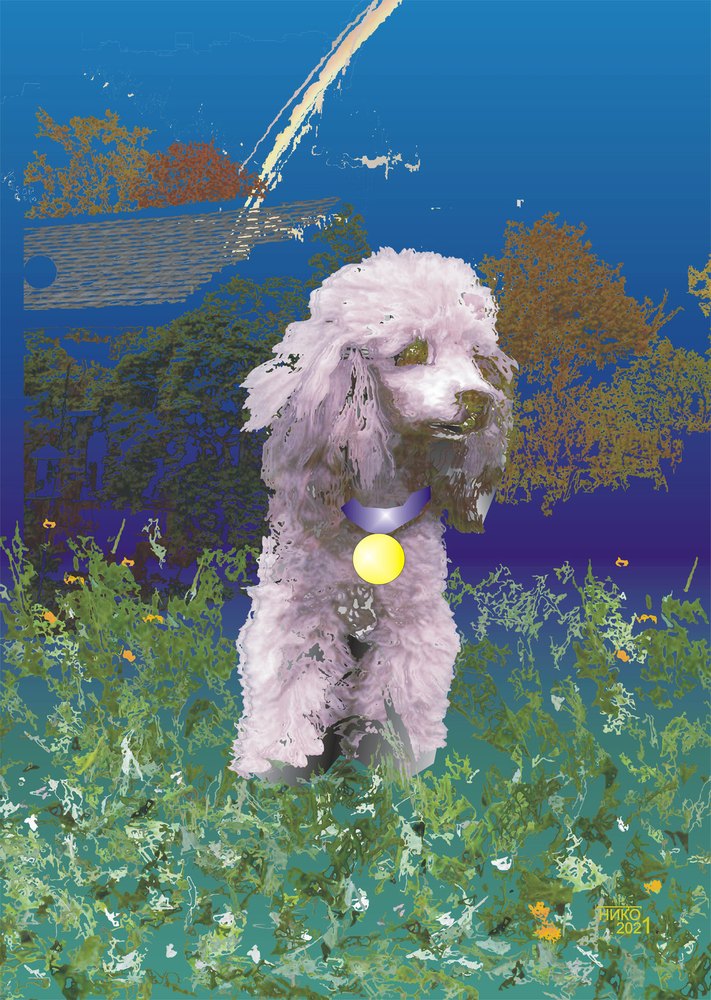
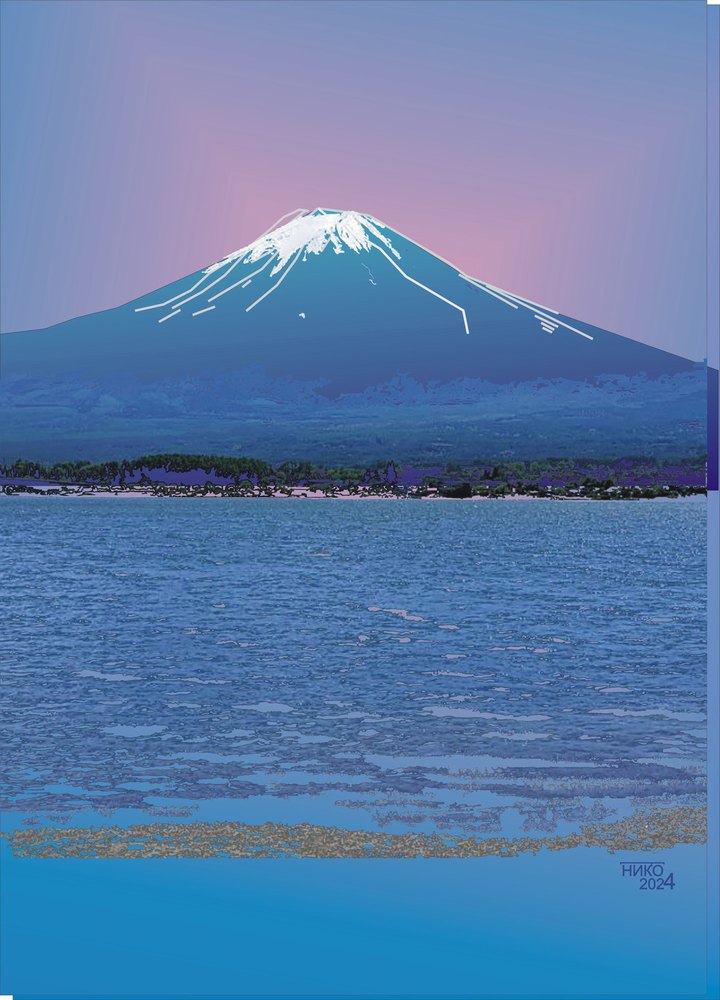
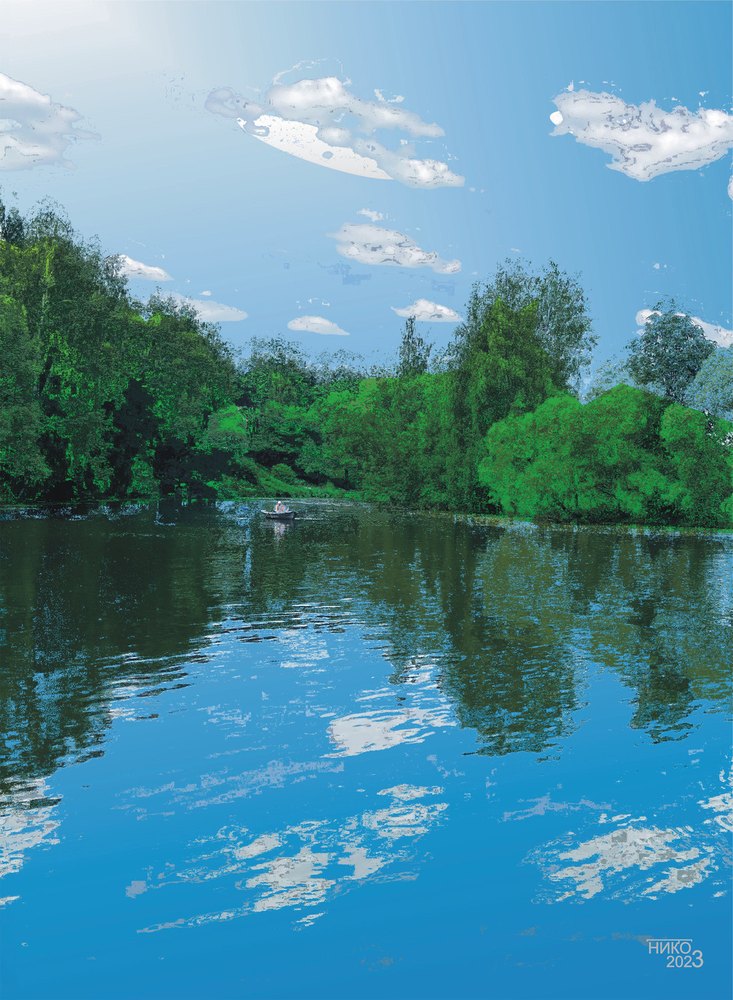
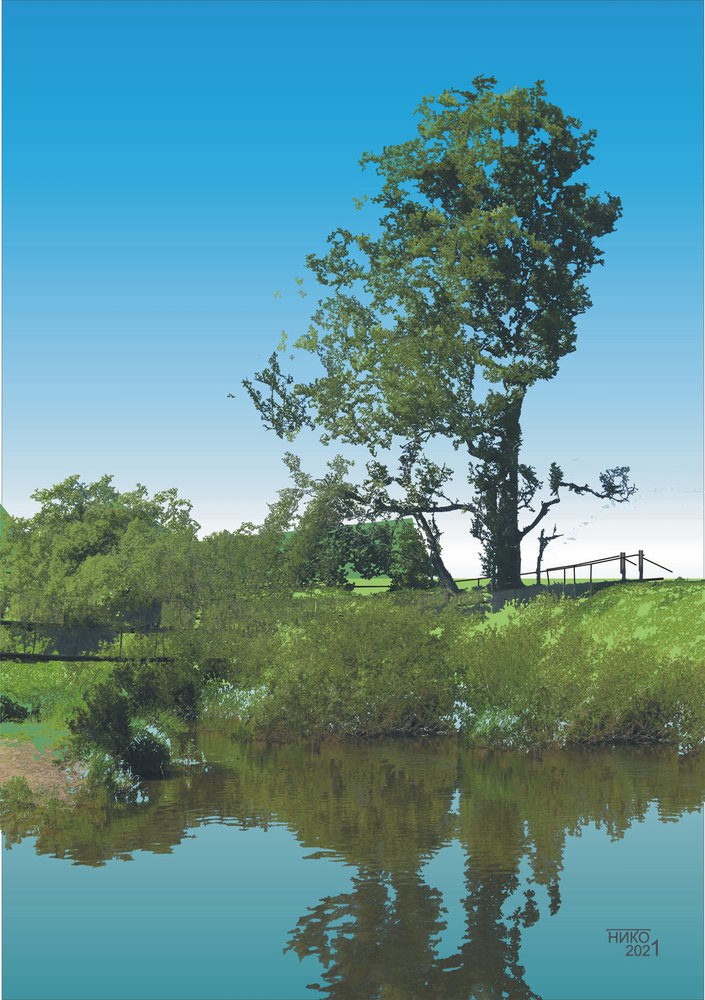
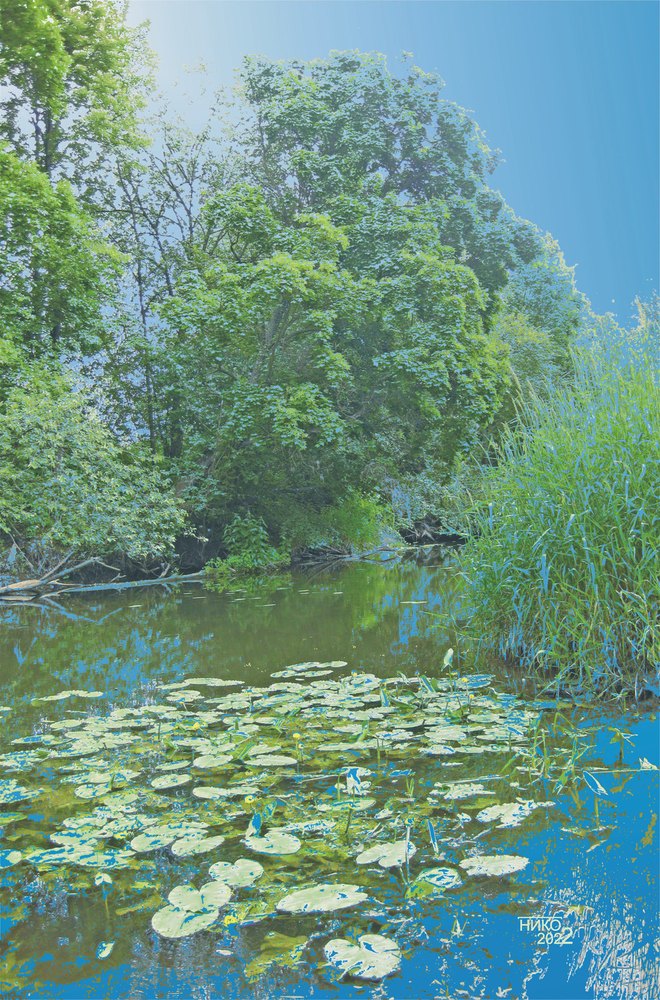
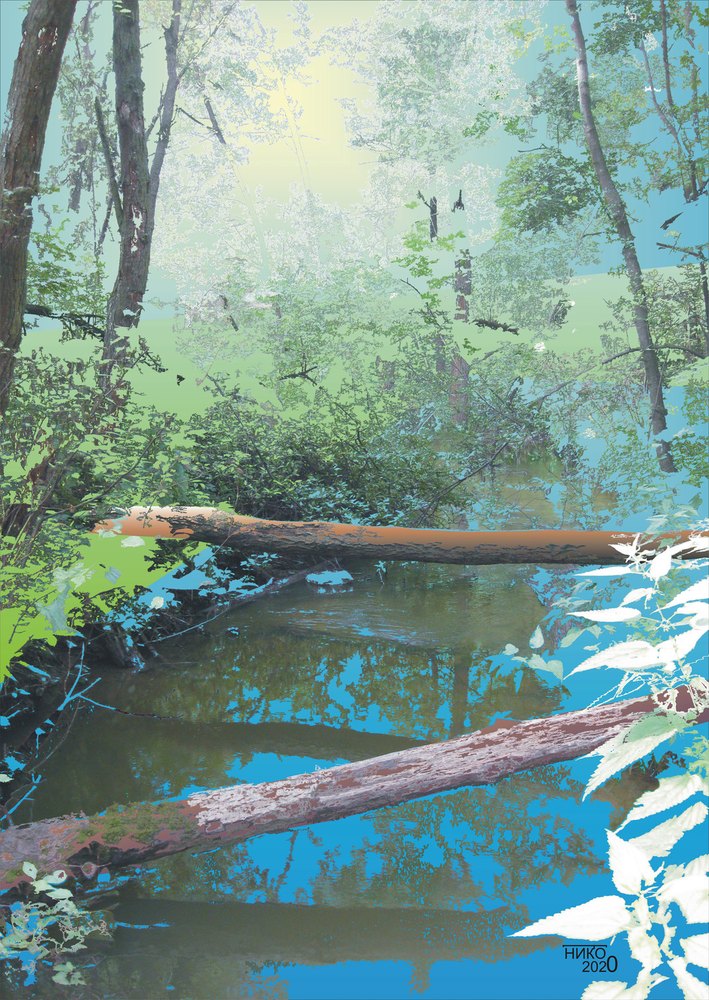
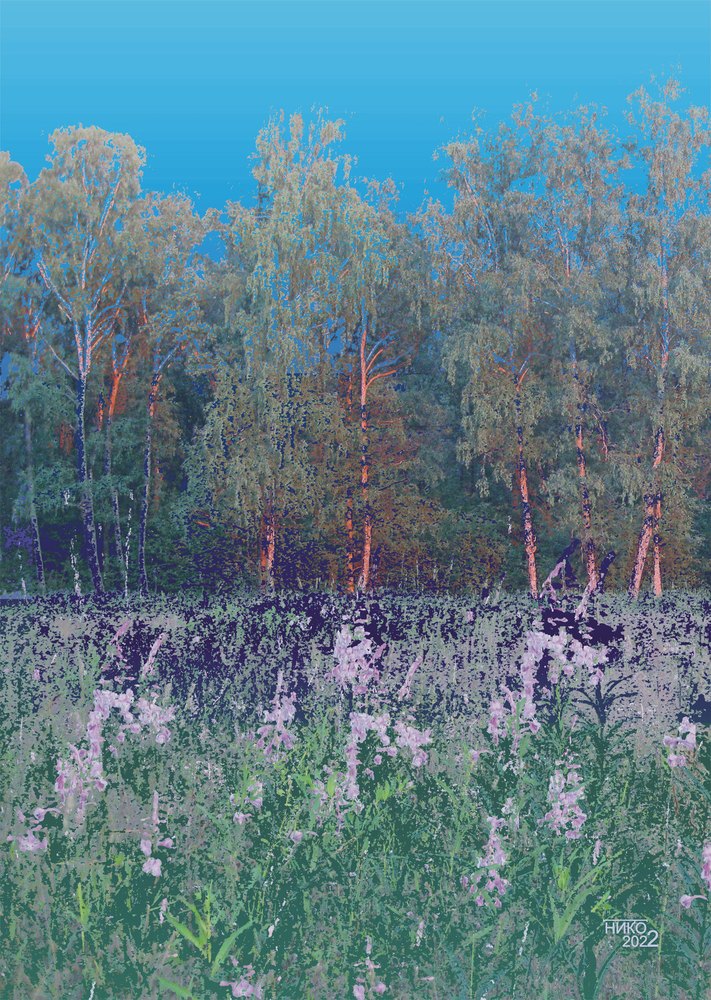
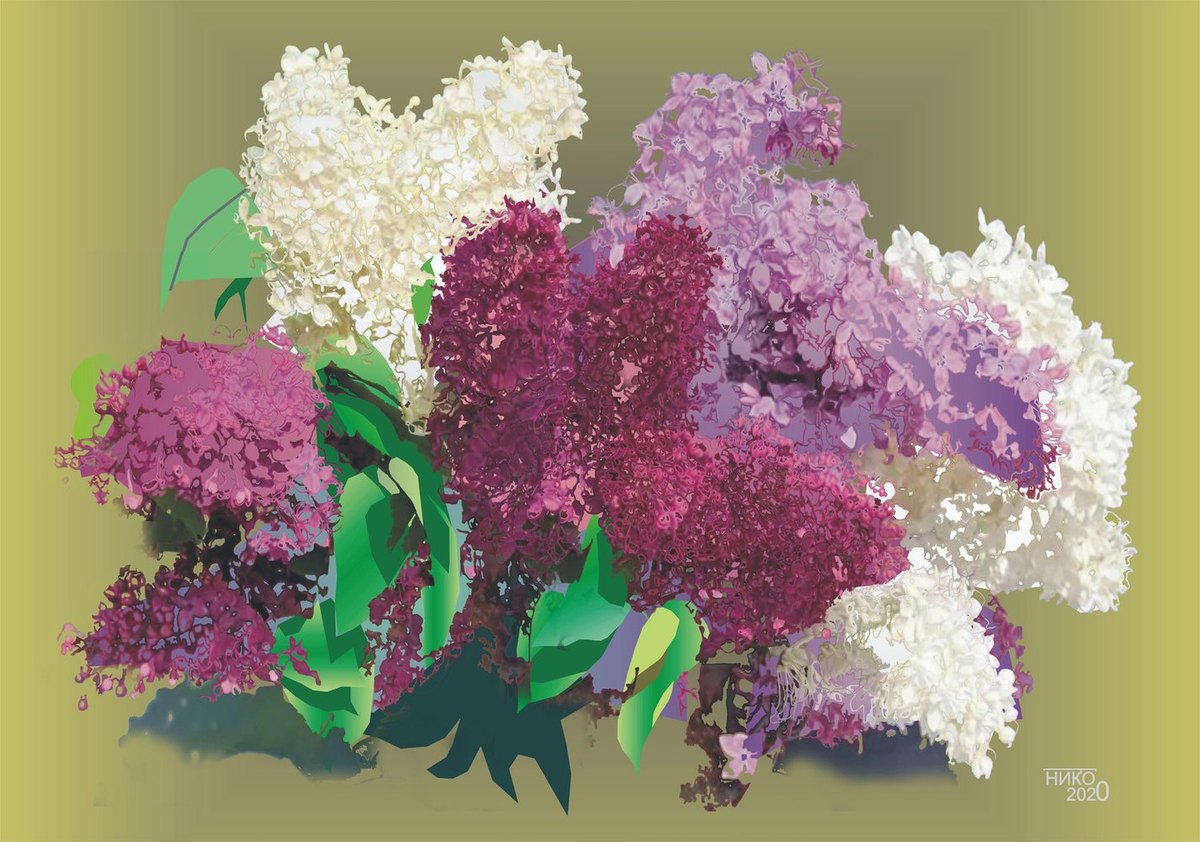
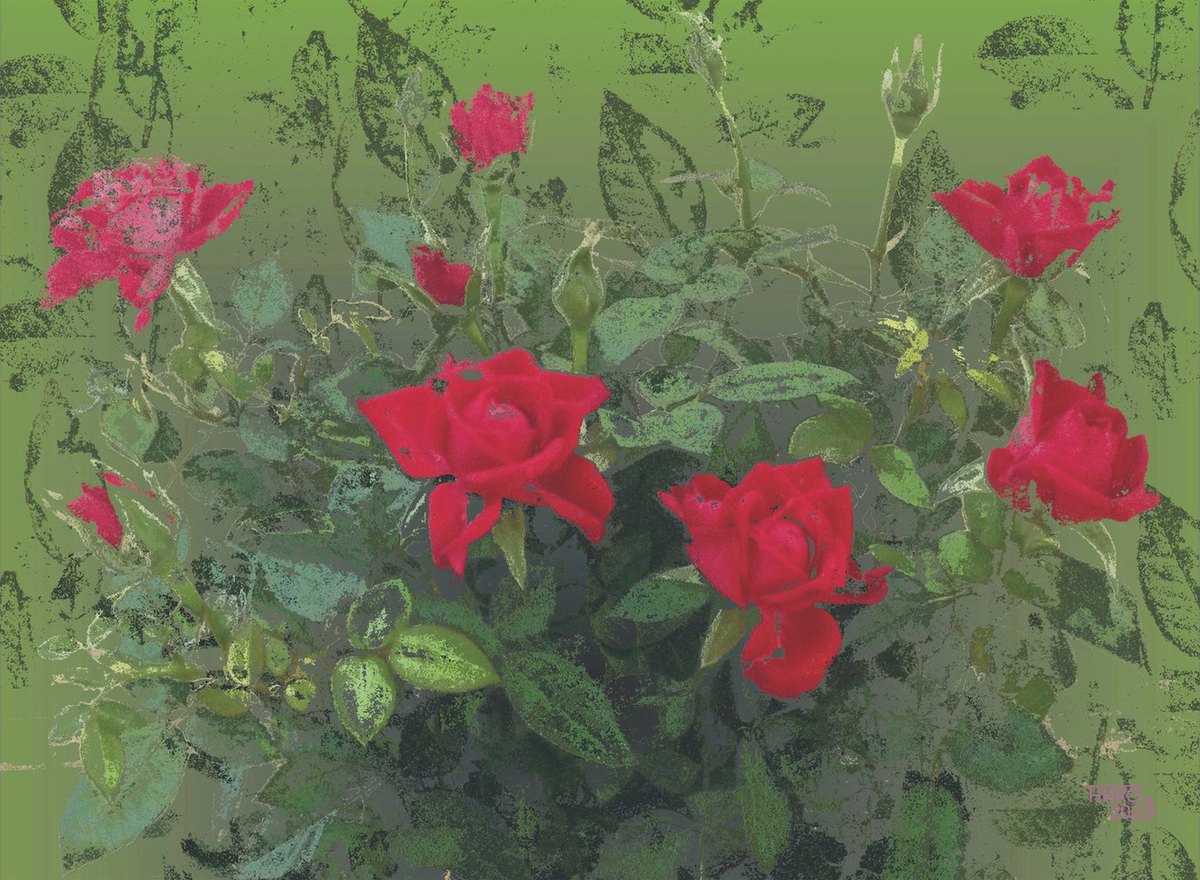
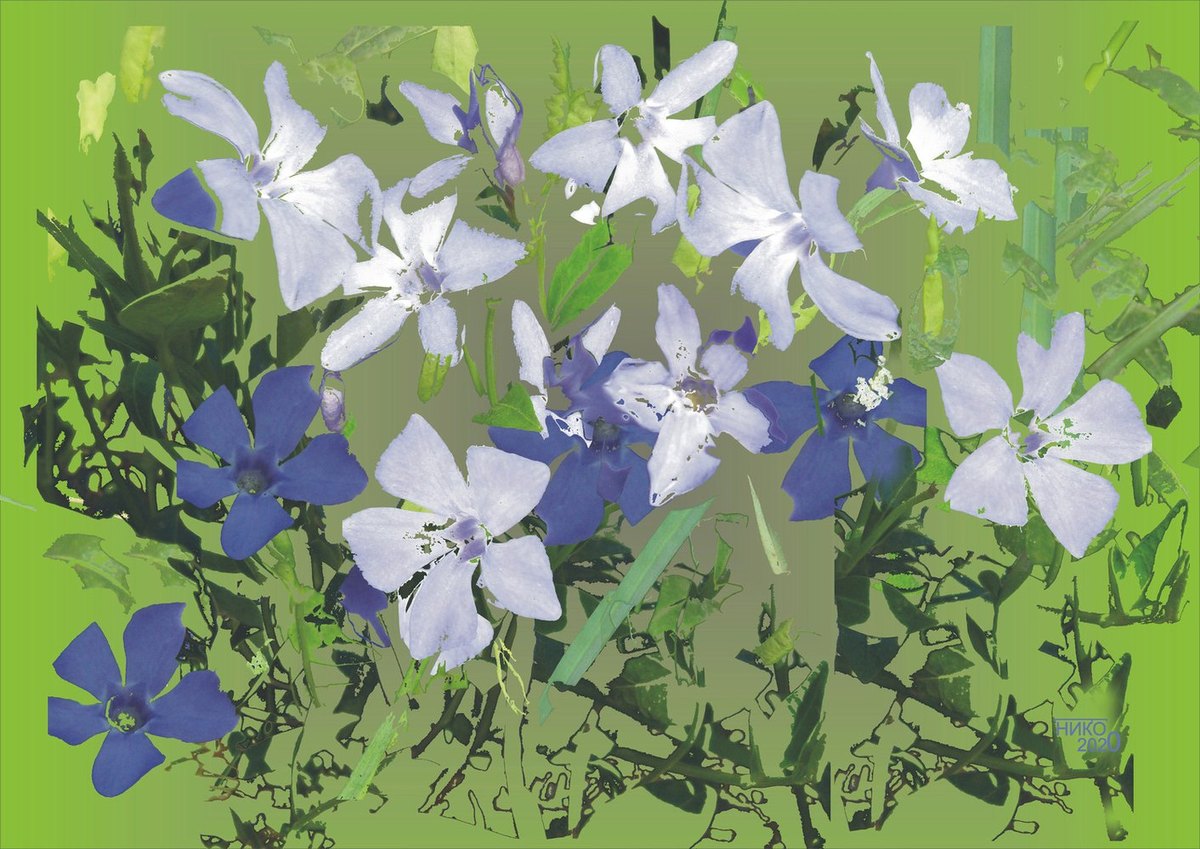
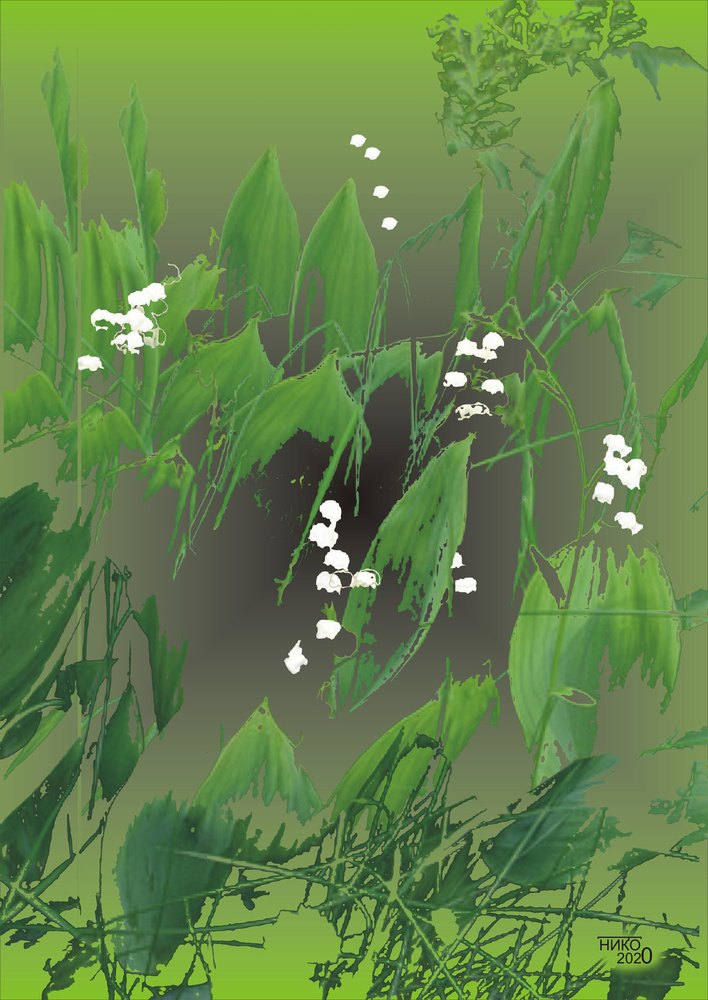
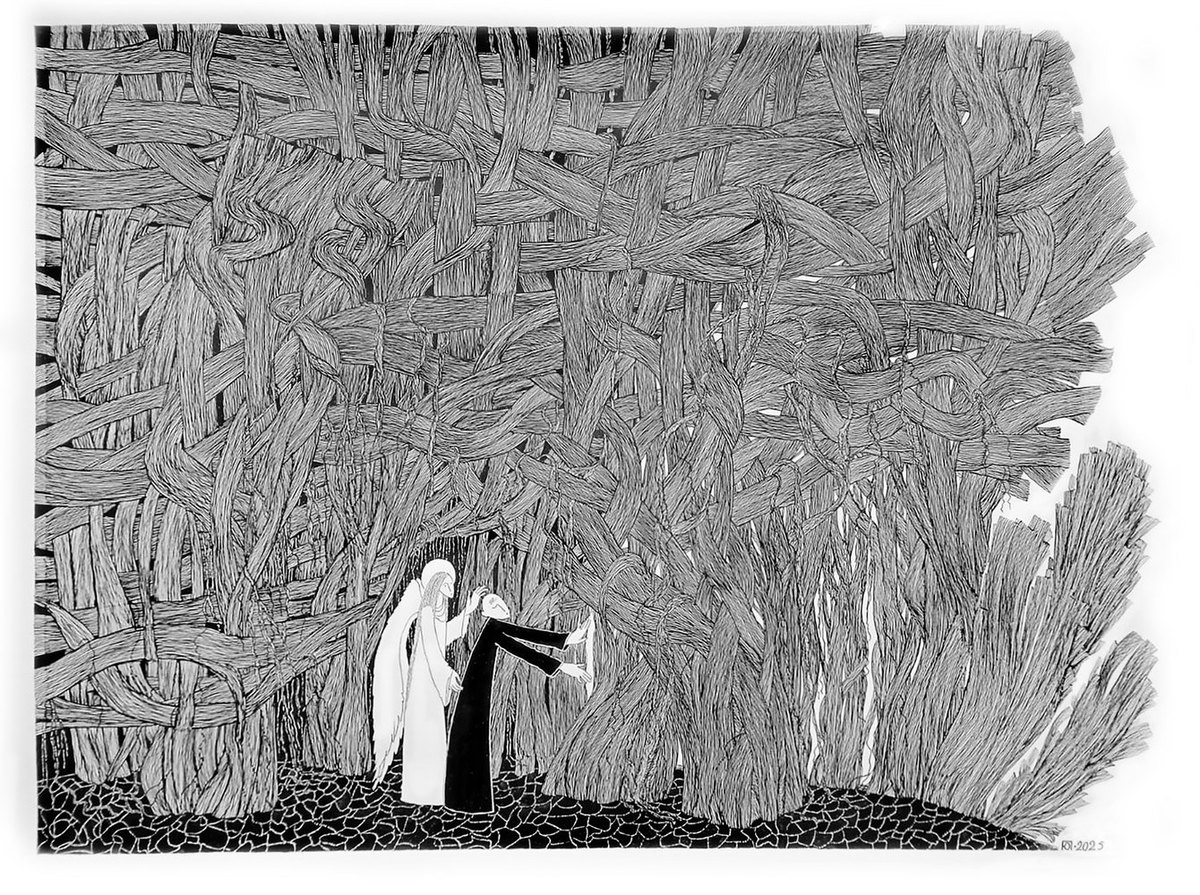
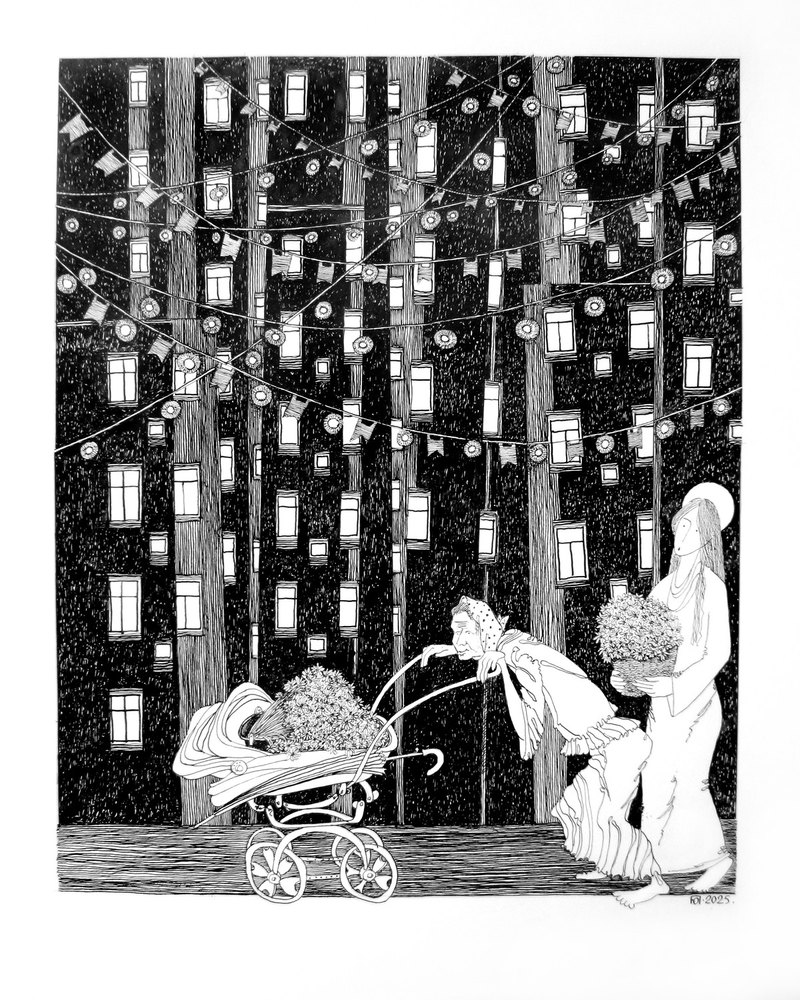
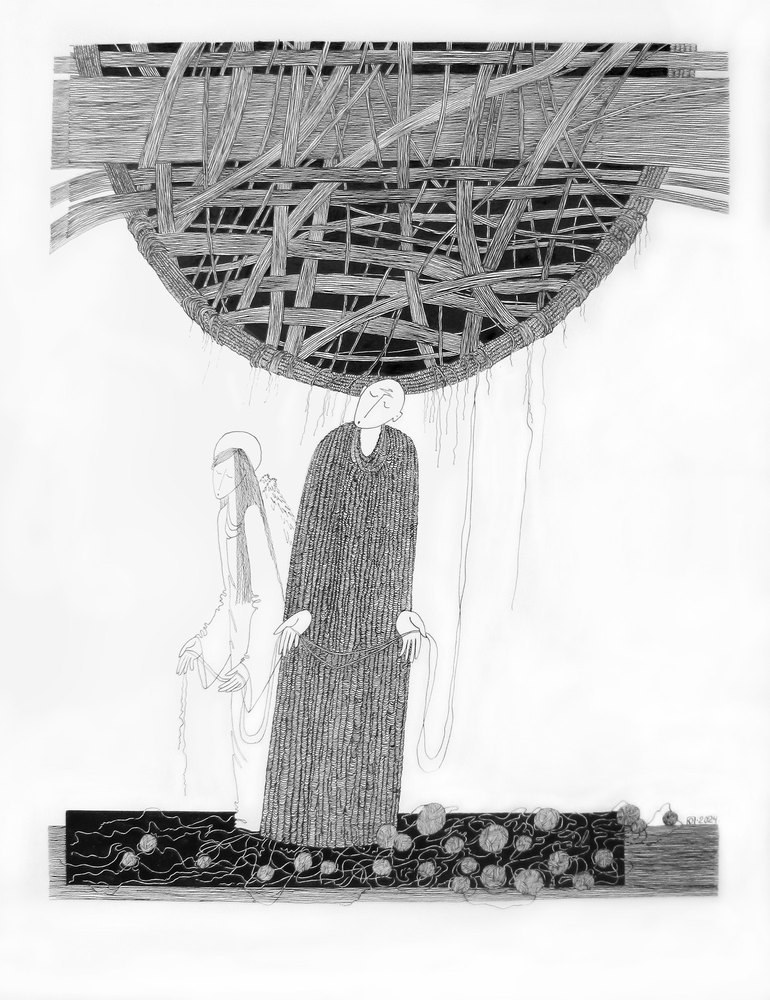
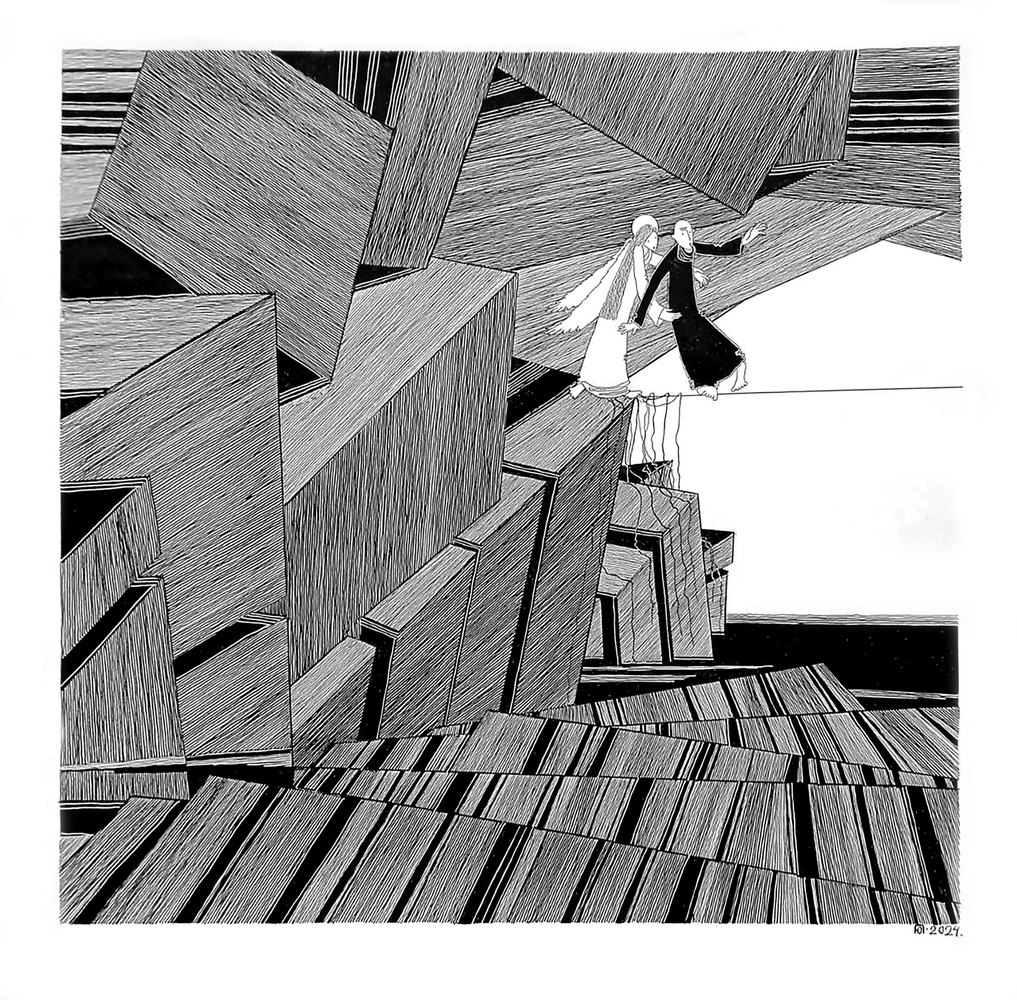
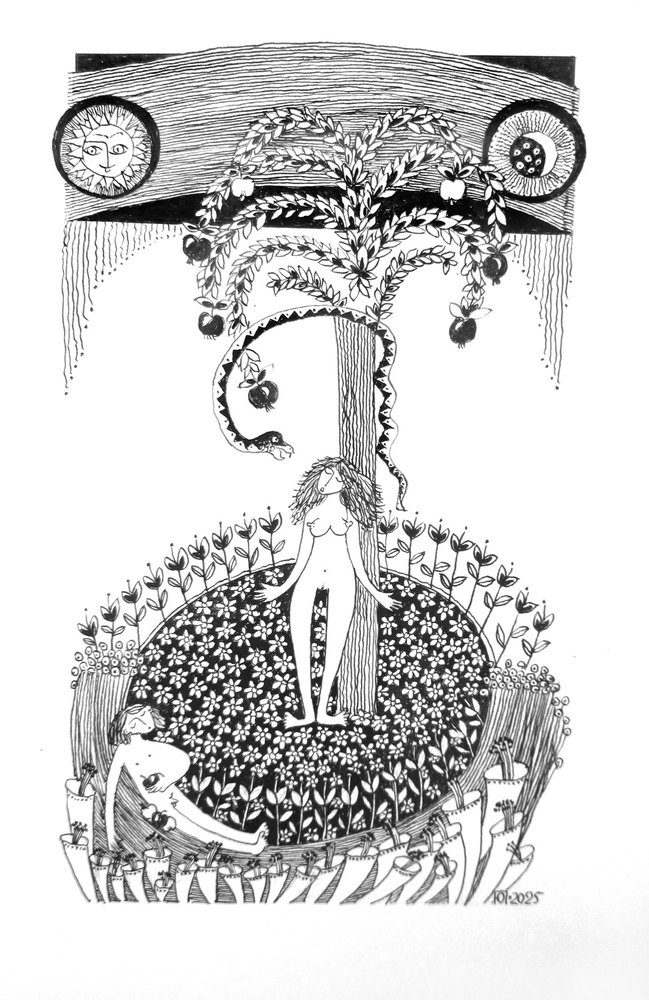
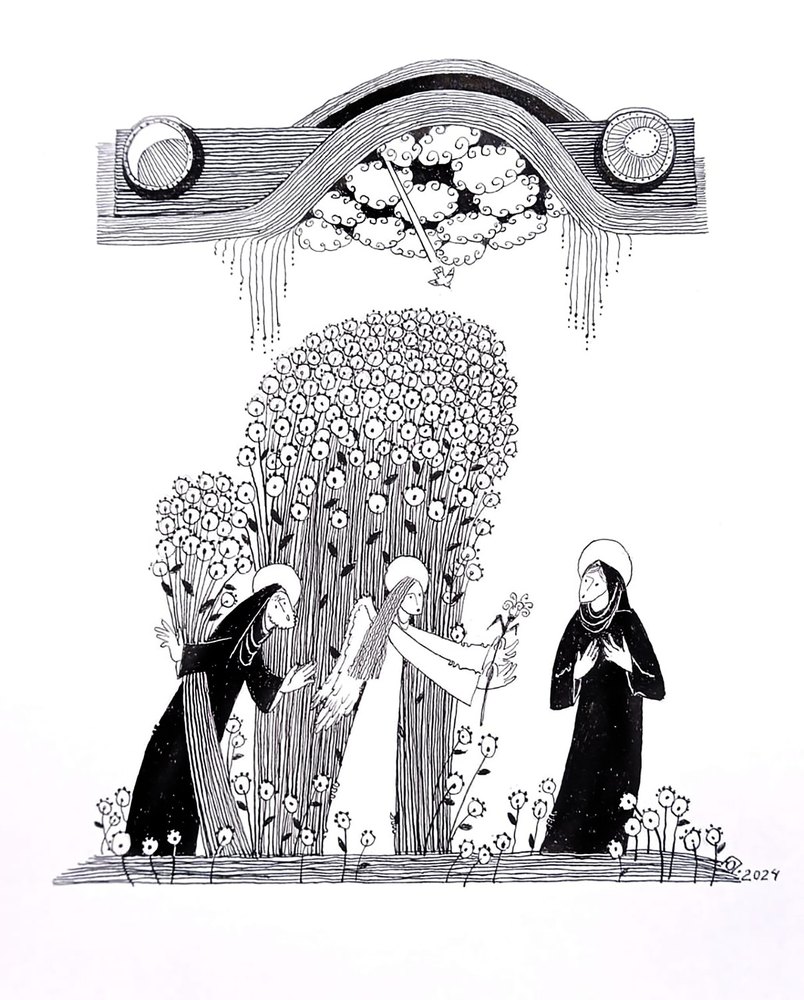
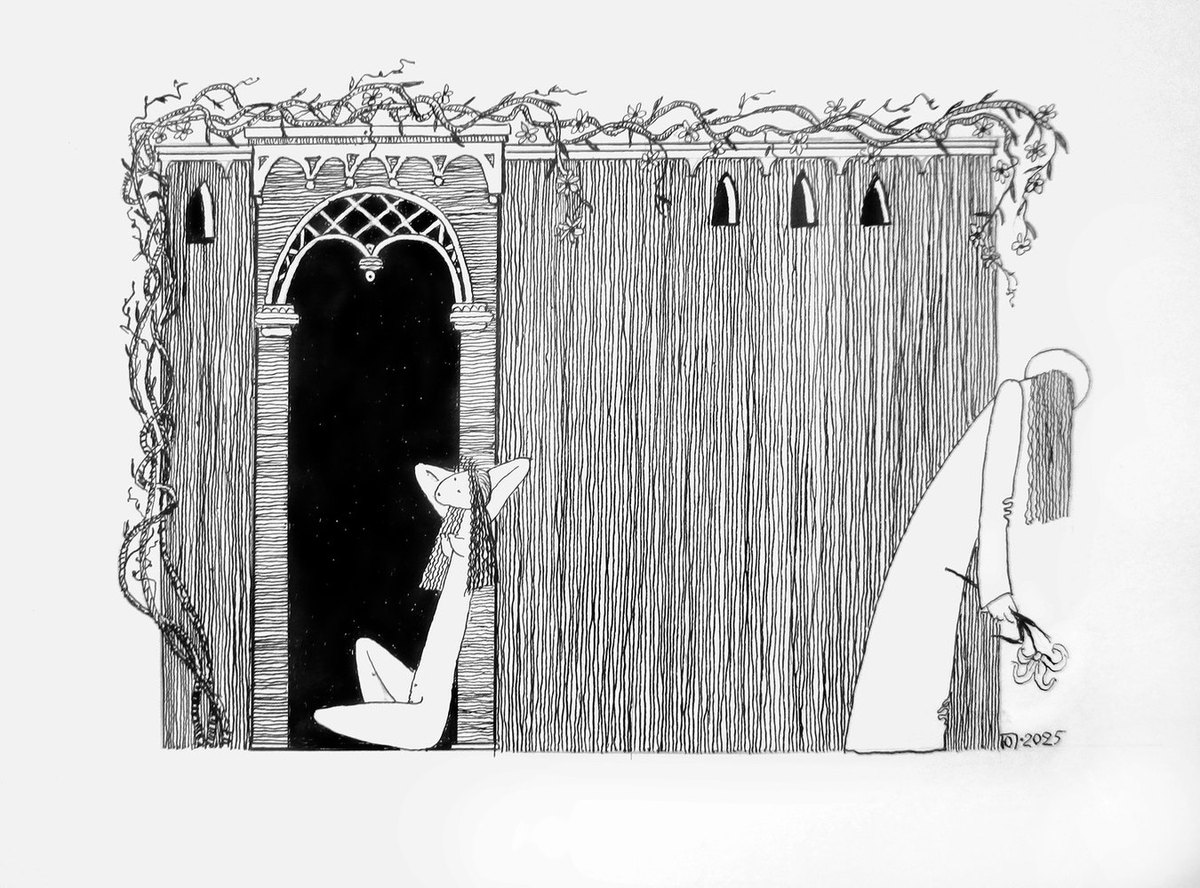
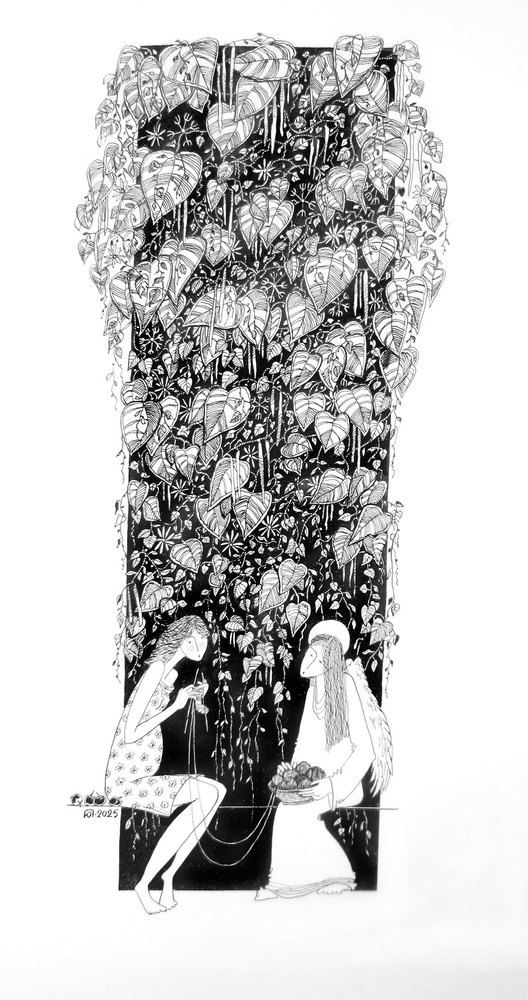
The distinctive feature of the project lies in the connection of different artistic directions within one cultural space. Oleg Basaev’s metaphysical still lifes transform simple objects into philosophical signs of time and inner tension. Yuri Poberezhny’s graphic sheets reveal a world of quiet spiritual presence, where the guardian angel becomes an image of invisible human support. Vyacheslav Lee’s painting cycles unite personal memory, irony, anxiety and reflection on the contemporary world. Olga Nikolaeva’s digital works address the beauty of nature, architecture, flowers and celestial phenomena, reminding us of the value of the living world. Natalia Burlakova’s works return the viewer to Nanai mythological memory, craft, family tradition and a special understanding of the object as a bearer of power, history and protection. Gennady Komarov’s landscapes affirm the importance of native land, small homeland, memory of place and the Russian landscape school.
The Venetian context is important for this publication not as a geographical marker, but as a symbol of international artistic dialogue. For centuries, Venice has been a meeting place of cultures, images, schools and languages of art. VerbArt Venice Digital Edition 2026 continues this idea in digital and book form: it brings together authors whose works speak of the local while addressing the universal. Ossetia, Kazakhstan, Khabarovsk, Moscow, Murom, Mountain Altai, Abkhazia, Cyprus, imaginary and sacred spaces - all these points form a map of contemporary artistic consciousness.
This book is not a simple catalogue. It is conceived as an art project in which biographies, images and art-historical texts work together to create a full representation of the authors. The publication records not only individual works, but also the energy of the artistic path itself: search, doubt, memory, craft, experiment, return to origins and the desire to be heard beyond the familiar audience.
VerbArt Venice Digital Edition 2026 invites the reader to see contemporary art from Russia and Kazakhstan as a living, multilayered and inwardly free territory. There is no single style here, no predetermined formula. There are artists for whom creativity becomes a form of conversation with the world, a way to preserve the invisible, express the personal and make it part of a shared cultural heritage.
Project Director, VerbArt
D. E. Fufaev
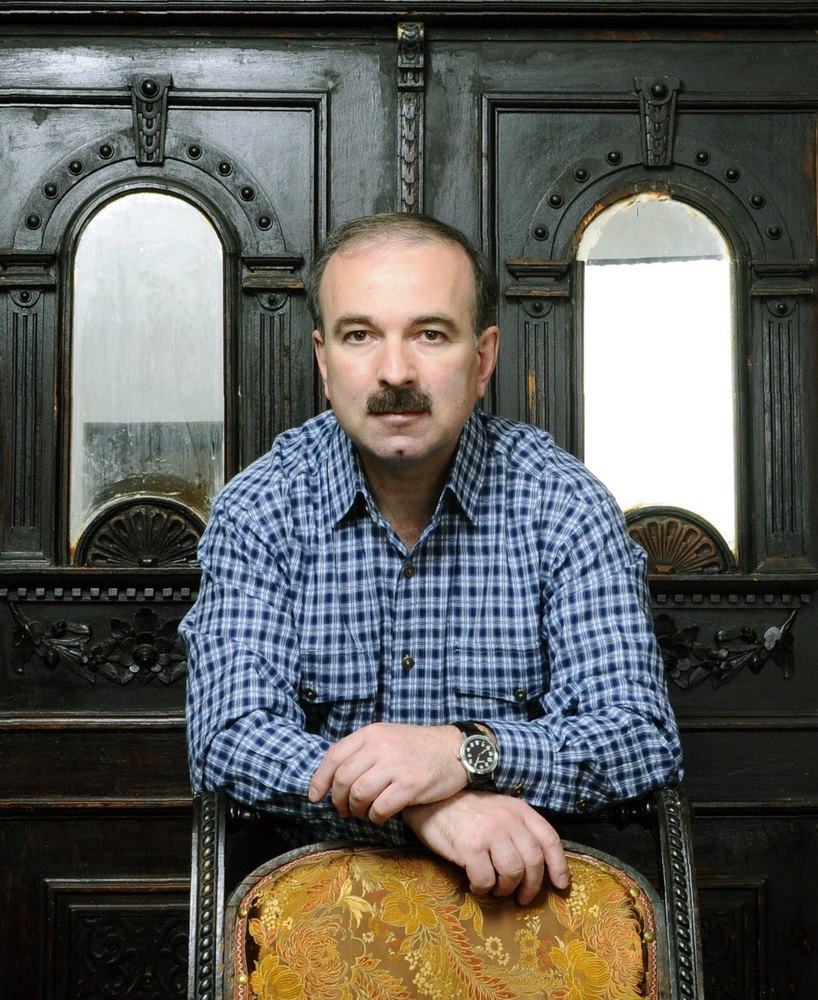
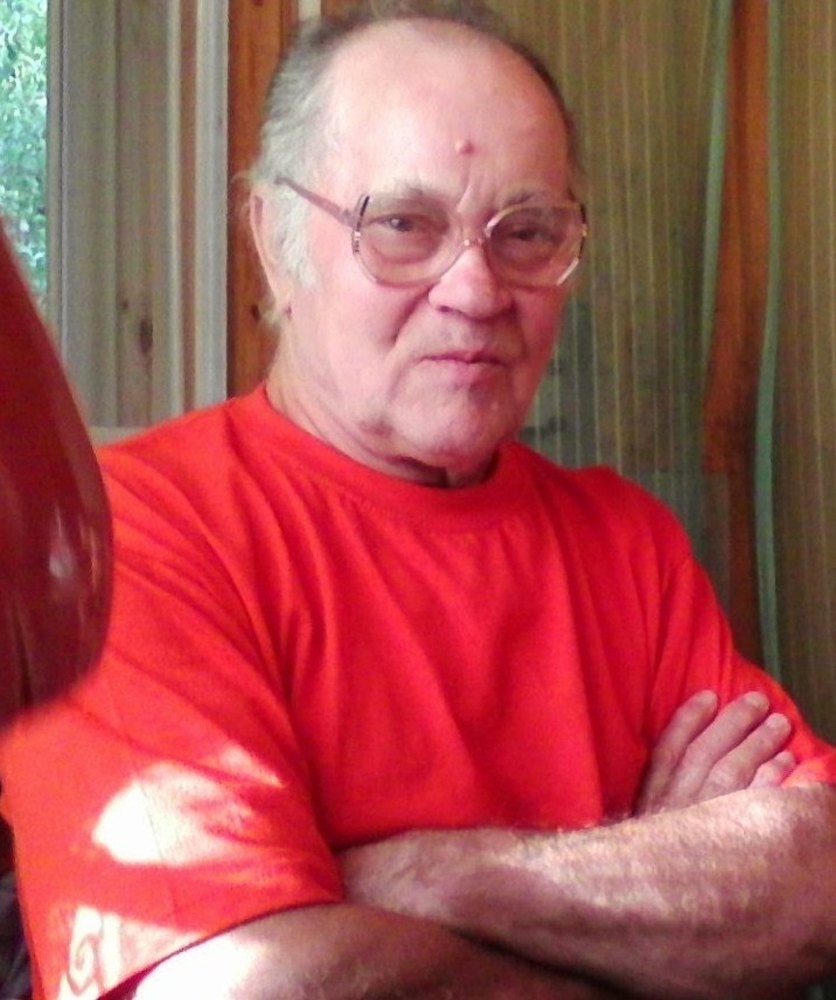
Oleg Temirbolatovich Basaev
Oleg Temirbolatovich Basaev is a painter, born on April 17, 1960 in Beslan, North Ossetian ASSR. His professional formation is connected with the academic school: in 1981 he graduated with honors from the North Ossetian Art College, and in 1988 from the Moscow State Academic Art Institute named after V. I. Surikov. At the Surikov Institute, the artist studied in the workshop of monumental painting under Professor K. A. Tutevol; among his teachers were E. N. Maksimov and V. N. Zabelin.
Oleg Basaev’s professional and public status reflects the significance of his contribution to contemporary artistic culture. Since 1995 he has been a member of the Union of Artists of Russia, and since 2016 a member of the Creative Union of Artists of Russia. In 2009 he was elected a corresponding member of the Russian Academy of Arts, and in 2021 a full member and academician of the Academy. In 2011 he was awarded the honorary title Honored Artist of Russia, and in 2001 the title Honored Art Worker of the Republic of North Ossetia-Alania. Since 2013 he has been a professor at North Ossetian State University named after K. L. Khetagurov, and since 2018 he has headed the Department of Fine Arts at the university. In 2022 he joined the presidium of the Southern Branch of the Russian Academy of Arts. In different years he participated in the work of the Public Chamber of the Republic of North Ossetia-Alania and the Public Council of the municipality of Vladikavkaz, and in 2019 he was awarded the title of honorary professor of Heihe University in China.
Oleg Basaev’s awards confirm the high professional level of his art and his public recognition. Among them are the medal “For the Glory of Ossetia” (2020), gold medals of the Union of Artists of Russia (2017), the Russian Academy of Arts (2018) and the Creative Union of Artists of Russia (2010), silver medals of the Russian Academy of Arts (2006) and the Union of Artists of Russia (2012), the diploma and medal “Silver Muse” of the Creative Union of Artists of Russia in the Southern Federal District (2007), and the diploma of the Russian Academy of Arts (2005). The artist has received gratitude from the Russian Academy of Arts for participation in the exhibition “Dialogue of Cultures in the Space of the Academic School” at UNESCO headquarters in Paris, as well as acknowledgements from the Union of Artists of Russia and Russian Centers of Science and Culture in Paris, Rome, Brussels and Luxembourg. He was also awarded a Certificate of Honor by the Ministry of Culture of the Republic of North Ossetia-Alania. In 2023 he became a laureate of the international Eurasian “Turan” Prize in the category “Painting” and received a gold medal.
Oleg Basaev’s works are held in the M. S. Tuganov Republican Art Museum in Vladikavkaz, the Russian Academy of Arts in Moscow, the Mikhail Shemyakin Foundation in Saint Petersburg, the R. Tabakman Museum of Contemporary Russian Art in New York, the Diachroniki Gallery in Nicosia, and in private collections in Russia and abroad.
Oleg Basaev has participated in numerous regional, national and international exhibitions. He lives and works in Vladikavkaz.
Project Description
At the heart of Oleg Basaev’s project is the desire to express the image of time through the world of objects freed from their habitual everyday function. Simple things placed by the artist in a conditional, at times metaphysical space begin to exist according to other laws: they lose stability, violate gravity, and acquire inner tension and symbolic ambiguity. In this artistic system, still life ceases to be only a genre of contemplation. It becomes a model of the world, a space of philosophical experience in which the visible opens the way to the invisible. Basaev’s objects are not so much depicted as brought into a state of reflection: they preserve memory, anxiety, silence and a sense of hidden freedom. Colour plays a special role, built on subtle, closely related tonal relationships. The restrained and complex painterly range intensifies the feeling of another reality, in which the familiar reveals absurd, mysterious and spiritually significant dimensions. The series is not limited to classical still life: it may include natural and architectural motifs whenever they help reveal the main idea - to show the instability of the obvious and expand the boundaries of perception.
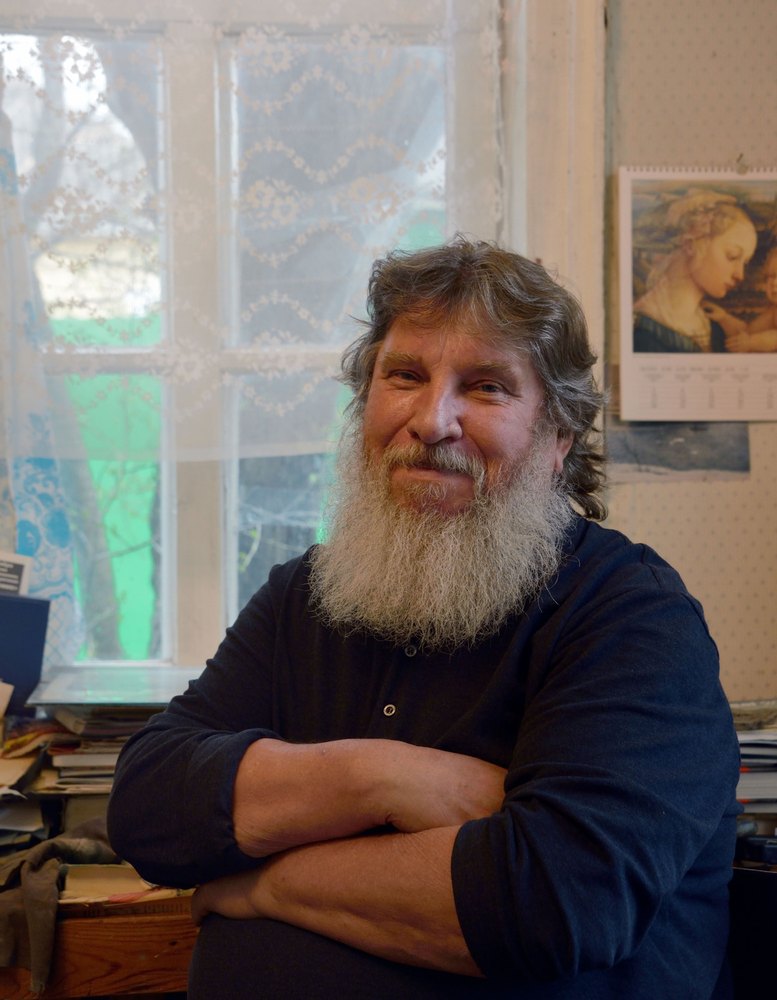
Yuri Petrovich Poberezhny
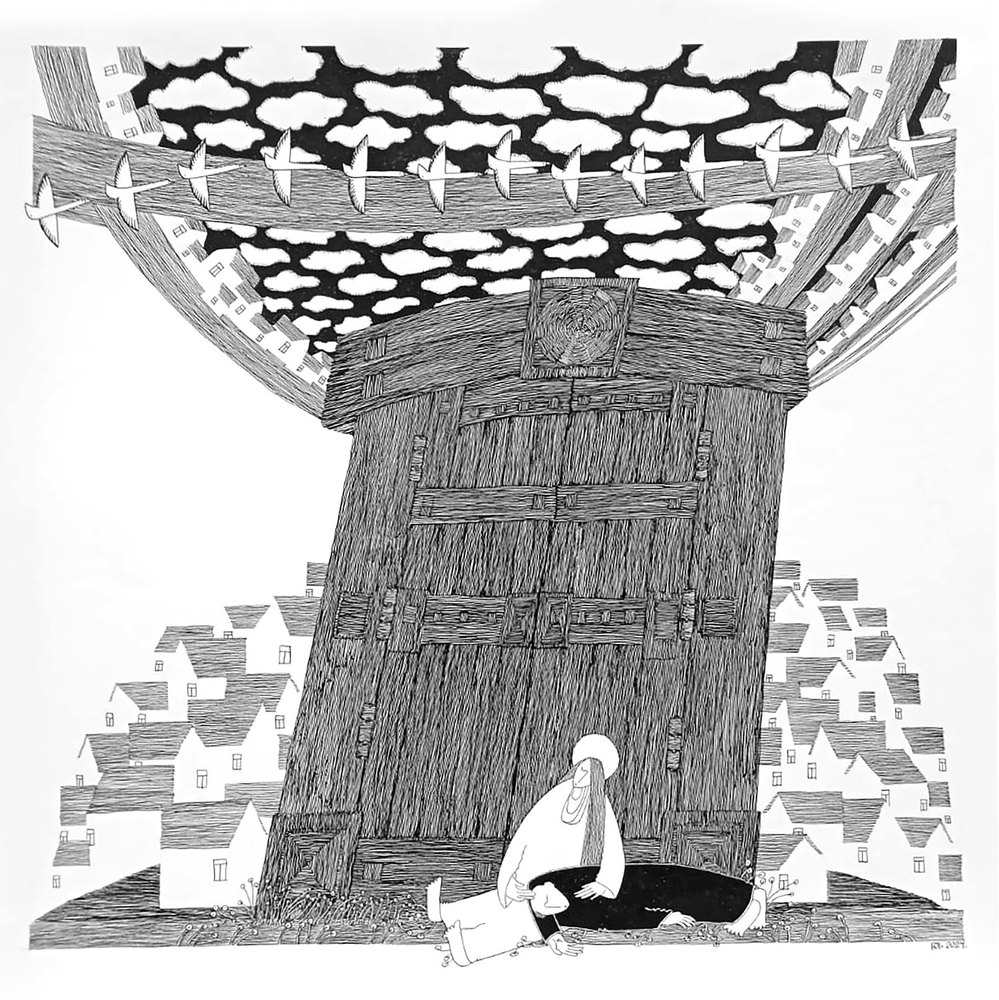
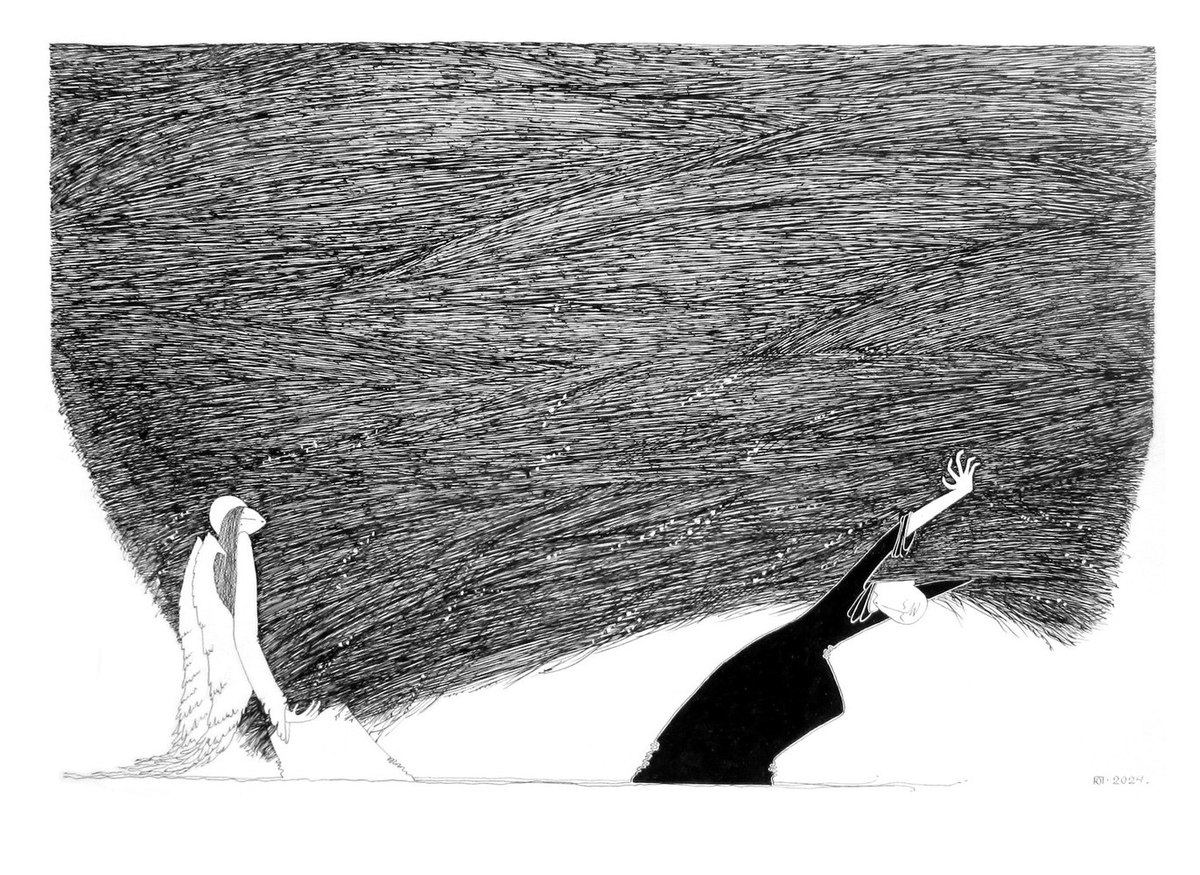
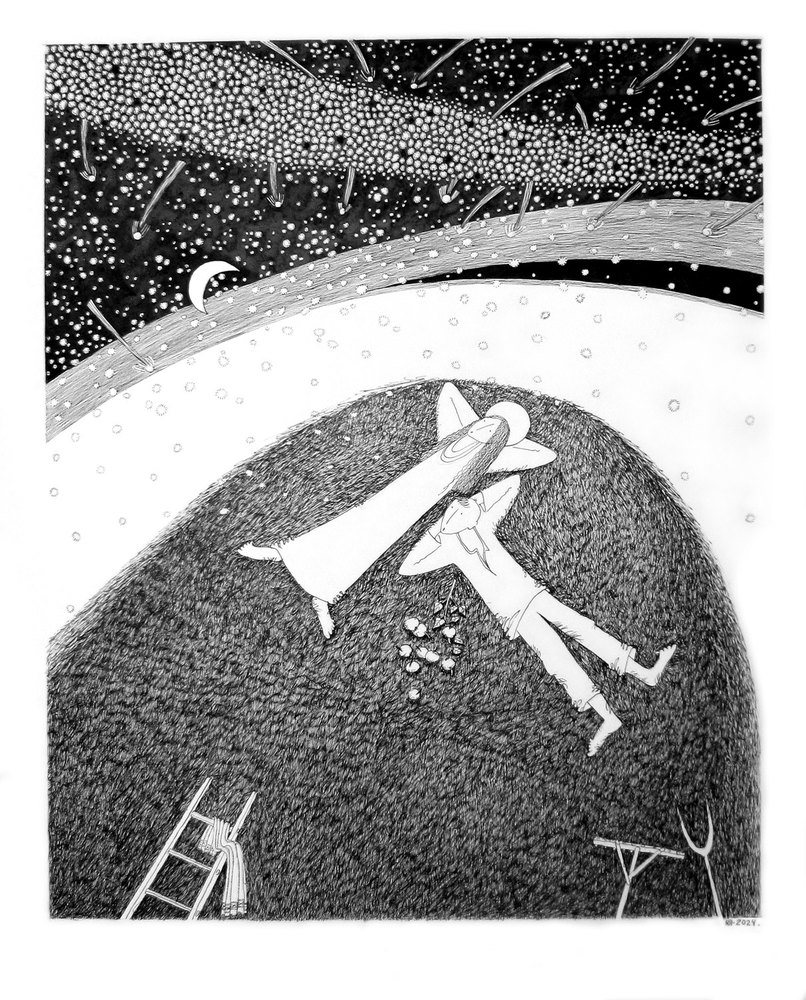
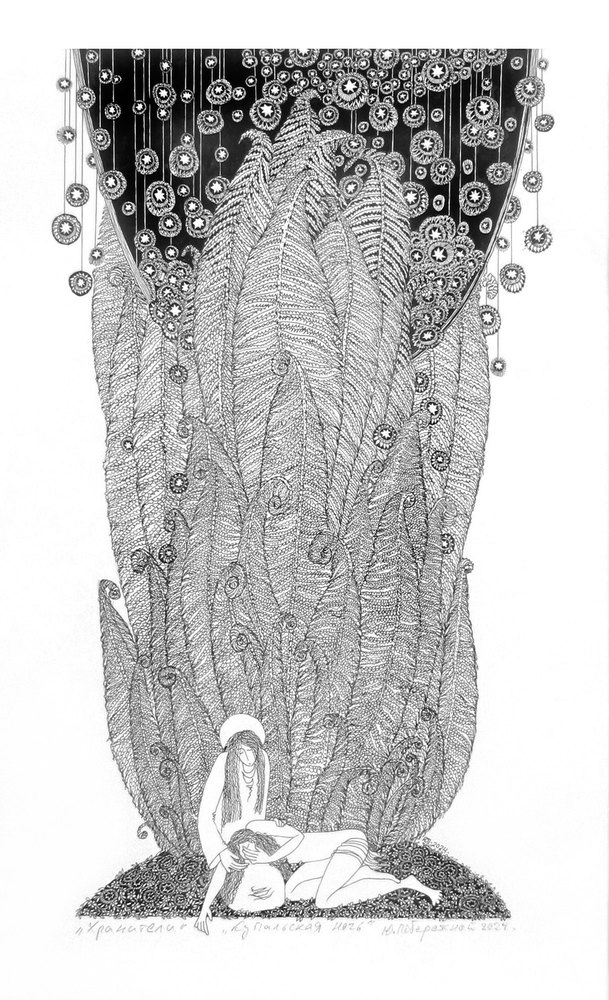
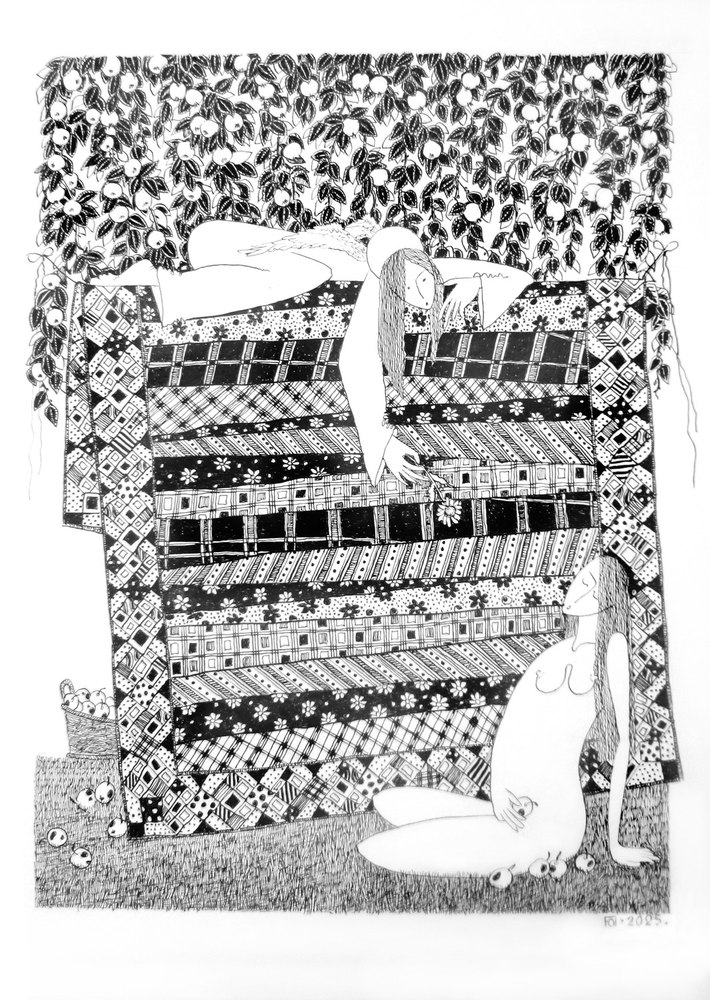
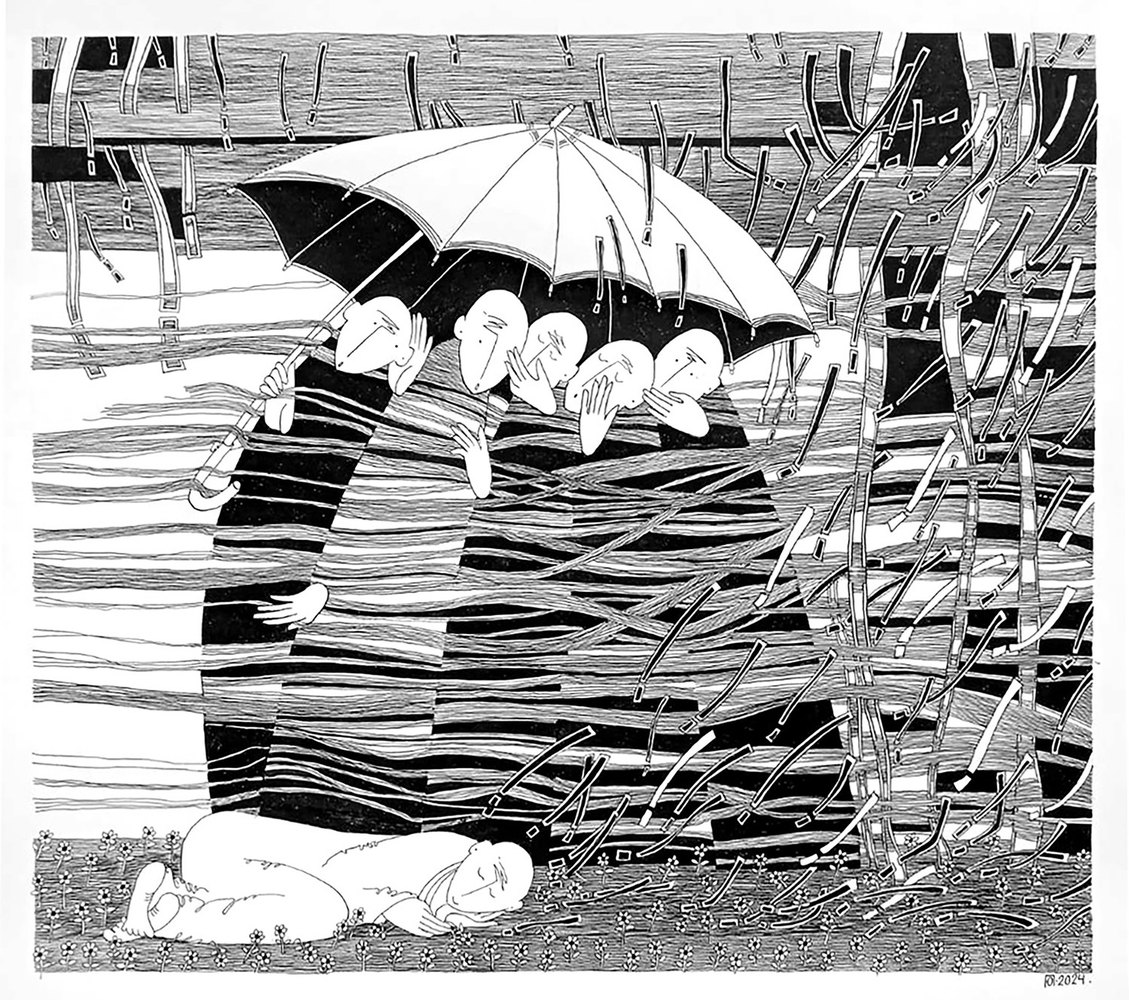
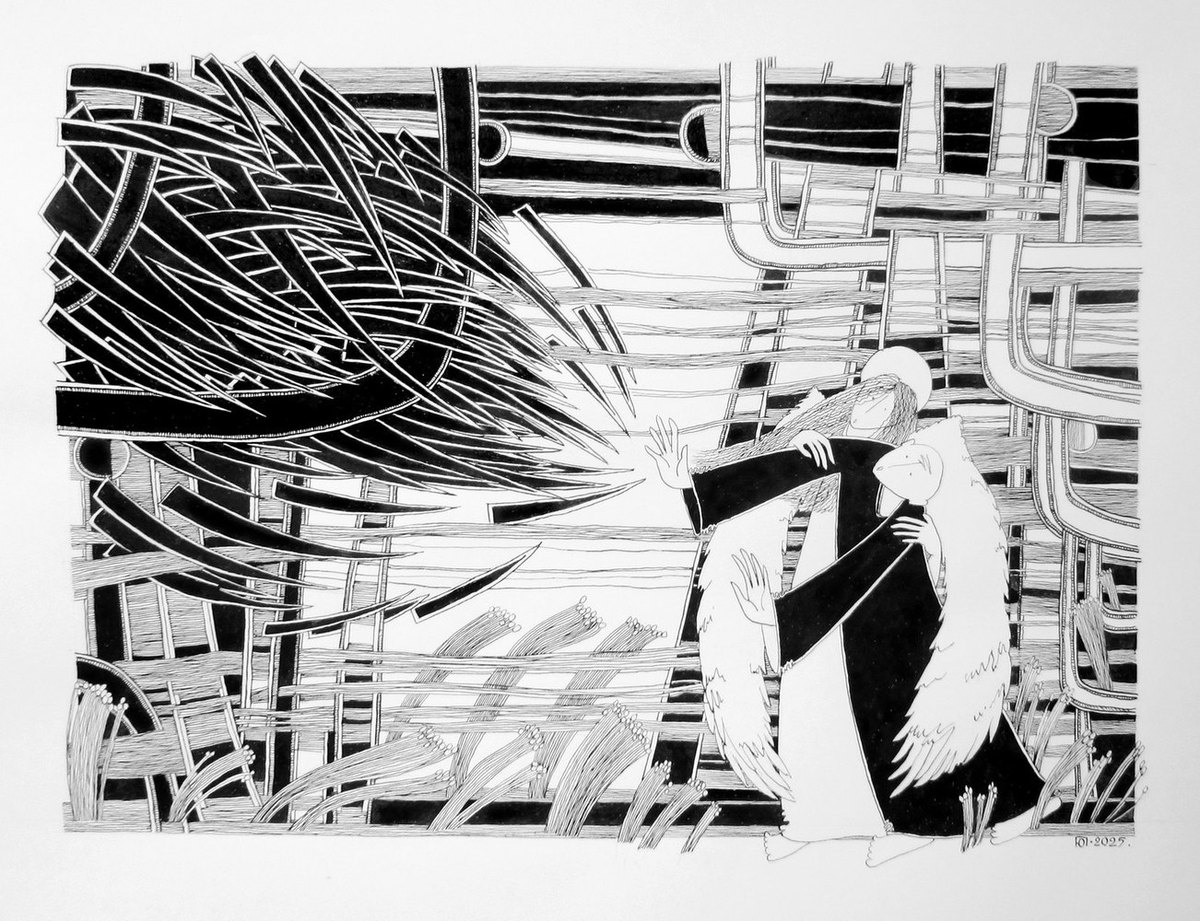
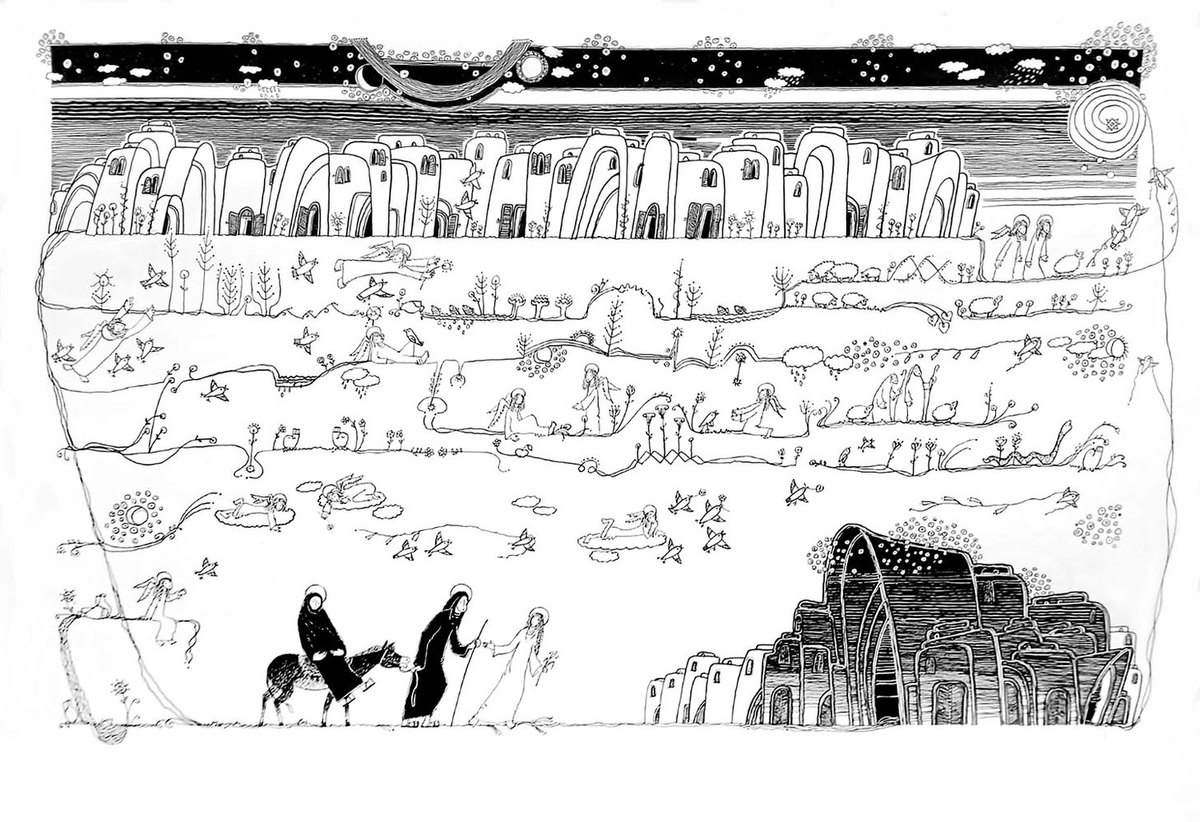
Yuri Petrovich Poberezhny is an original master of contemporary graphic art, whose work is inseparable from Ossetia, his native land and the inner poetry of everyday life. The artist was born on November 22, 1955 in Mozdok, a city that became not only the starting point of his biography, but also a major source of images. His path in art began at the Mozdok Children’s Art School, from which he graduated in 1971. In 1976 he completed his studies at the Stavropol Art College. After college he worked for some time in design, but in the 1990s returned to “pure” art - to pen, ink and paper. Graphic art became for him a language of concentrated reflection, capable of conveying memory, moral choice, silence and the complex relationship between good and evil. Since 1990 Poberezhny has taught at the Lukovskaya School of Arts, passing professional experience on to new generations. He is an Honored Artist of the Republic of North Ossetia-Alania, a member of the Union of Artists of Russia since 1998 and of the International Academy of Graphics, a laureate of prestigious awards, a holder of the Gold Medal of the Union of Artists of Russia and prizes from international graphic biennials in Saint Petersburg. His works are in private collections in Germany, the United States and Poland, as well as in museum collections, including the M. Tuganov Art Museum in Vladikavkaz. Poberezhny has participated in numerous regional, national and international exhibitions and has held more than twenty solo shows. His works have been shown in Vladikavkaz, Mozdok, Stavropol, Saint Petersburg, Kazan and abroad, including exhibition venues in London and Poland, where books with his illustrations were published. In 2025-2026 he marked his seventieth anniversary with a series of personal exhibitions titled “On the Way...”, confirming his status as one of the notable graphic artists of southern Russia.
Project Description
The graphic cycle “Guardians” is a complete artistic project devoted to the presence of the sacred in everyday life. Yuri Poberezhny explores spiritual solitude and, at the same time, the experience of invisible support that accompanies a person in moments of joy, labour, grief, loss and transition. The recurring images of a human being and a fragile figure with a halo form the inner narrative of the series: beside earthly existence there is always a quiet companion, a guardian whose meaning is revealed not through action, but through silent presence. All the works are executed in a unified graphic manner - ink, pen and paper. Dense hatching creates rich textures of wood, stone, fabric, starry sky and architectural space, turning the sheet into a complex field of contemplation.
The series is built on the universality of human experience. The artist uses expressive scale - enormous doors, endless walls of houses, giant leaves - to emphasize the smallness of the human being before the universe and at the same time his inner dignity. Static quality, pause and dreamlike slowness prevail in these works. Even movement is perceived as a stopped moment of prayer or recollection. The finest detailing requires attentive, unhurried viewing; every line becomes a trace of time and an element of a visual diary of the soul. Biblical subjects occupy a special place. They are united not only by the technique of filigree black-and-white graphics, but also by a quiet, contemplative and deeply personal intonation. Poberezhny transfers sacred plots from the space of dogma into the space of living human feeling: he speaks of the search for protection, temptation, the good news, hope and the human path toward God and toward oneself. The rejection of direct perspective, elongated figures, signs of the Sun and Moon, plant motifs and the limitation of the palette to black and white create a special icon-like space. In this world, anxiety does not cancel light, and melancholy is joined with a sense of higher order and inner harmony.
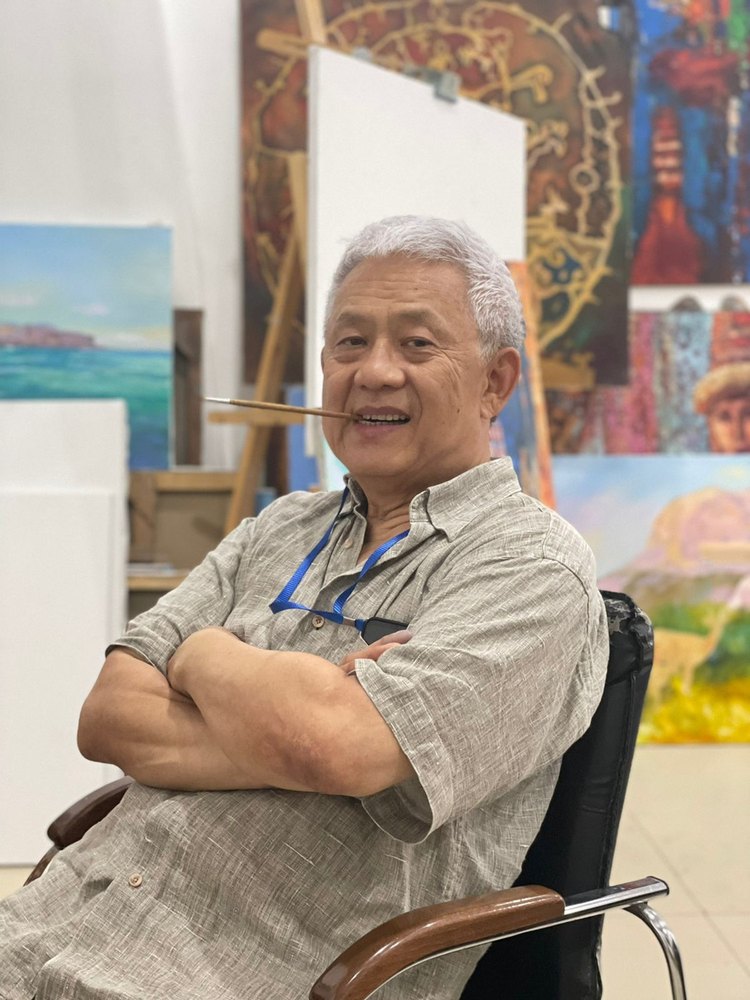
Vyacheslav Nikolaevich Lee
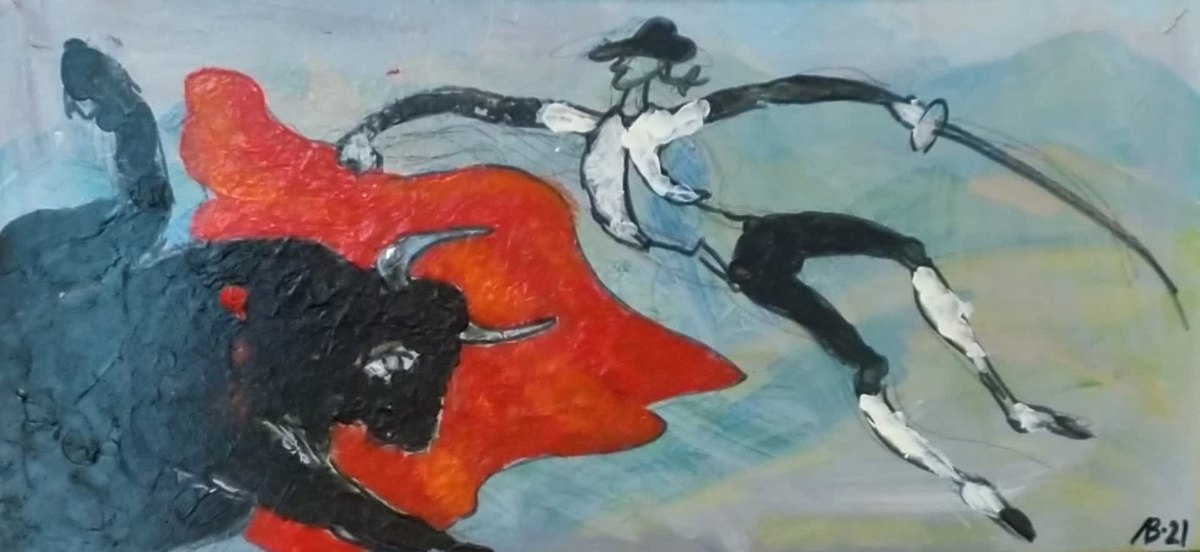
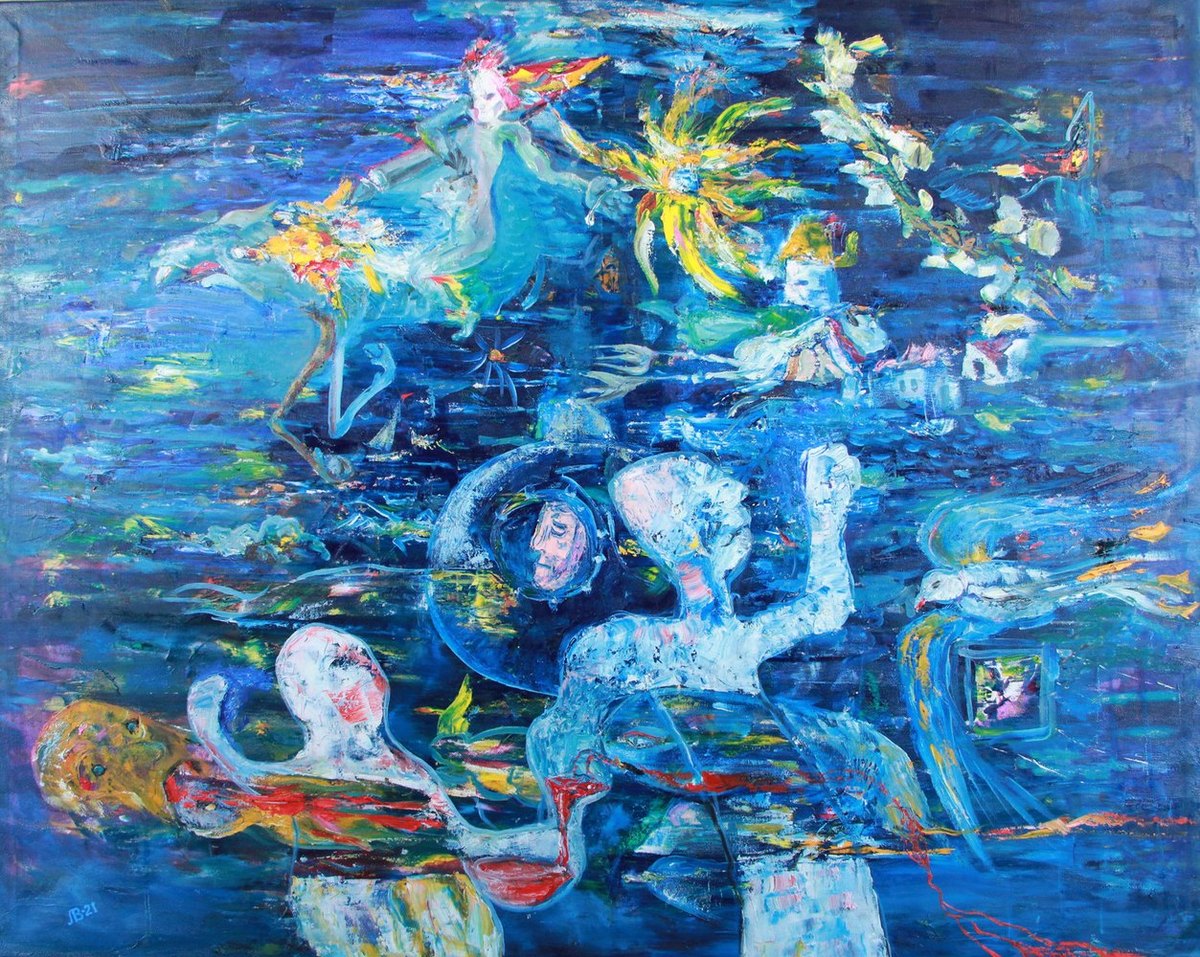
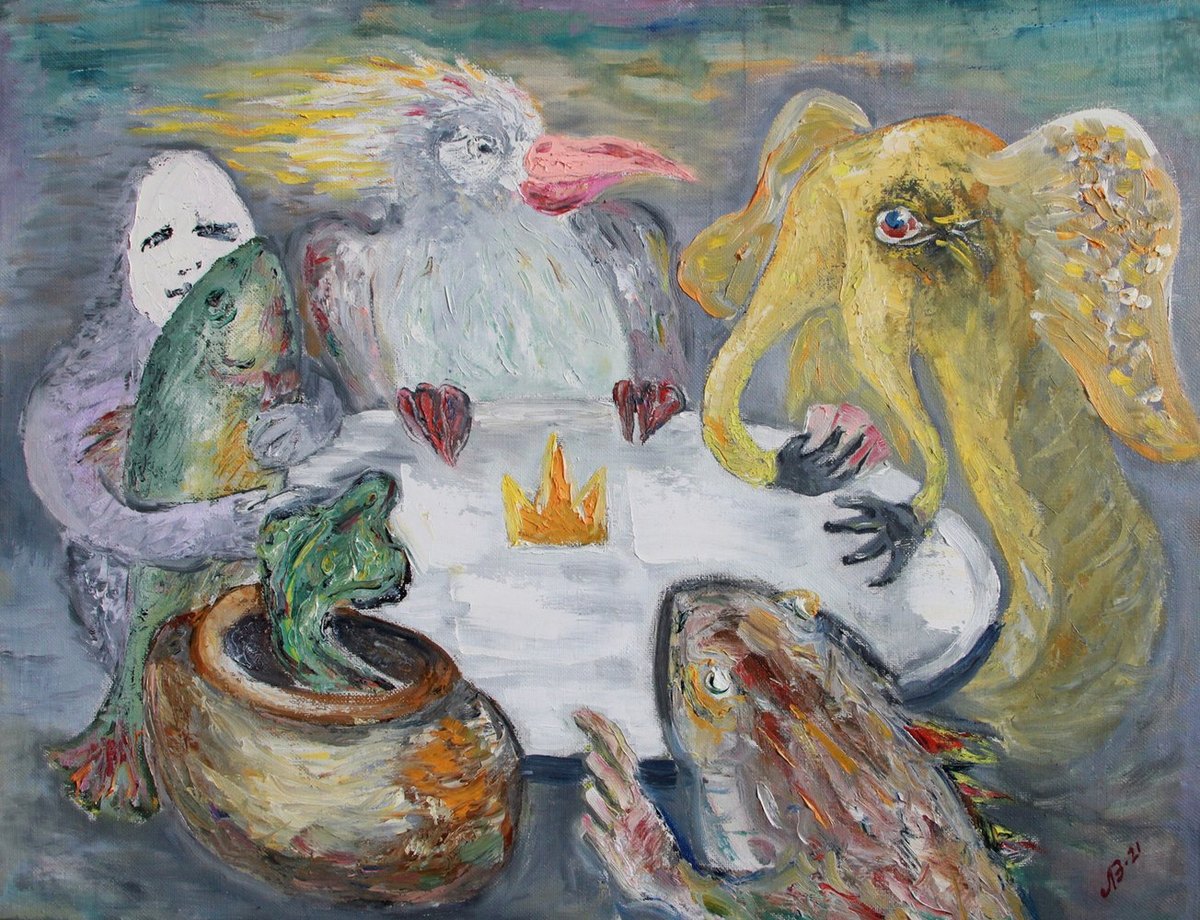
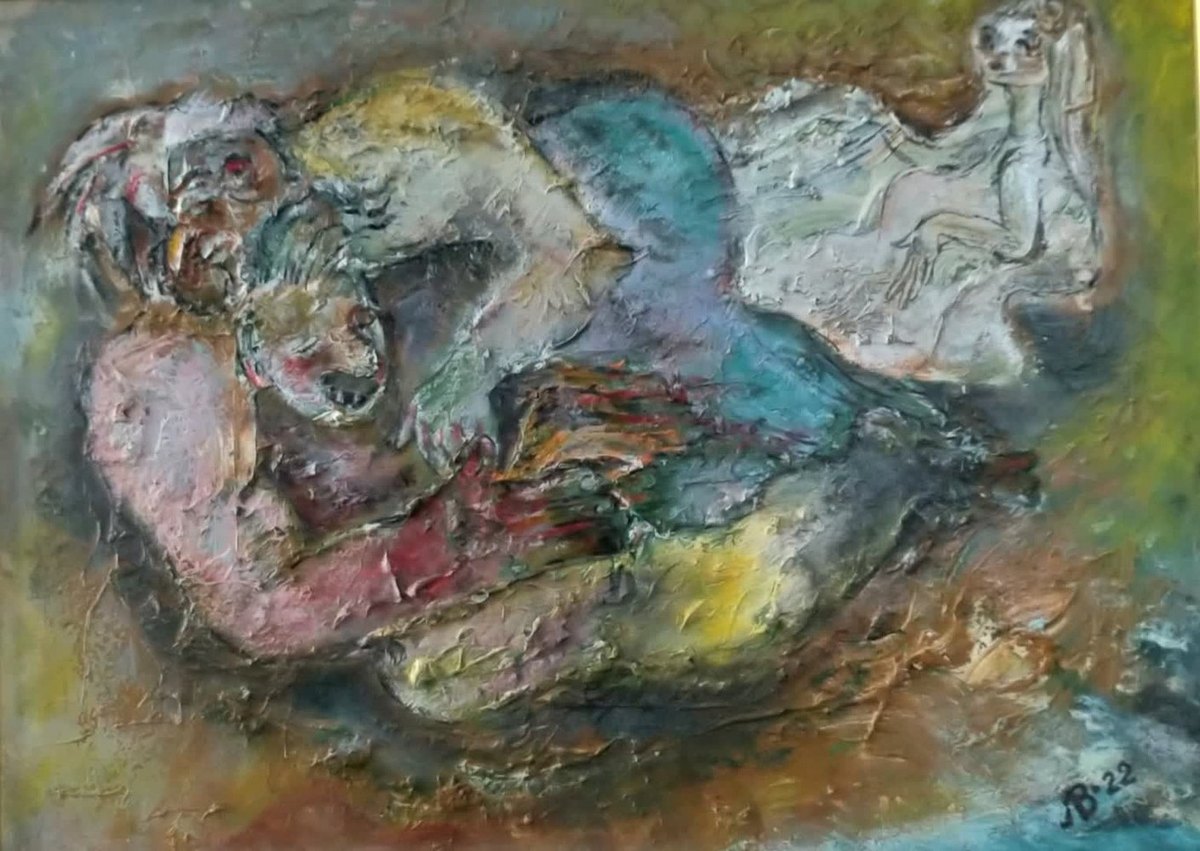
Vyacheslav Nikolaevich Lee was born on July 16, 1948 in Kazakhstan, in Astana, then called Akmolinsk, into a family of deported Koreans. Family history and a scientific-humanitarian environment had a significant influence on his worldview. His grandfather, Hwang Unjon (Unden), was an active participant in the Civil War in Primorye and a Hero of Korea; his father, a professor and Doctor of Economics, was involved in art in his youth and played an important role in the future artist’s aesthetic upbringing. As a teenager, Vyacheslav Lee studied at the Novosibirsk Physics and Mathematics School of Akademgorodok while also attending art school. The artistic skills he acquired were later used in public and design work. In 1972 he graduated from the Physics Department of Kazakh State University, then worked as a lecturer at the Tselinograd Civil Engineering Institute. From 1975 to 1978 he studied in postgraduate school at Leningrad State University and worked at the Research Institute of Physics at LSU. In 1981 he defended his dissertation for the degree of Candidate of Technical Sciences, returned to Kazakhstan, continued teaching and received the title of associate professor. In 1990 he entered the doctoral programme at LSU, but interrupted his studies after the tragic death of his wife and younger daughter. In 1997 he founded the private Kainar University in Astana and served as its rector for more than twenty years, later becoming director of Asu College. He is a member of the Kazakhstan National Academy of Natural Sciences and the European Academy of Natural Sciences in Hanover. After retiring in 2020, Vyacheslav Lee actively turned to painting. In 2021, his acquaintance with the Kyrgyz artist Nastar Mamay, a doctoral student at the Vienna Academy of Fine Arts, became an important impulse for participation in contemporary art exhibitions. The artist joined the Eurasian Art Union and in 2023 became an EXC ambassador in Kazakhstan and Central Asia. He is a winner and prize-winner of international competitions, holder of more than 35 diplomas, two “Star of the Virtuoso” gold medals SV-24 and SV-25 in the Art Project nomination, and the MASI ART. EXCELLENCE. AWARDS silver medal in Painting. In 2025 he was awarded the title of Honorary Member of the International Academy of Contemporary Art (MASI) and is an Honorary Corresponding Member of the International Academy of Quantum Art Russia-Asia. In 2024-2025 he held seven solo exhibitions in Kazakhstan and one in Moscow. Among them were “Awakened Love” at the Zhastar Palace, “Autumn Kaleidoscope” at the Center for the Preservation of Historical and Cultural Heritage Sites, “Morning Anxiety” at the Korean Cultural Center of the Embassy of the Republic of Korea, “The Brightest Day” at the House of Friendship in Astana, “Curvature of Time” at the Center for Active Longevity, the “Tamir Bazaar” exhibition at Nazarbayev University, the project “United by Art” in Mexico, as well as “Ru Persona” in the West Wing of the Tretyakov Gallery and “Blooming Sunset” in Moscow. In January 2025 he participated in the international exhibition festival “YaRussia” in Moscow.
Additional materials on the work of V. N. Lee can be found in open search systems using the query: “Vyacheslav Nikolaevich Lee artist”.
Project Description
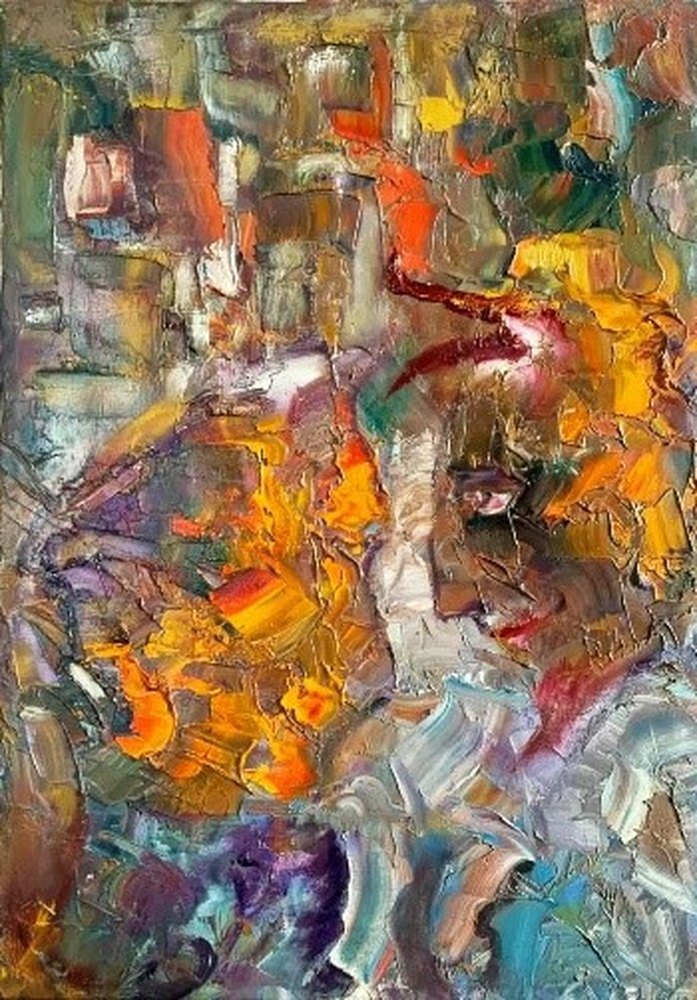
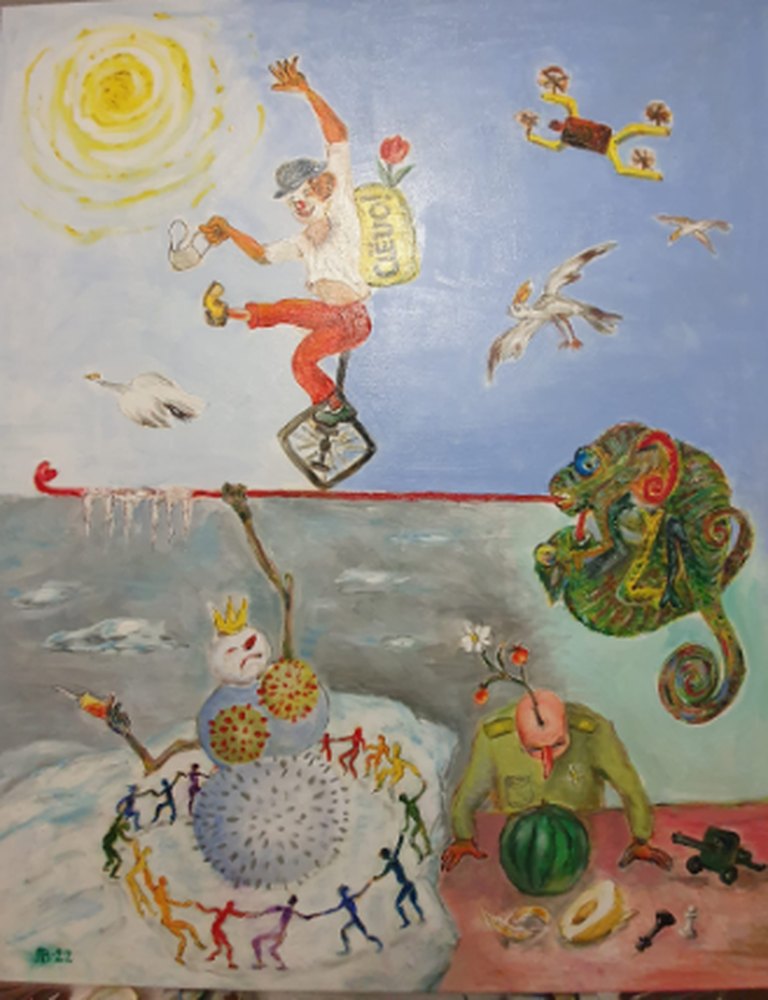
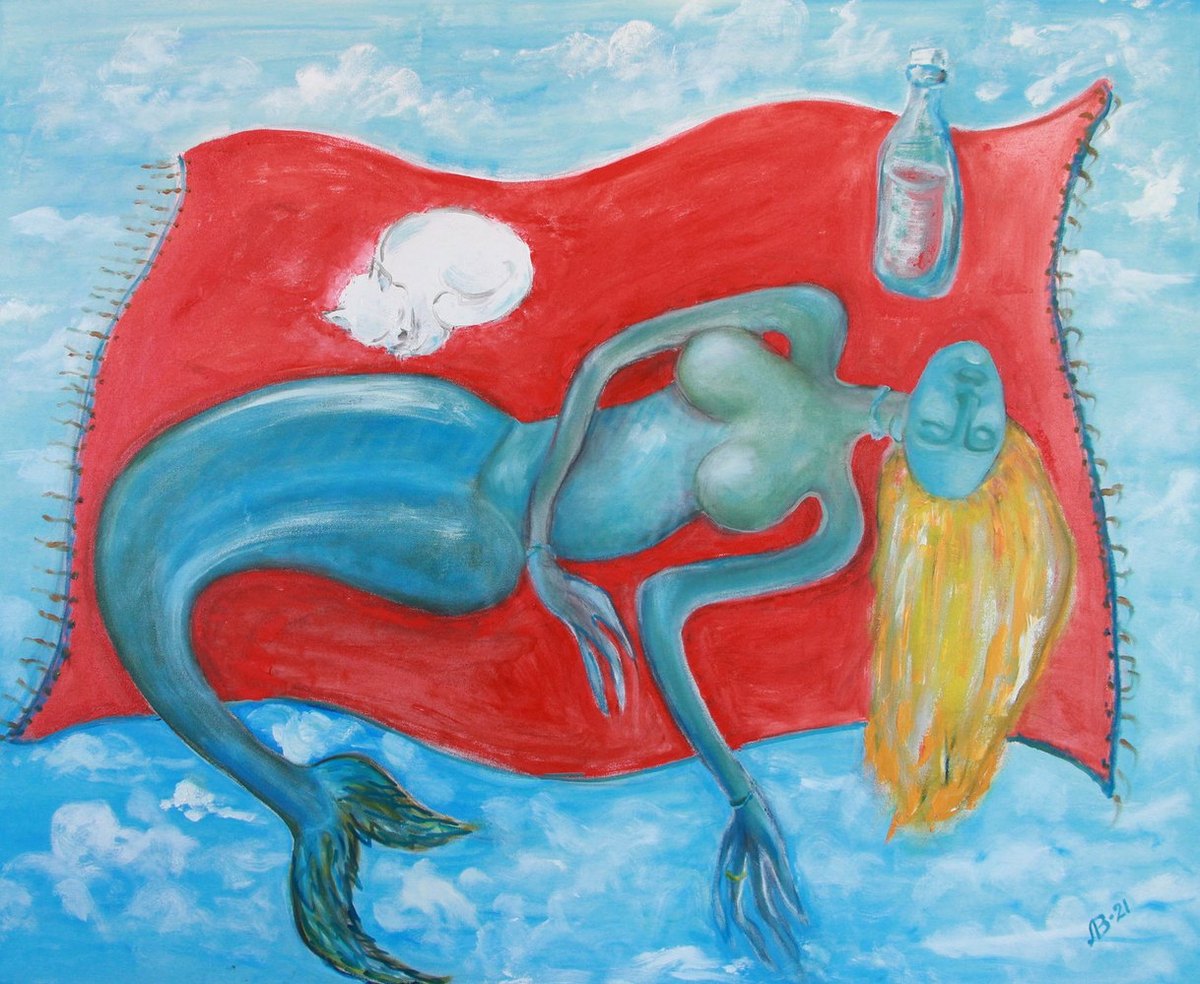
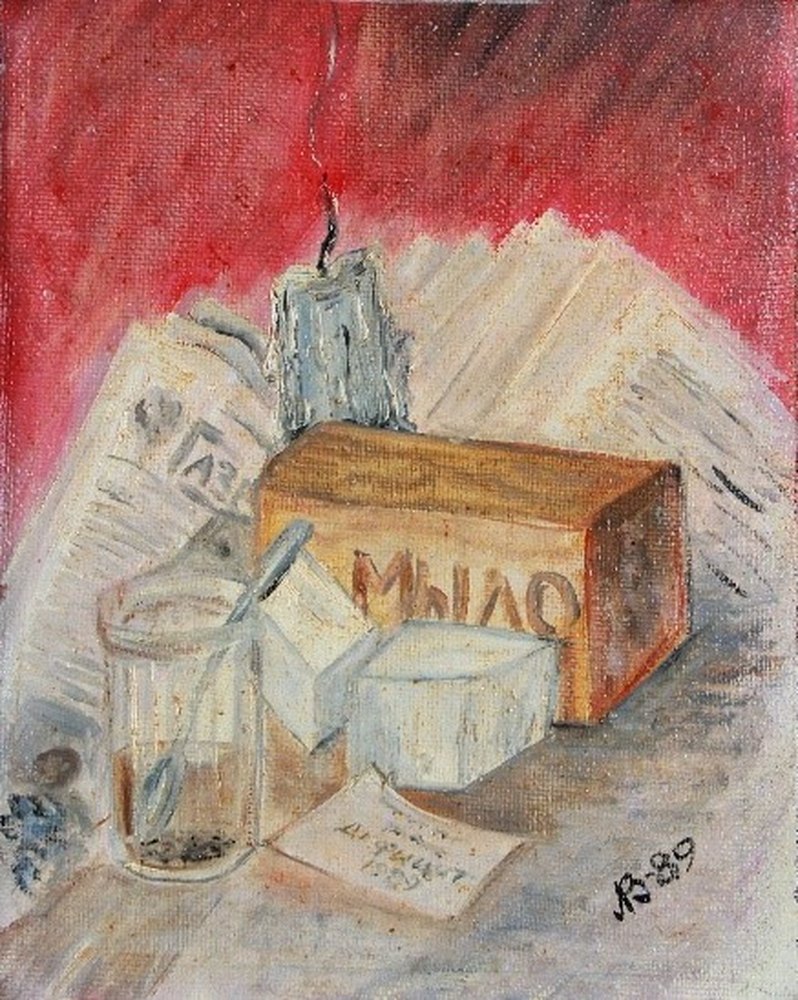
Vyacheslav Lee’s Painting Project
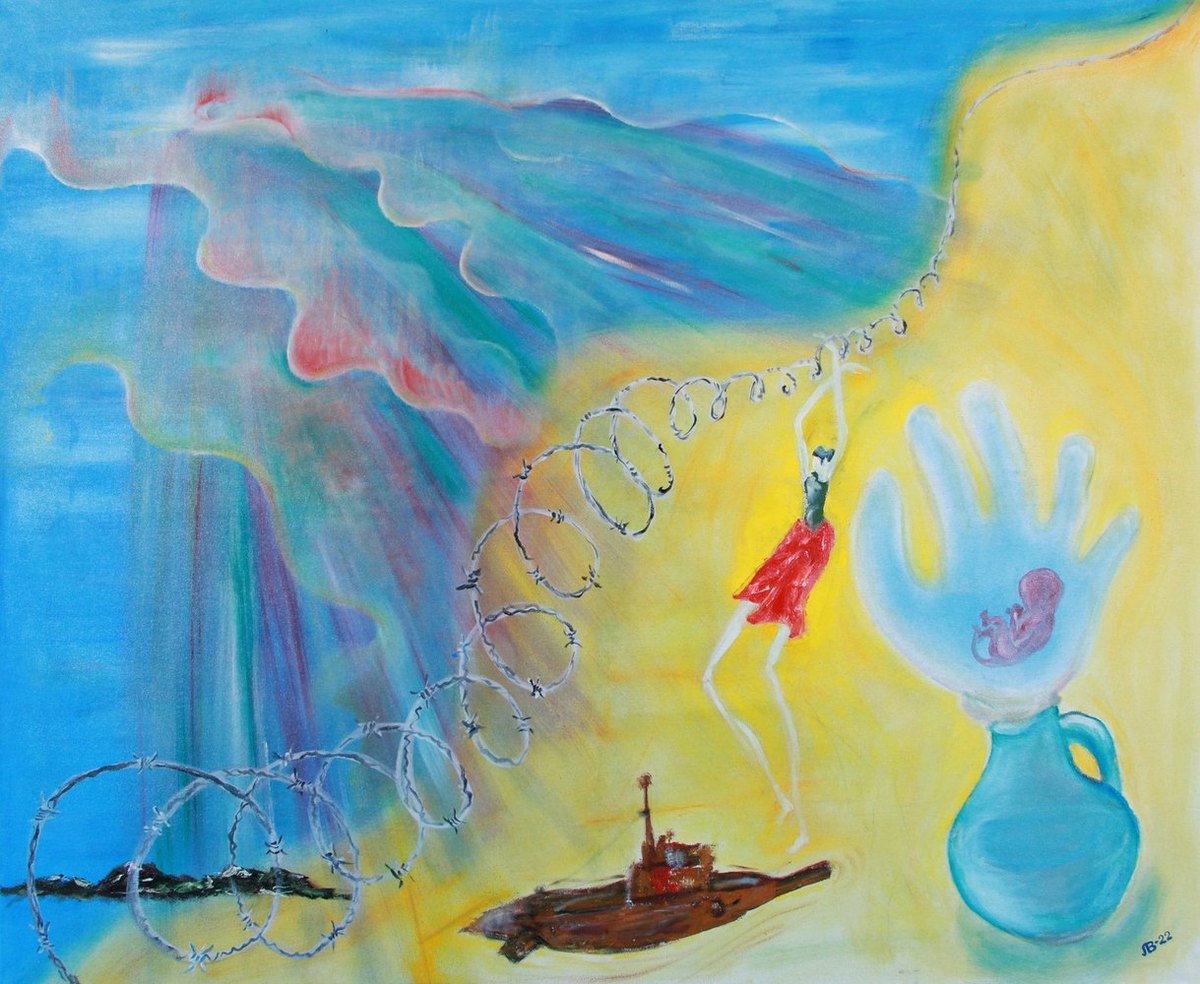
The project brings together twenty works created after the completion of the artist’s active professional career outside painting. This period became for him a time of inner reassessment, a return to forgotten artistic skills and a search for a new way to speak about personal experience. Informal communication with artists, the circumstances of the pandemic and personal upheavals intensified the need for painterly expression. The series records not so much external events as the state of a person confronted with a rapidly changing reality. In Vyacheslav Lee’s works, personal biography is joined with reflection on the turbulence of the modern world, anxiety, loneliness and the need for inner support. The project shows the development of the author’s language: from direct emotional impulse to a more conscious artistic position in which painting becomes a form of testimony, memory and philosophical self-definition.
Olga Viktorovna Nikolaeva
Olga Viktorovna Nikolaeva is an artist, Honorary Member of the International Academy of Contemporary Arts, member of the Creative Union of Artists of the Russian Federation, the Professional Union of Artists of Russia, the Union of Watercolorists of Russia, the International Art Fund, and a member and expert of the Eurasian Art Union. She was born in 1970.
The artist is a laureate of various creative competitions, including international projects, and an active participant in the exhibition process. Her professional biography includes more than 250 exhibitions in Europe, Asia and America. Olga Nikolaeva’s works are held in museum and private collections.
In 2020 Olga Nikolaeva developed her own authorial technique in the computer-digital direction of art. Her work is based on a constant search for new plastic and technological possibilities. Working mainly in a realistic manner, the artist turns to a wide range of themes - from classical landscape and still life to fantasy subjects. At the center of her artistic world is the beauty of being, the fragility of nature and the need for careful treatment of the environment. For the author, art becomes a way to remind the viewer of the uniqueness of every moment and of human responsibility toward the world inherited and passed on to future generations.
Project Description
The Project “A World of Reflections of Being”
The project “A World of Reflections of Being” is based on the connection between the artistic image and the possibilities of augmented reality. Its distinctive feature is the use of Olga Nikolaeva’s authorial computer-digital technique, developed in 2020. This technology expands the traditional idea of a work of art, allowing the viewer to perceive the image not only as a static composition, but also as a space of interaction.
The project includes landscapes, architectural motifs, animalistic subjects and floral compositions. They are united by the desire to show the beauty of the surrounding world as a value that requires attention and protection. The artist addresses motifs of nature and cultural memory not as decorative themes, but as images of a vulnerable, living space in which every element is linked to human responsibility. The realistic basis of the works is combined with a fantasy resonance, through which familiar images acquire emotional depth and symbolic expressiveness.
The meaning of the project is especially relevant in unstable modernity, when the preservation of historical landmarks, the natural environment, the animal world and human dignity becomes not an abstract idea, but an ethical task. Olga Nikolaeva proposes to view art as a form of testimony about time. In her interpretation, new technologies should serve peace, memory and creation, while contemporary art should preserve for future generations not a myth of vanished reality, but a visual experience of a living, dignified and careful attitude toward the world.
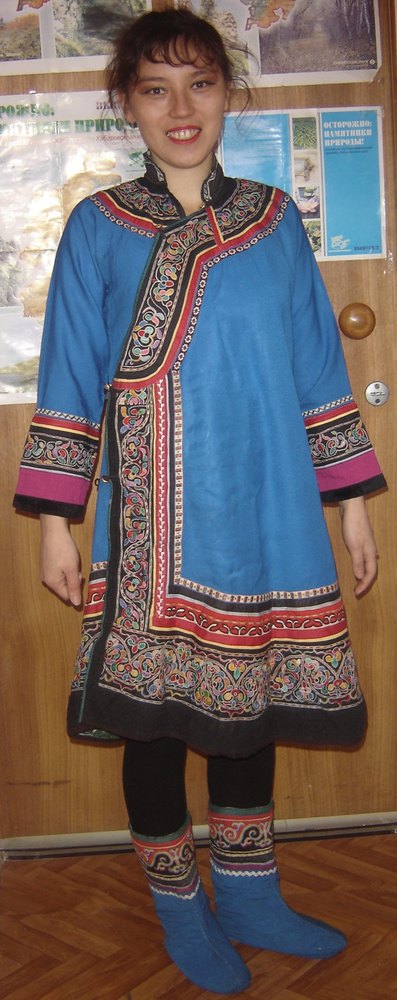
Natalia Yuryevna Burlakova
Biography. About the master. “Skin white as snow, beauty like a maiden from a terem. They breathe the wind, drink the dew and eat no grain. Riding the cloud pneuma, they fly on dragons and travel beyond the four seas... Nothing can harm such people: they will not drown even when the waters rise to the sky; they will not burn even in a great drought, when metals and stones melt and the soil and mountains grow red-hot.” This ancient poetic characterization, rooted in the texts of the “Treasury of Taoist Writings” of the second century BC, opens a space of mythological memory of the peoples of the Far East. For Natalia Burlakova, the appeal to Nanai cultural heritage is not an external ethnographic theme, but a deep source of artistic thinking.
Natalia Yuryevna Burlakova is a representative of the ancient Nanai Samar clan, a master of decorative and applied art whose work is connected with the preservation and contemporary interpretation of the traditions of the indigenous peoples of the Far North. She creates national Nanai women’s and men’s clothing, embroiders carpets with ethnic motifs, makes artistic panels and household objects from birch bark, works with wood, and creates chandeliers, masks, sculptures and miniature handmade objects devoted to the life and spiritual culture of the Nanai people. The artist was born on May 14, 1979 in the village of Tsimmermanovka, where she lived until 2008. After completing the tenth grade in 1995, she entered PONS - the Preparatory Department for the Peoples of the North - and remembers those years as a special time of community and support: “At PONS we lived like one big family.” From 1996 to 2001 she studied at the Far Eastern State Medical University. Her later professional biography was connected with construction and the mining industry: she held line positions, served as head of OPS and head of KES of military unit 30593, studied Building and Construction from 2010, and in 2012 became general director of Stroy Proekt LLC. From 2016 she worked in international mining companies as a distributor of explosive materials and head of an explosives warehouse, spending more than six years at Kinross Gold Corporation. In 2021 she graduated from Pacific National University in Khabarovsk in Mining Engineering, receiving the qualification of mining engineer for drilling and blasting operations and the right to supervise blasting at open-pit mines. Natalia Burlakova’s complex professional path is joined with the craft memory of her family: relatives help her create objects of decorative and applied art. She lives in Khabarovsk. Contact details: postal address - 680003, Russian Post, poste restante, Khabarovsk, Krasnorechenskaya 73; phone: +7 (909) 809-47-68 from 7:00 to 23:00 Khabarovsk time; e-mail: burlakova_natalya@inbox.ru, 89098094768@mail.ru.
Gennady Konstantinovich Komarov
Autobiography
Gennady Konstantinovich Komarov was born on November 8, 1943 in the village of Gornevo, Vacha District, Gorky Region. His childhood fell during the difficult postwar years: in March 1945 the family lost its father, and his mother was left with seven children. Komarov drew from an early age, and his first professional mentor, Mikhail Grigorievich Kopchenov, a teacher at the art studio of the district house of culture in Navashino, instilled in him a love of oil painting. It was he who first recommended the young artist’s studies for a district exhibition. After military service, Komarov worked as a drawing and drafting teacher, then as a graphic designer, head of a design bureau and deputy chief architect of a large defense enterprise. During this period he actively participated in city and regional exhibitions; among his mentors were members of the Union of Artists A. V. Morozov and M. K. Levin, as well as Kim Britov, then chairman of the regional artists’ union. In 1971 Komarov graduated from the Murom branch of the Moscow Mechanical Engineering Institute with a degree in Radio Equipment Design and soon attempted to enter the Moscow Higher School of Art and Industry - the Stroganov School - in painting. He passed the examinations successfully, but the admissions committee refused him enrollment, citing his age and already completed higher education. The artist did not return to Murom, wishing to establish himself in Moscow and later enter the evening department of the Stroganov School in design. Attempts to obtain Moscow residence registration through work in the housing system failed, and he joined the Moscow Regional Internal Affairs Directorate as an engineer with the condition of later referral to study. In a year he designed a communications console for police duty units, several examples of which were manufactured at the Institute for Nuclear Research in Dubna. Yet another attempt to enter the Stroganov School also failed. Service in the system of the Main Internal Affairs Directorate of the Moscow Regional Executive Committee became Komarov’s long professional path, but it did not stop his artistic development. After receiving officer rank, he entered the art circle at the M. B. Grekov Studio of Military Artists, where he studied for four years and could work with models. He never received a higher art education, but consistently pursued self-education: he studied casts and still lifes in studios, collected a home library on art, explored different painting schools, copied masters and painted portraits of beloved artists. He participated in exhibitions of amateur artists at various levels - regional, republican and once all-Union at the Manege - showed works in libraries and houses of culture in his native Khimki, painted “Kurkino Switzerland,” and after moving to Moscow turned to images of the Kolomenskoye estate and landscapes of the Moscow River embankment. Government service long determined the rhythm of his life: beginning with events in Sumgait and Stepanakert, Komarov worked in “hot spots,” heading one of the ministry’s main departments, which included the communications directorate. His understanding of political processes allowed him to reorganize the service and retire with the rank of colonel. After this the artist again focused on painting, creative freedom and the creation of his own studio. For some time he designed and built facilities for MTS PJSC in different regions of Russia and abroad, but acquiring a studio opened a new stage of creative growth. In March 2017 Komarov held a solo exhibition in his small homeland, at the Murom Orthodox Gymnasium named after Ilya Muromets. In October 2024, at the request of the gymnasium administration, an exhibition of his recent works was held there as well. Since 2024 he has been a member of the Eurasian Art Union and a participant in Russian and international exhibitions. Komarov is also the author of two books: “A Letter to My Grandson” (DelLibri Publishing House, Moscow, 2010) and “My Mistress” (Bukvalno Publishing House, Saint Petersburg, 2019). He has government awards from the USSR, Russia and a number of foreign states, and is an honorary radio operator of the USSR.
Project Description
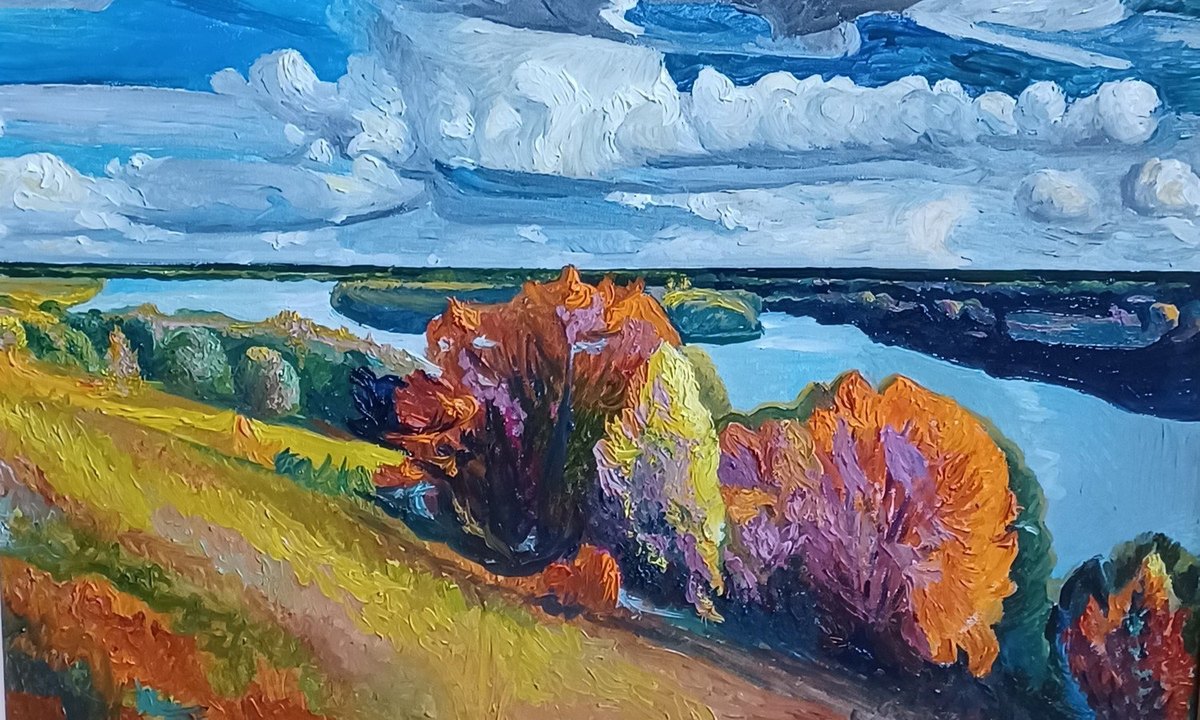
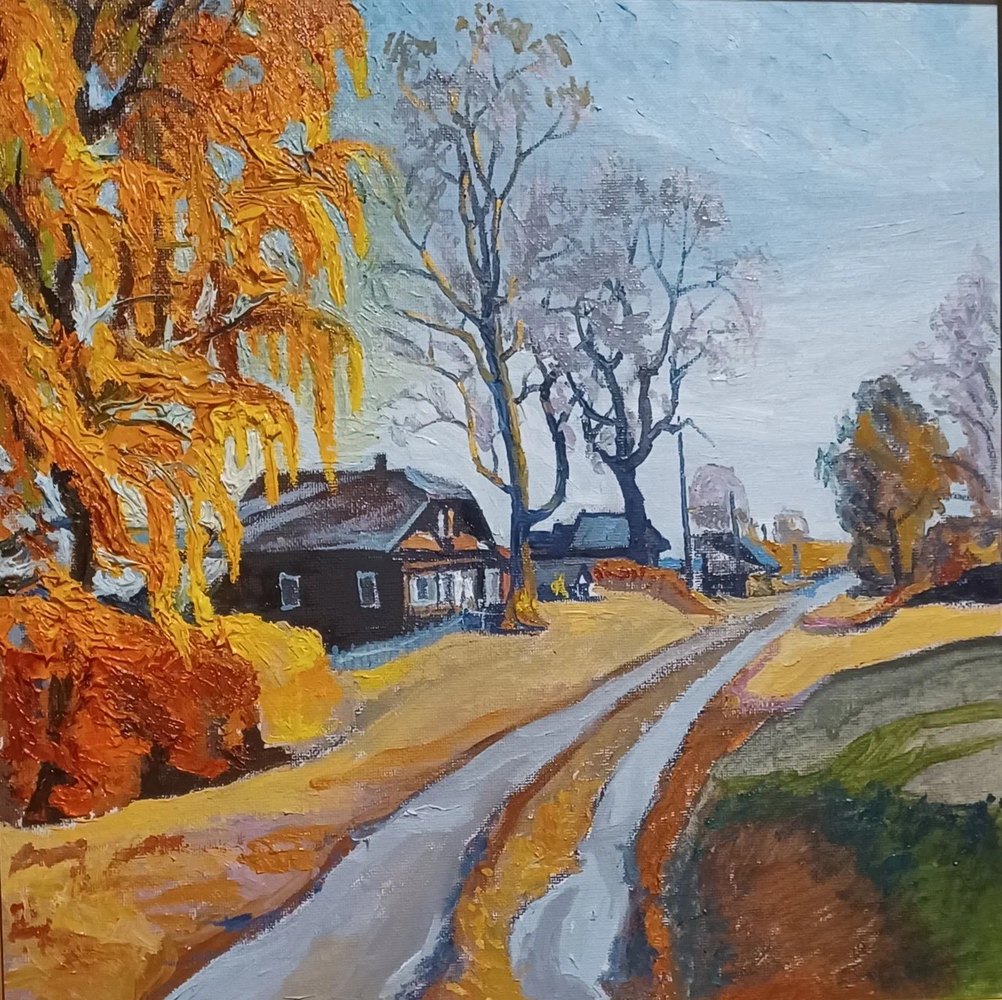
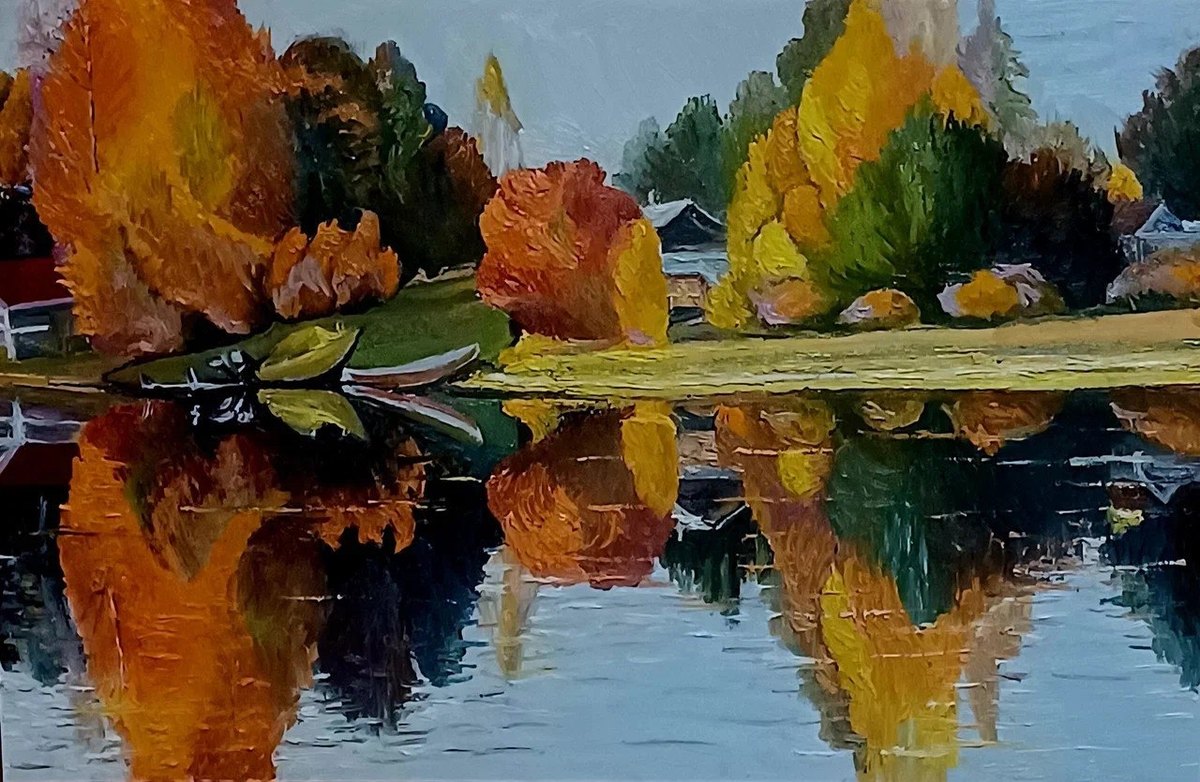
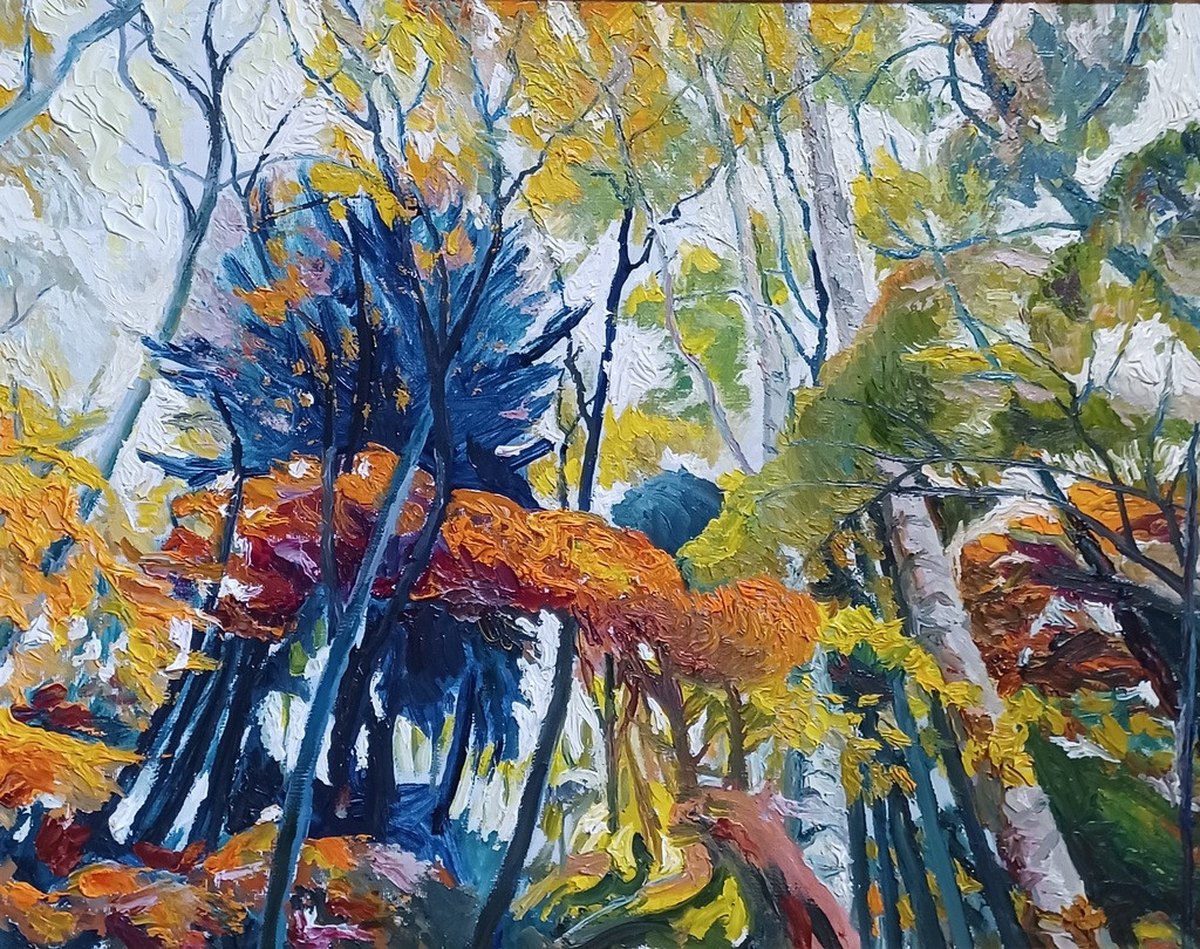
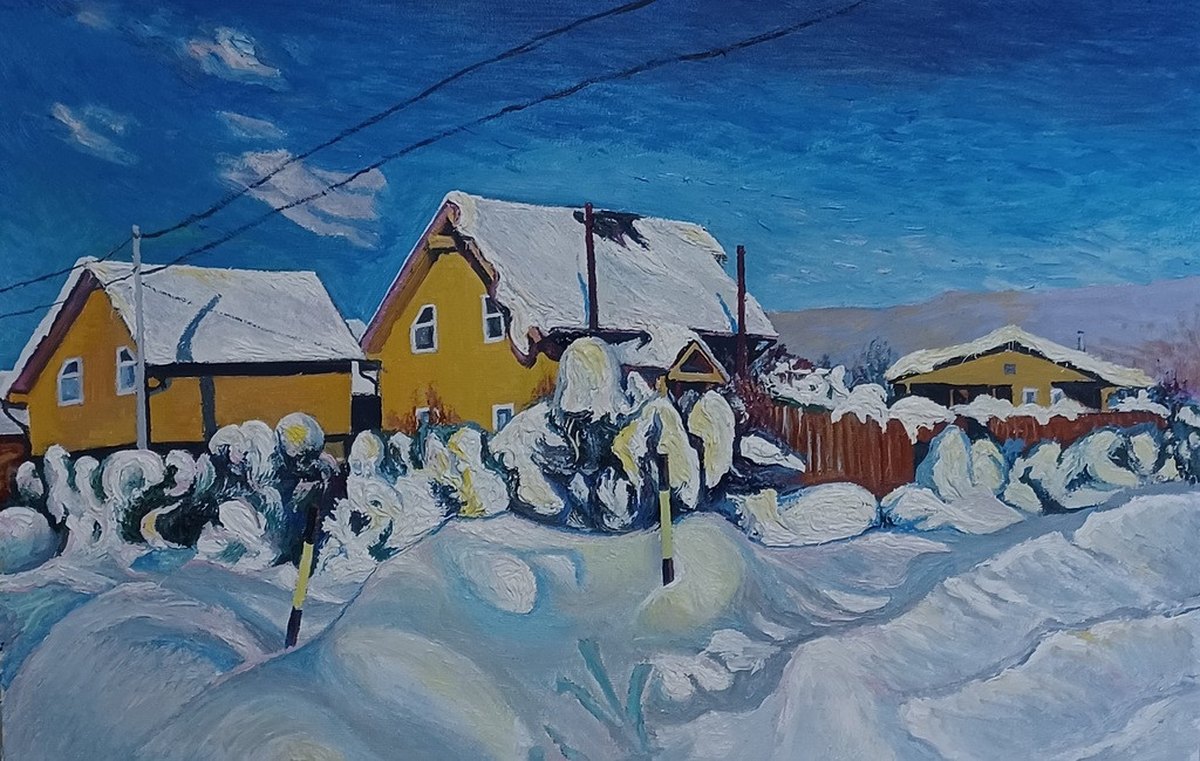
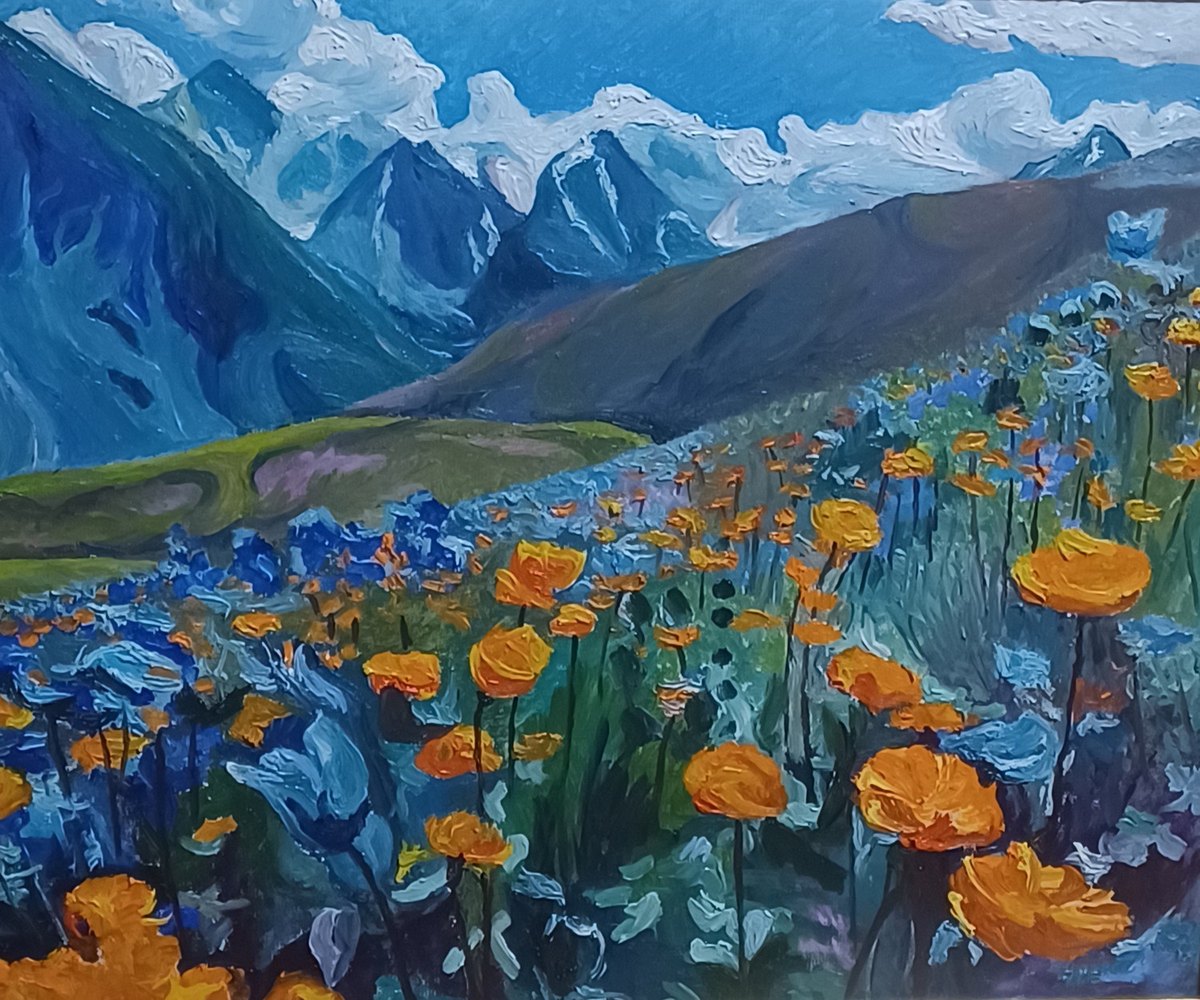
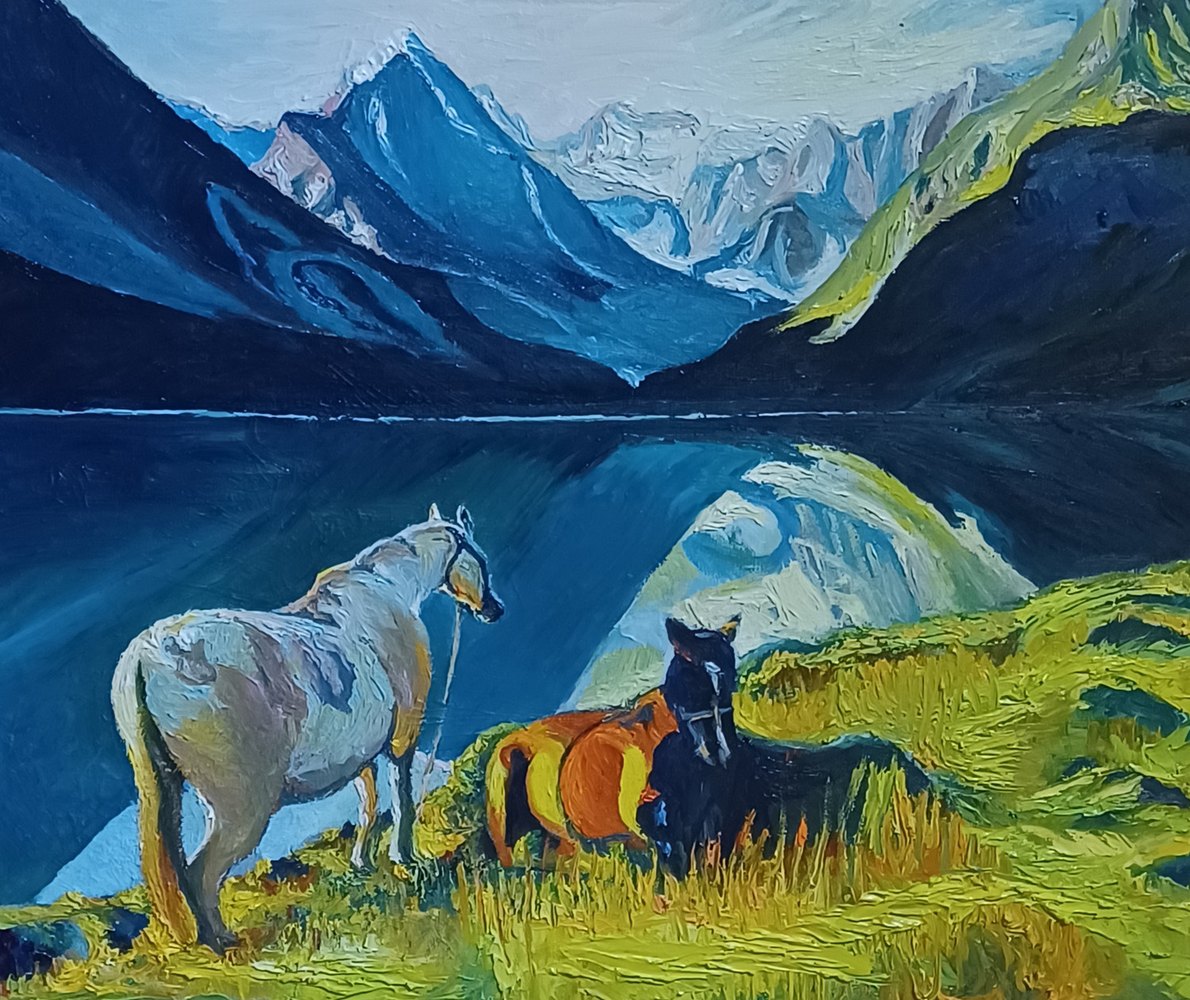
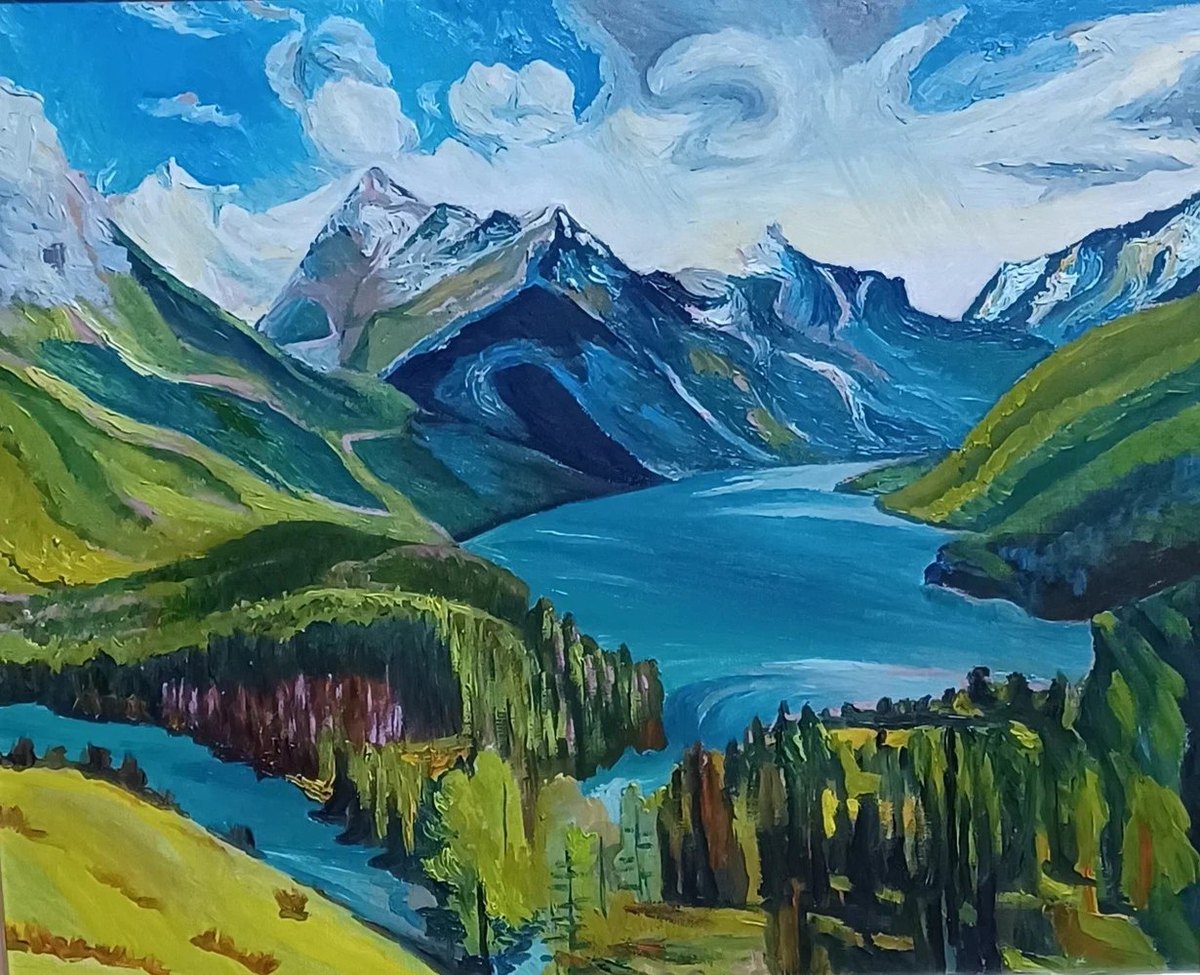
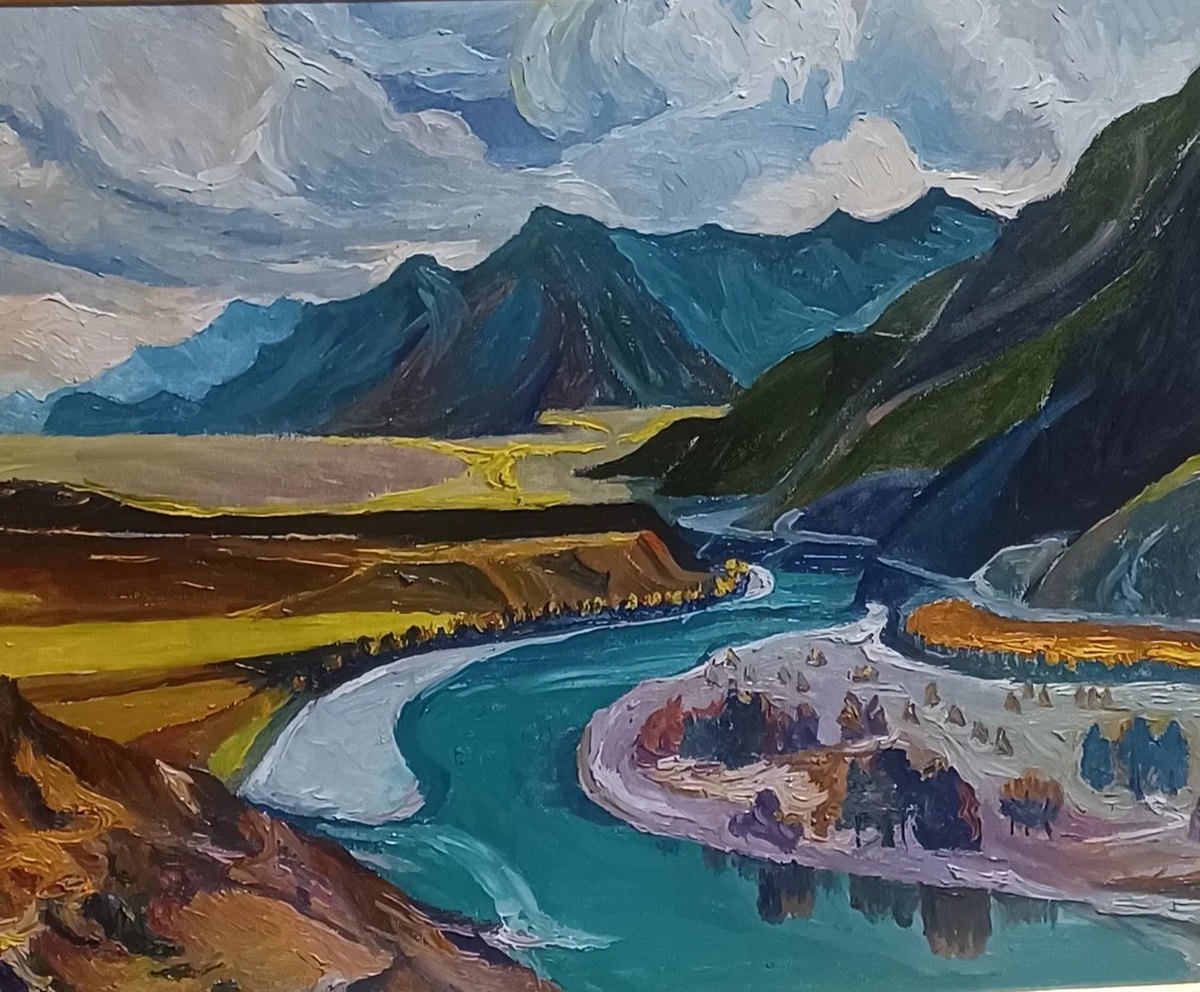
The project presents works by Gennady Komarov from 2022 to 2026. The basis of the exhibition consists of landscapes from the cycle “My Small Homeland,” created from early studies made in the surroundings of Murom in the Vladimir Region. These works address the memory of place and the inner image of native land, where the artist’s personal biography is joined with the stable tradition of the Russian landscape school. The project also includes works of the Moscow period, praising the Moscow region, including places connected with the artist’s nearby dacha not far from Zelenograd. A separate layer is formed by recent landscapes of the area around his more distant dacha, where the artist has a studio and currently lives - the Lesnye Ozera settlement in the Aleksandrov District of the Vladimir Region. Special significance belongs to works painted in memory of his friend Vladimir Saiko: the series “The Small Homeland of a Friend” turns to images of Mountain Altai, one of the most majestic natural territories of Russia. Together, these works reveal the project’s main theme - the extraordinary, captivating beauty of Russian nature as seen by a person for whom landscape is not only a motif of depiction, but also a form of grateful memory, inner return and artistic testimony.
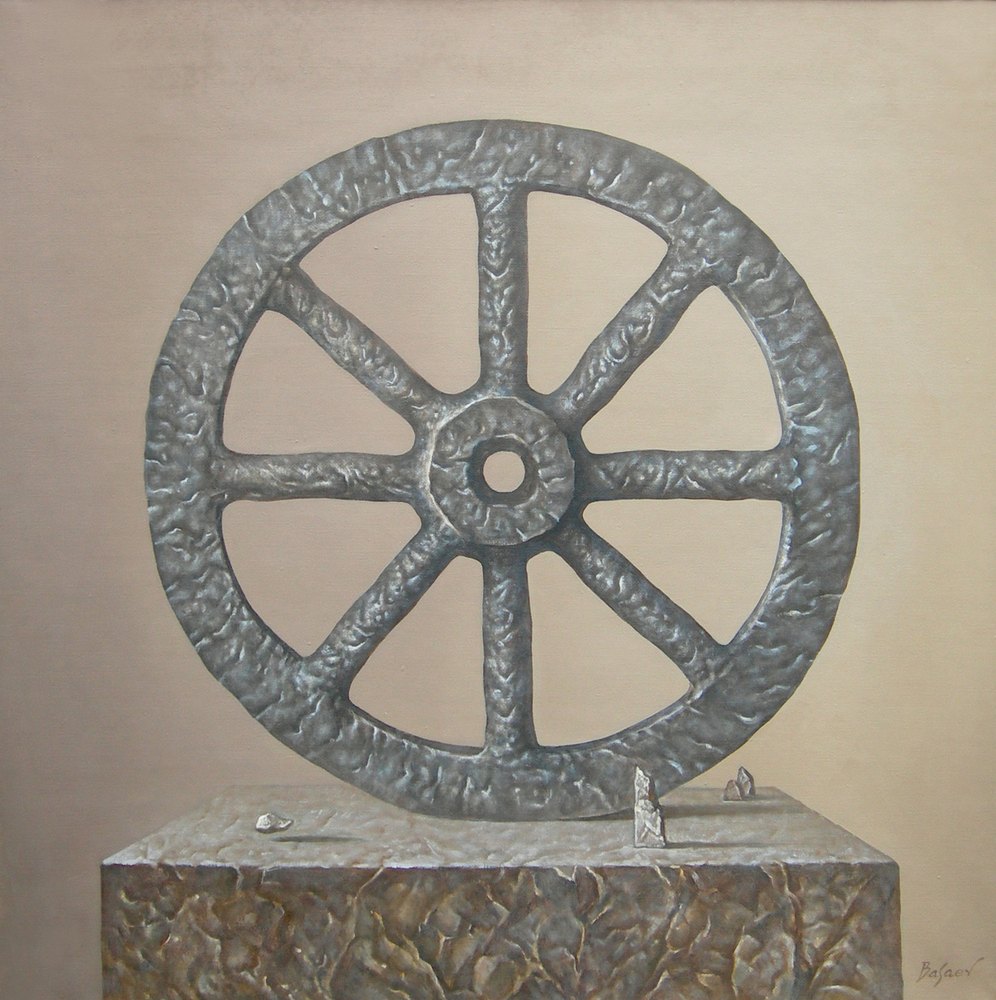
In Stone Wheel, Oleg Basaev develops his characteristic metaphysical language through a stone wheel on a cube, a symbol of motion turned into memory and fate. The composition is not built as a narrative scene, but as a field of concentrated contemplation. Objects and forms are removed from everyday usefulness and placed in a conditional space where gravity, silence and memory begin to work according to another order. The viewer is invited not simply to recognize things, but to watch how they become signs: heavy matter turns into a bearer of time, a small shift in balance becomes an event, and a restrained colour range opens a philosophical depth behind the visible surface.
Within VerbArt Venice Digital Edition 2026, the work enters an international dialogue as an image of cultural memory and inner tension. Basaev does not illustrate Venice directly; rather, he speaks in a language close to the Venetian experience of stone, reflection, historical layering and fragile equilibrium. The artistic value of the work lies in its ability to combine academic clarity with symbolic ambiguity. Each object remains convincing as matter, yet at the same time becomes a model of human experience - movement and stillness, order and fracture, the desire for freedom and the weight of the past.
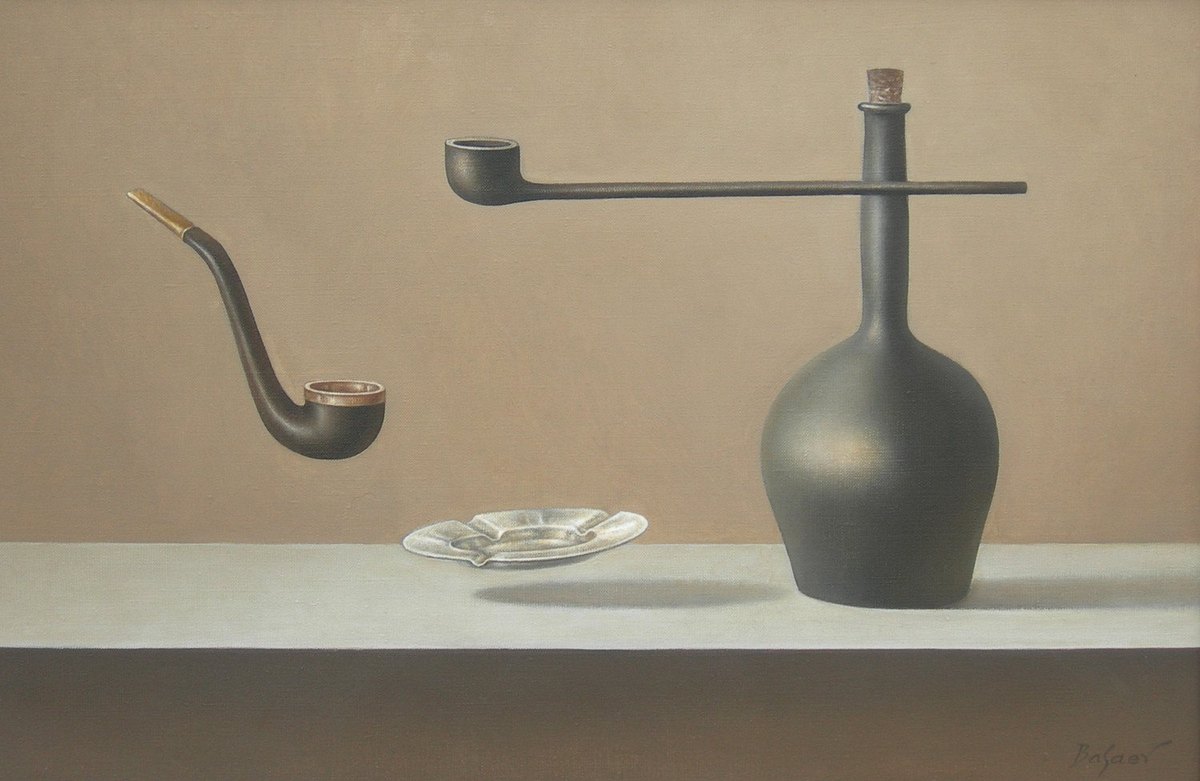
In Two Pipes, Oleg Basaev develops his characteristic metaphysical language through floating pipes, a suspended ashtray and a closed bottle forming a silent metaphysical dialogue. The composition is not built as a narrative scene, but as a field of concentrated contemplation. Objects and forms are removed from everyday usefulness and placed in a conditional space where gravity, silence and memory begin to work according to another order. The viewer is invited not simply to recognize things, but to watch how they become signs: heavy matter turns into a bearer of time, a small shift in balance becomes an event, and a restrained colour range opens a philosophical depth behind the visible surface.
Within VerbArt Venice Digital Edition 2026, the work enters an international dialogue as an image of cultural memory and inner tension. Basaev does not illustrate Venice directly; rather, he speaks in a language close to the Venetian experience of stone, reflection, historical layering and fragile equilibrium. The artistic value of the work lies in its ability to combine academic clarity with symbolic ambiguity. Each object remains convincing as matter, yet at the same time becomes a model of human experience - movement and stillness, order and fracture, the desire for freedom and the weight of the past.
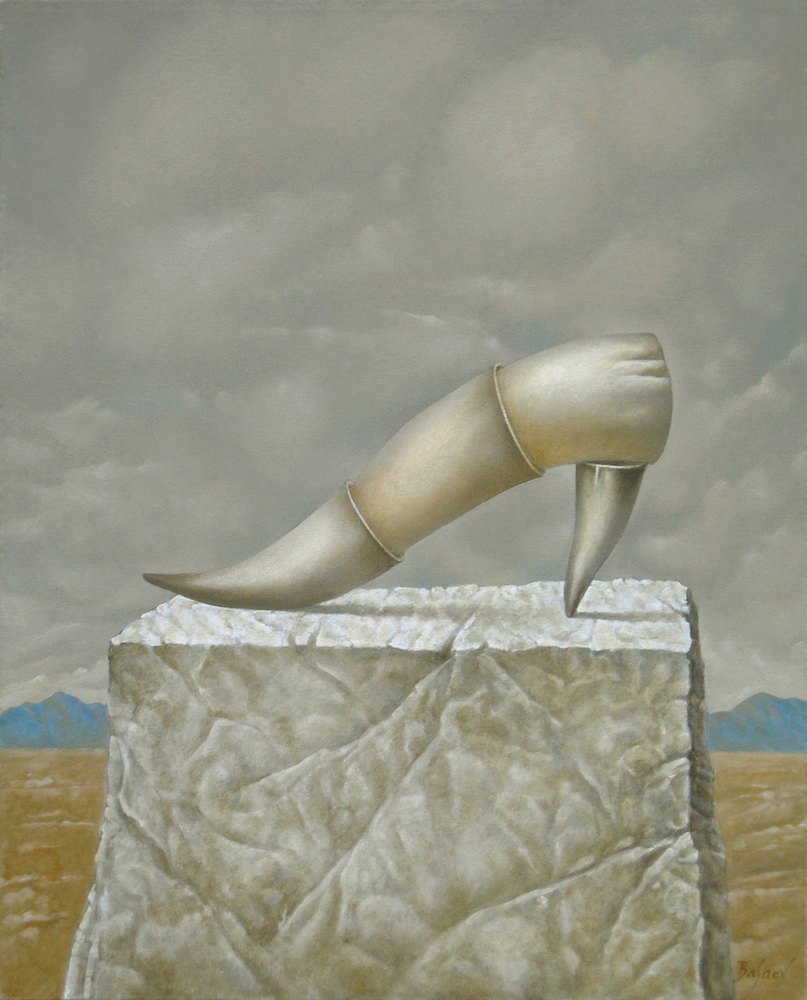
In Metamorphoses, Oleg Basaev develops his characteristic metaphysical language through objects that lose their original function and become ambiguous signs of transformation. The composition is not built as a narrative scene, but as a field of concentrated contemplation. Objects and forms are removed from everyday usefulness and placed in a conditional space where gravity, silence and memory begin to work according to another order. The viewer is invited not simply to recognize things, but to watch how they become signs: heavy matter turns into a bearer of time, a small shift in balance becomes an event, and a restrained colour range opens a philosophical depth behind the visible surface.
Within VerbArt Venice Digital Edition 2026, the work enters an international dialogue as an image of cultural memory and inner tension. Basaev does not illustrate Venice directly; rather, he speaks in a language close to the Venetian experience of stone, reflection, historical layering and fragile equilibrium. The artistic value of the work lies in its ability to combine academic clarity with symbolic ambiguity. Each object remains convincing as matter, yet at the same time becomes a model of human experience - movement and stillness, order and fracture, the desire for freedom and the weight of the past.
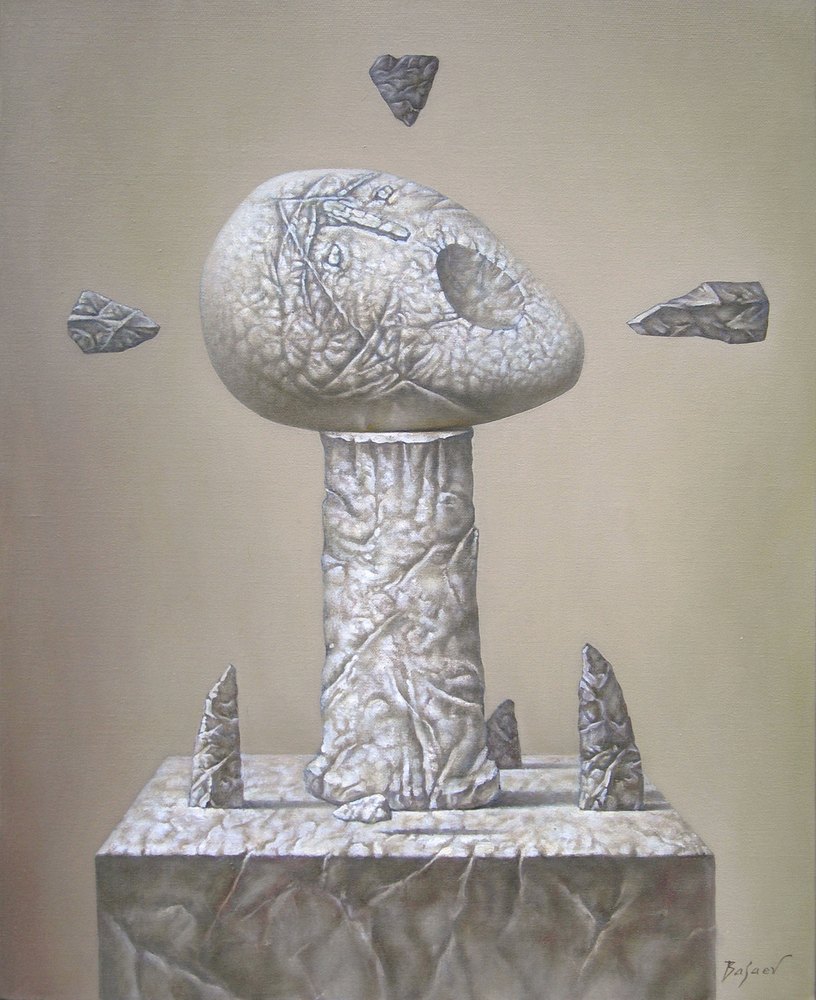
In Scream, Oleg Basaev develops his characteristic metaphysical language through a stone head and sharp fragments that translate collective fear into mute matter. The composition is not built as a narrative scene, but as a field of concentrated contemplation. Objects and forms are removed from everyday usefulness and placed in a conditional space where gravity, silence and memory begin to work according to another order. The viewer is invited not simply to recognize things, but to watch how they become signs: heavy matter turns into a bearer of time, a small shift in balance becomes an event, and a restrained colour range opens a philosophical depth behind the visible surface.
Within VerbArt Venice Digital Edition 2026, the work enters an international dialogue as an image of cultural memory and inner tension. Basaev does not illustrate Venice directly; rather, he speaks in a language close to the Venetian experience of stone, reflection, historical layering and fragile equilibrium. The artistic value of the work lies in its ability to combine academic clarity with symbolic ambiguity. Each object remains convincing as matter, yet at the same time becomes a model of human experience - movement and stillness, order and fracture, the desire for freedom and the weight of the past.
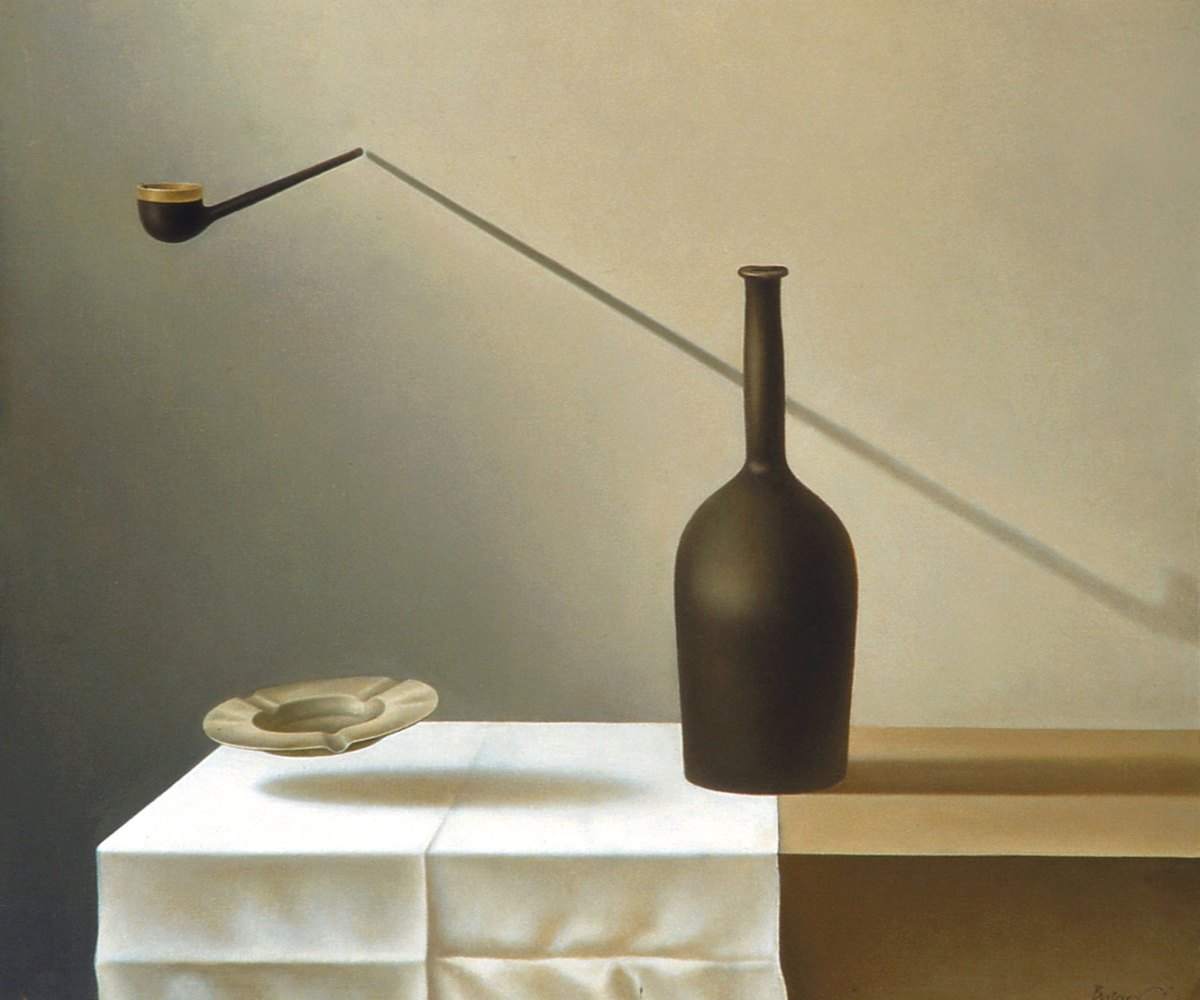
In Long Shadow from a Pipe, Oleg Basaev develops his characteristic metaphysical language through a pipe whose shadow becomes more important than the object itself. The composition is not built as a narrative scene, but as a field of concentrated contemplation. Objects and forms are removed from everyday usefulness and placed in a conditional space where gravity, silence and memory begin to work according to another order. The viewer is invited not simply to recognize things, but to watch how they become signs: heavy matter turns into a bearer of time, a small shift in balance becomes an event, and a restrained colour range opens a philosophical depth behind the visible surface.
Within VerbArt Venice Digital Edition 2026, the work enters an international dialogue as an image of cultural memory and inner tension. Basaev does not illustrate Venice directly; rather, he speaks in a language close to the Venetian experience of stone, reflection, historical layering and fragile equilibrium. The artistic value of the work lies in its ability to combine academic clarity with symbolic ambiguity. Each object remains convincing as matter, yet at the same time becomes a model of human experience - movement and stillness, order and fracture, the desire for freedom and the weight of the past.
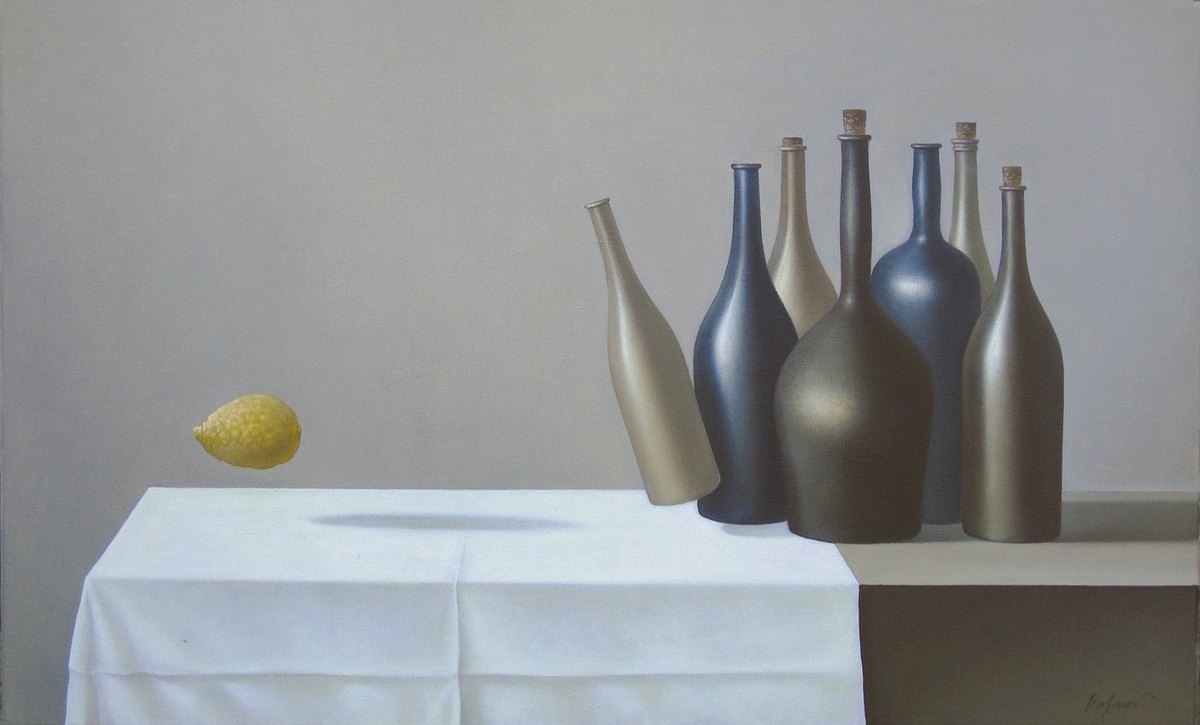
In Still Life with Bottles and a Lemon, Oleg Basaev develops his characteristic metaphysical language through dark vessels and a floating yellow lemon set against a white plane. The composition is not built as a narrative scene, but as a field of concentrated contemplation. Objects and forms are removed from everyday usefulness and placed in a conditional space where gravity, silence and memory begin to work according to another order. The viewer is invited not simply to recognize things, but to watch how they become signs: heavy matter turns into a bearer of time, a small shift in balance becomes an event, and a restrained colour range opens a philosophical depth behind the visible surface.
Within VerbArt Venice Digital Edition 2026, the work enters an international dialogue as an image of cultural memory and inner tension. Basaev does not illustrate Venice directly; rather, he speaks in a language close to the Venetian experience of stone, reflection, historical layering and fragile equilibrium. The artistic value of the work lies in its ability to combine academic clarity with symbolic ambiguity. Each object remains convincing as matter, yet at the same time becomes a model of human experience - movement and stillness, order and fracture, the desire for freedom and the weight of the past.
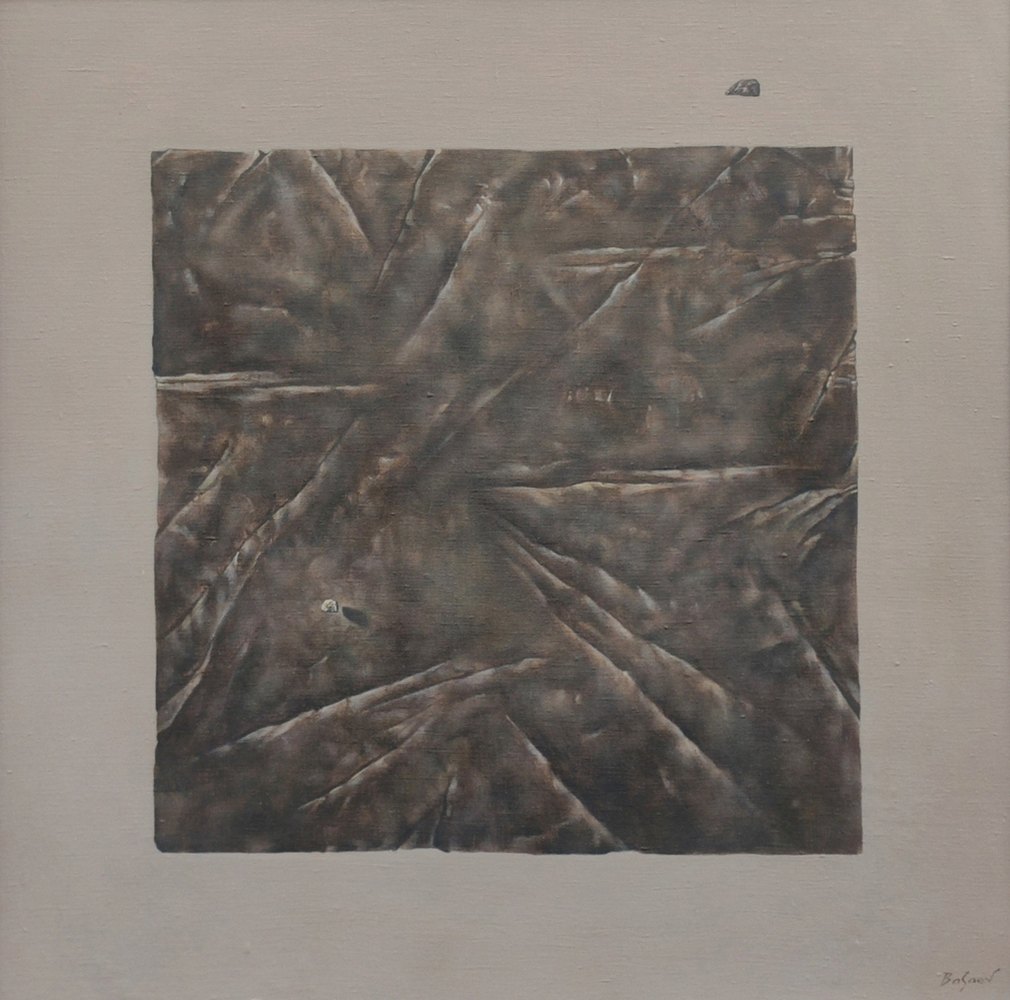
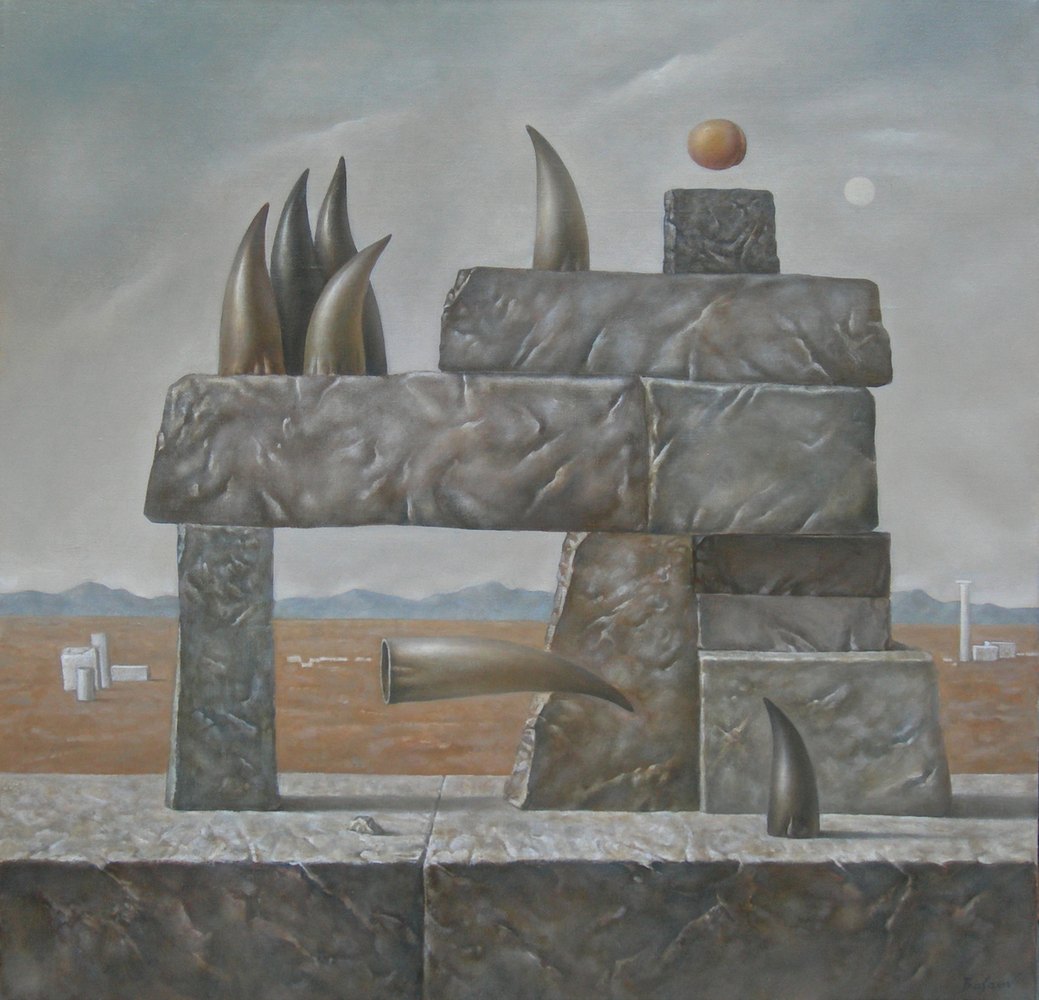
In Stone Square, Oleg Basaev develops his characteristic metaphysical language through a dialogue with the legacy of the square and the transformation of a pure sign into aging stone. The composition is not built as a narrative scene, but as a field of concentrated contemplation. Objects and forms are removed from everyday usefulness and placed in a conditional space where gravity, silence and memory begin to work according to another order. The viewer is invited not simply to recognize things, but to watch how they become signs: heavy matter turns into a bearer of time, a small shift in balance becomes an event, and a restrained colour range opens a philosophical depth behind the visible surface.
Within VerbArt Venice Digital Edition 2026, the work enters an international dialogue as an image of cultural memory and inner tension. Basaev does not illustrate Venice directly; rather, he speaks in a language close to the Venetian experience of stone, reflection, historical layering and fragile equilibrium. The artistic value of the work lies in its ability to combine academic clarity with symbolic ambiguity. Each object remains convincing as matter, yet at the same time becomes a model of human experience - movement and stillness, order and fracture, the desire for freedom and the weight of the past.
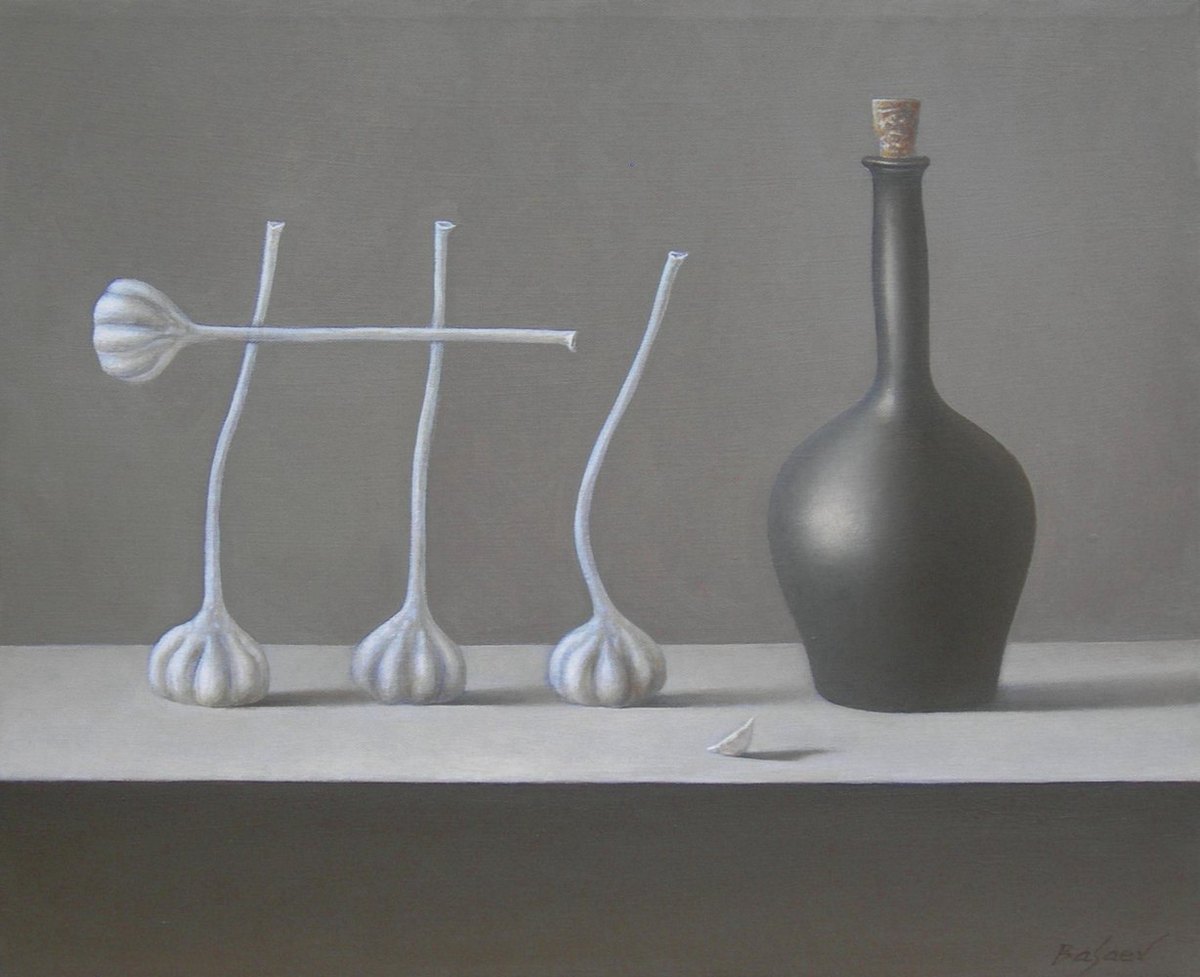
In Still Life with Garlic, Oleg Basaev develops his characteristic metaphysical language through ordinary garlic and a bottle transformed into a strict ritual arrangement. The composition is not built as a narrative scene, but as a field of concentrated contemplation. Objects and forms are removed from everyday usefulness and placed in a conditional space where gravity, silence and memory begin to work according to another order. The viewer is invited not simply to recognize things, but to watch how they become signs: heavy matter turns into a bearer of time, a small shift in balance becomes an event, and a restrained colour range opens a philosophical depth behind the visible surface.
Within VerbArt Venice Digital Edition 2026, the work enters an international dialogue as an image of cultural memory and inner tension. Basaev does not illustrate Venice directly; rather, he speaks in a language close to the Venetian experience of stone, reflection, historical layering and fragile equilibrium. The artistic value of the work lies in its ability to combine academic clarity with symbolic ambiguity. Each object remains convincing as matter, yet at the same time becomes a model of human experience - movement and stillness, order and fracture, the desire for freedom and the weight of the past.
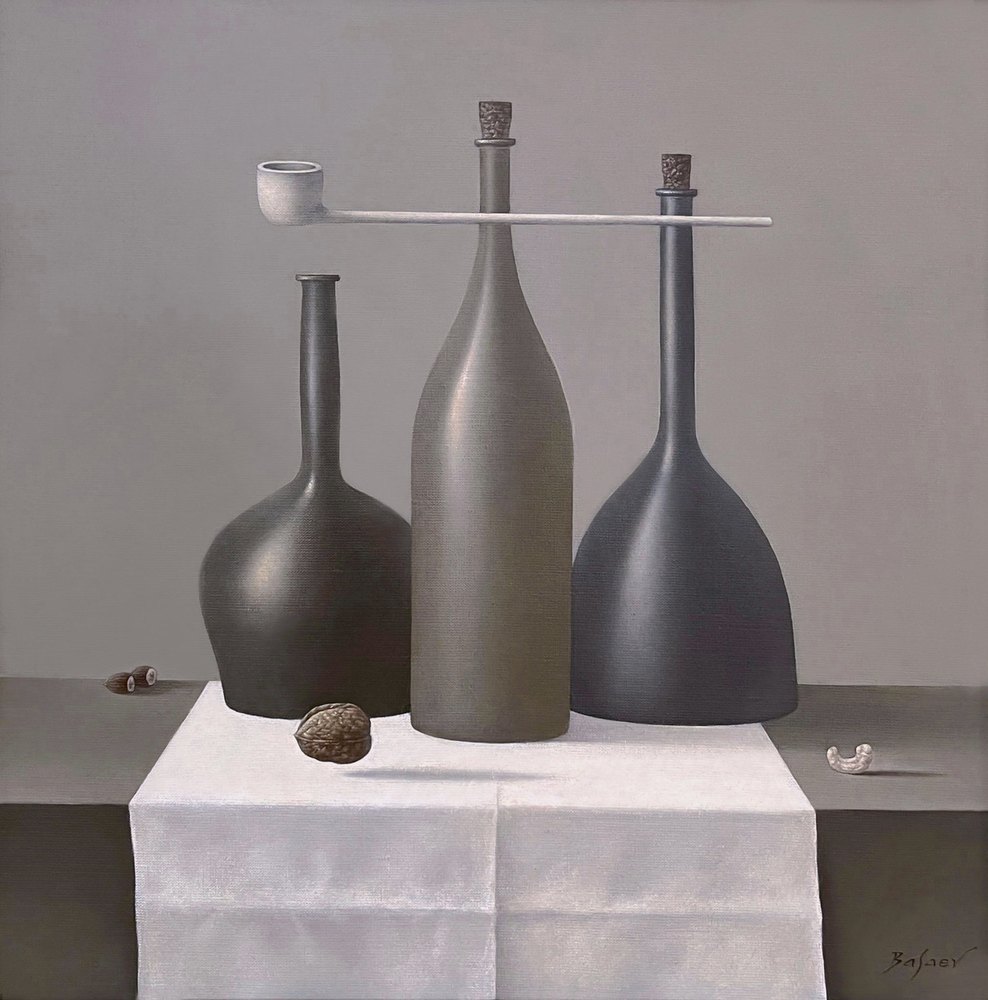
In Still Life with a White Pipe, Oleg Basaev develops his characteristic metaphysical language through bottles, nuts and a white pipe arranged as a closed world with its own laws. The composition is not built as a narrative scene, but as a field of concentrated contemplation. Objects and forms are removed from everyday usefulness and placed in a conditional space where gravity, silence and memory begin to work according to another order. The viewer is invited not simply to recognize things, but to watch how they become signs: heavy matter turns into a bearer of time, a small shift in balance becomes an event, and a restrained colour range opens a philosophical depth behind the visible surface.
Within VerbArt Venice Digital Edition 2026, the work enters an international dialogue as an image of cultural memory and inner tension. Basaev does not illustrate Venice directly; rather, he speaks in a language close to the Venetian experience of stone, reflection, historical layering and fragile equilibrium. The artistic value of the work lies in its ability to combine academic clarity with symbolic ambiguity. Each object remains convincing as matter, yet at the same time becomes a model of human experience - movement and stillness, order and fracture, the desire for freedom and the weight of the past.
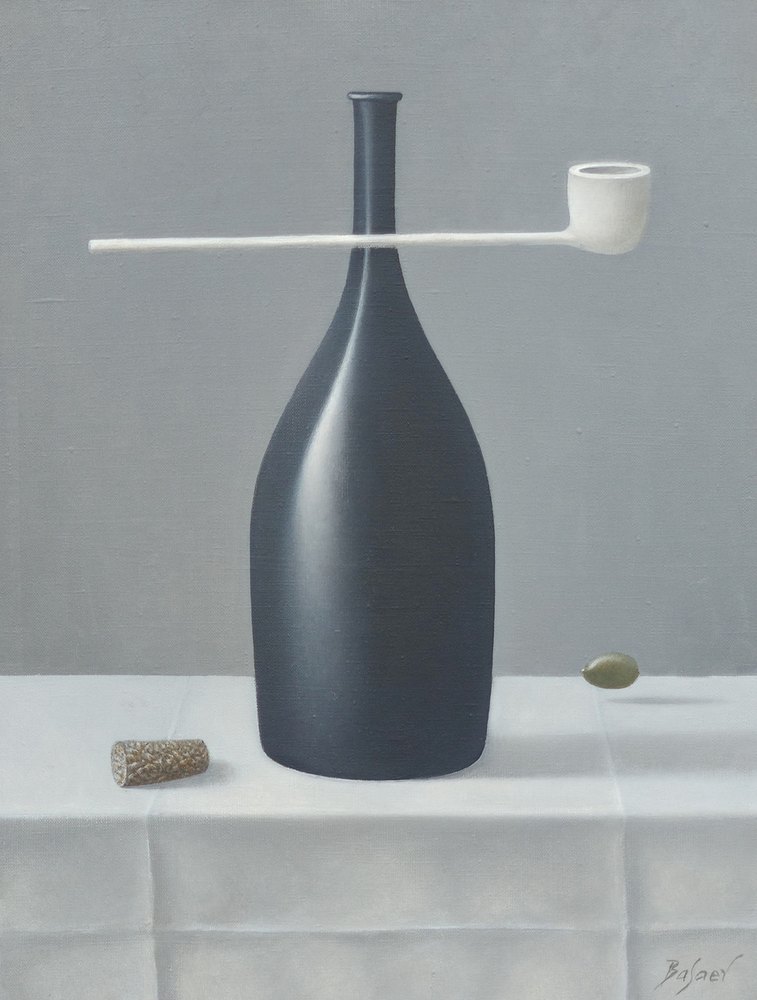
In Still Life with a Bottle, a Pipe and an Olive, Oleg Basaev develops his characteristic metaphysical language through a minimal scene where a bottle, a pipe, a cork and a floating olive create a philosophical balance. The composition is not built as a narrative scene, but as a field of concentrated contemplation. Objects and forms are removed from everyday usefulness and placed in a conditional space where gravity, silence and memory begin to work according to another order. The viewer is invited not simply to recognize things, but to watch how they become signs: heavy matter turns into a bearer of time, a small shift in balance becomes an event, and a restrained colour range opens a philosophical depth behind the visible surface.
Within VerbArt Venice Digital Edition 2026, the work enters an international dialogue as an image of cultural memory and inner tension. Basaev does not illustrate Venice directly; rather, he speaks in a language close to the Venetian experience of stone, reflection, historical layering and fragile equilibrium. The artistic value of the work lies in its ability to combine academic clarity with symbolic ambiguity. Each object remains convincing as matter, yet at the same time becomes a model of human experience - movement and stillness, order and fracture, the desire for freedom and the weight of the past.
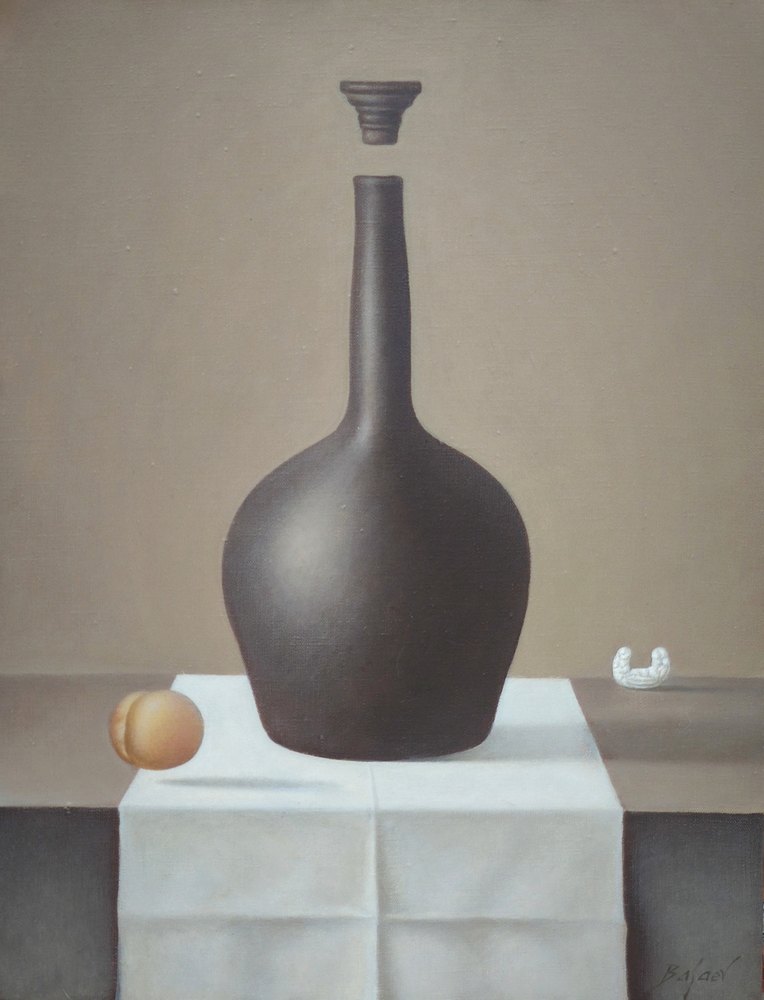
In Still Life with a Bottle, Cashew and Apricot, Oleg Basaev develops his characteristic metaphysical language through a small world of bottle, fruit and nut, where the lifting of a lid suggests release. The composition is not built as a narrative scene, but as a field of concentrated contemplation. Objects and forms are removed from everyday usefulness and placed in a conditional space where gravity, silence and memory begin to work according to another order. The viewer is invited not simply to recognize things, but to watch how they become signs: heavy matter turns into a bearer of time, a small shift in balance becomes an event, and a restrained colour range opens a philosophical depth behind the visible surface.
Within VerbArt Venice Digital Edition 2026, the work enters an international dialogue as an image of cultural memory and inner tension. Basaev does not illustrate Venice directly; rather, he speaks in a language close to the Venetian experience of stone, reflection, historical layering and fragile equilibrium. The artistic value of the work lies in its ability to combine academic clarity with symbolic ambiguity. Each object remains convincing as matter, yet at the same time becomes a model of human experience - movement and stillness, order and fracture, the desire for freedom and the weight of the past.
In Metamorphoses, Oleg Basaev develops his characteristic metaphysical language through objects that lose their original function and become ambiguous signs of transformation. The composition is not built as a narrative scene, but as a field of concentrated contemplation. Objects and forms are removed from everyday usefulness and placed in a conditional space where gravity, silence and memory begin to work according to another order. The viewer is invited not simply to recognize things, but to watch how they become signs: heavy matter turns into a bearer of time, a small shift in balance becomes an event, and a restrained colour range opens a philosophical depth behind the visible surface.
Within VerbArt Venice Digital Edition 2026, the work enters an international dialogue as an image of cultural memory and inner tension. Basaev does not illustrate Venice directly; rather, he speaks in a language close to the Venetian experience of stone, reflection, historical layering and fragile equilibrium. The artistic value of the work lies in its ability to combine academic clarity with symbolic ambiguity. Each object remains convincing as matter, yet at the same time becomes a model of human experience - movement and stillness, order and fracture, the desire for freedom and the weight of the past.
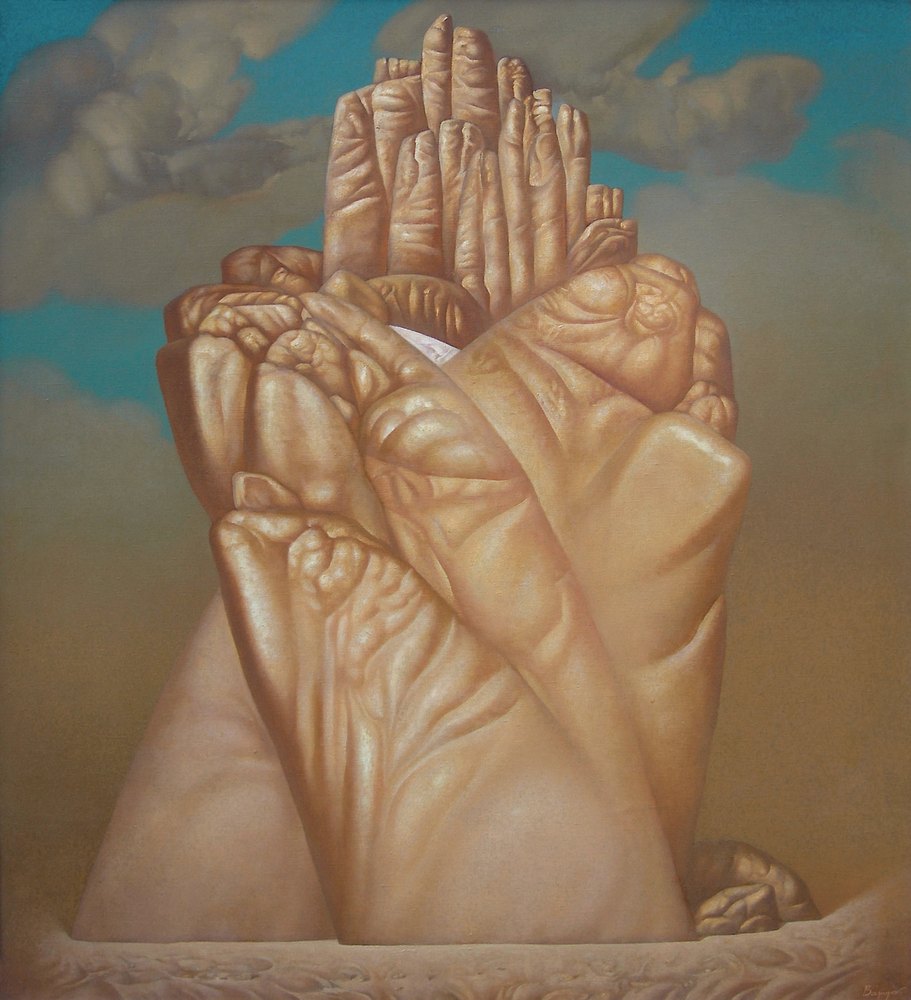
In Rock, Oleg Basaev develops his characteristic metaphysical language through a rock formation that becomes a gesture of aspiration, prayer and ascent. The composition is not built as a narrative scene, but as a field of concentrated contemplation. Objects and forms are removed from everyday usefulness and placed in a conditional space where gravity, silence and memory begin to work according to another order. The viewer is invited not simply to recognize things, but to watch how they become signs: heavy matter turns into a bearer of time, a small shift in balance becomes an event, and a restrained colour range opens a philosophical depth behind the visible surface.
Within VerbArt Venice Digital Edition 2026, the work enters an international dialogue as an image of cultural memory and inner tension. Basaev does not illustrate Venice directly; rather, he speaks in a language close to the Venetian experience of stone, reflection, historical layering and fragile equilibrium. The artistic value of the work lies in its ability to combine academic clarity with symbolic ambiguity. Each object remains convincing as matter, yet at the same time becomes a model of human experience - movement and stillness, order and fracture, the desire for freedom and the weight of the past.
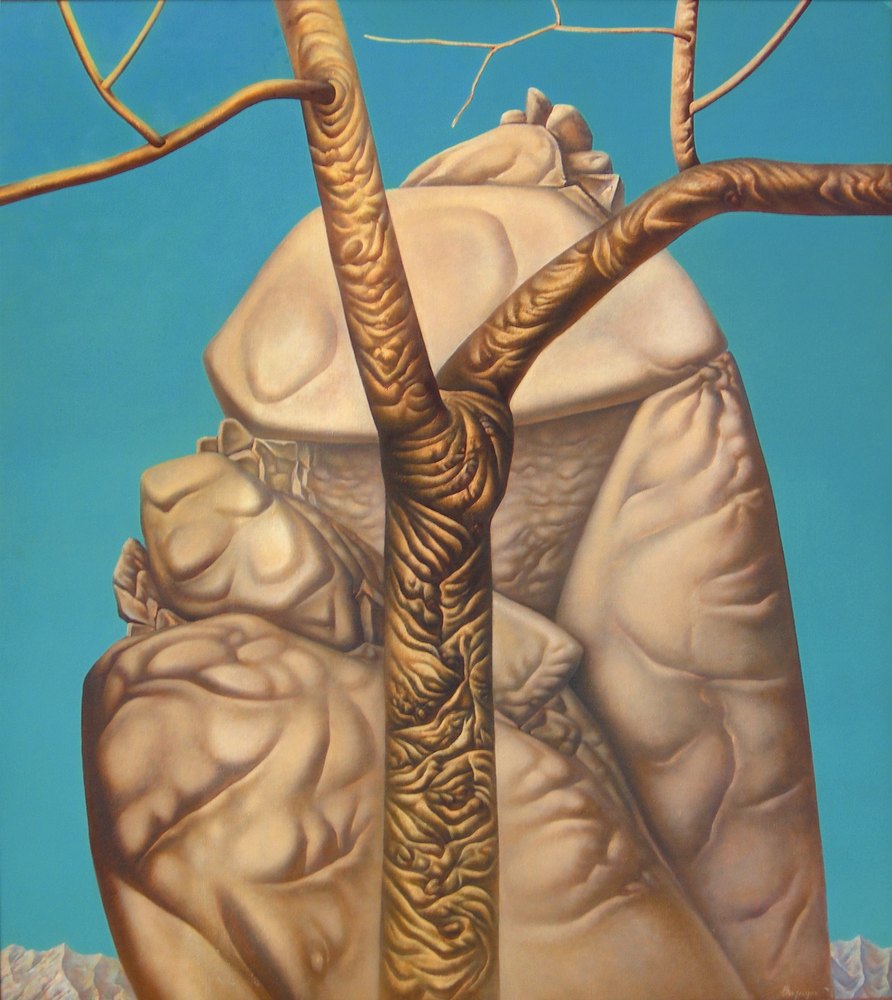
In Rock and Tree, Oleg Basaev develops his characteristic metaphysical language through tree and stone shown as parts of one living organism. The composition is not built as a narrative scene, but as a field of concentrated contemplation. Objects and forms are removed from everyday usefulness and placed in a conditional space where gravity, silence and memory begin to work according to another order. The viewer is invited not simply to recognize things, but to watch how they become signs: heavy matter turns into a bearer of time, a small shift in balance becomes an event, and a restrained colour range opens a philosophical depth behind the visible surface.
Within VerbArt Venice Digital Edition 2026, the work enters an international dialogue as an image of cultural memory and inner tension. Basaev does not illustrate Venice directly; rather, he speaks in a language close to the Venetian experience of stone, reflection, historical layering and fragile equilibrium. The artistic value of the work lies in its ability to combine academic clarity with symbolic ambiguity. Each object remains convincing as matter, yet at the same time becomes a model of human experience - movement and stillness, order and fracture, the desire for freedom and the weight of the past.
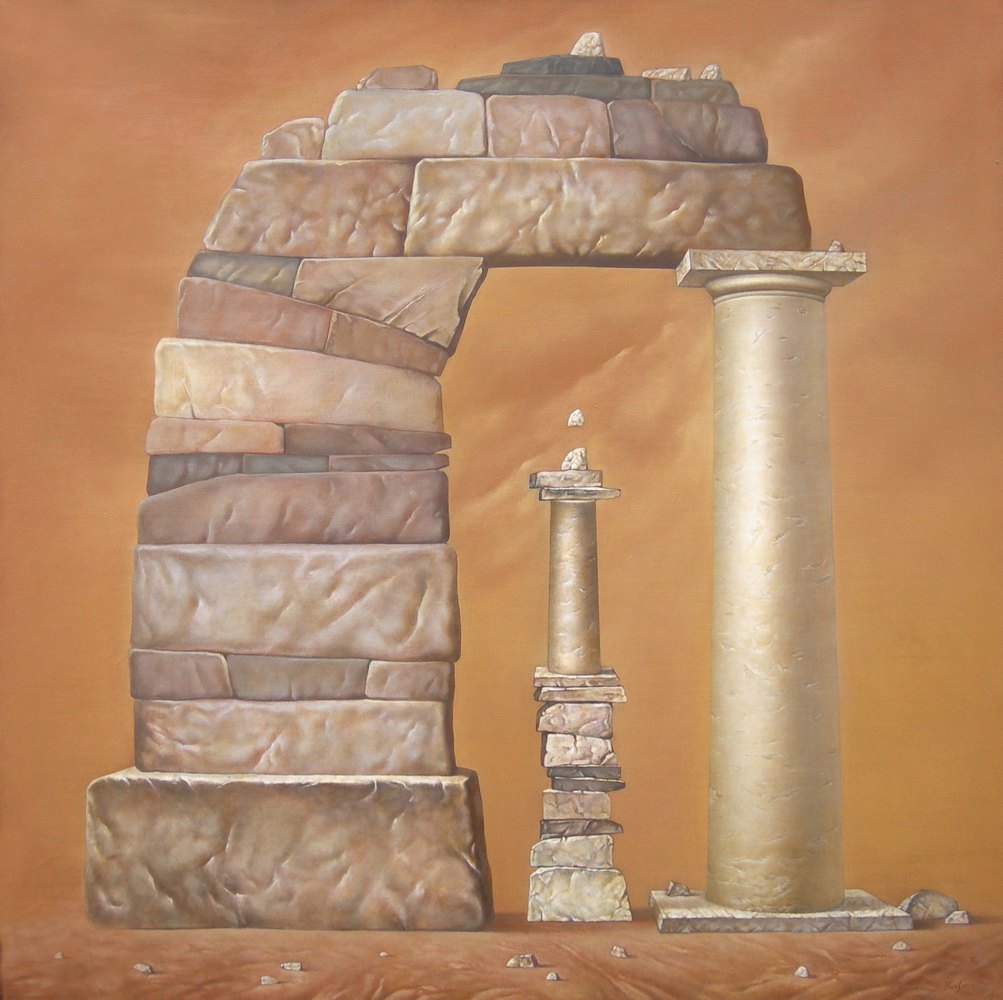
In Arch, Oleg Basaev develops his characteristic metaphysical language through a symbolic arch uniting archaic stone and classical order. The composition is not built as a narrative scene, but as a field of concentrated contemplation. Objects and forms are removed from everyday usefulness and placed in a conditional space where gravity, silence and memory begin to work according to another order. The viewer is invited not simply to recognize things, but to watch how they become signs: heavy matter turns into a bearer of time, a small shift in balance becomes an event, and a restrained colour range opens a philosophical depth behind the visible surface.
Within VerbArt Venice Digital Edition 2026, the work enters an international dialogue as an image of cultural memory and inner tension. Basaev does not illustrate Venice directly; rather, he speaks in a language close to the Venetian experience of stone, reflection, historical layering and fragile equilibrium. The artistic value of the work lies in its ability to combine academic clarity with symbolic ambiguity. Each object remains convincing as matter, yet at the same time becomes a model of human experience - movement and stillness, order and fracture, the desire for freedom and the weight of the past.
In Cyprus, Oleg Basaev develops his characteristic metaphysical language through a Mediterranean composition where fruit, landscape and the hidden outline of the island merge. The composition is not built as a narrative scene, but as a field of concentrated contemplation. Objects and forms are removed from everyday usefulness and placed in a conditional space where gravity, silence and memory begin to work according to another order. The viewer is invited not simply to recognize things, but to watch how they become signs: heavy matter turns into a bearer of time, a small shift in balance becomes an event, and a restrained colour range opens a philosophical depth behind the visible surface.
Within VerbArt Venice Digital Edition 2026, the work enters an international dialogue as an image of cultural memory and inner tension. Basaev does not illustrate Venice directly; rather, he speaks in a language close to the Venetian experience of stone, reflection, historical layering and fragile equilibrium. The artistic value of the work lies in its ability to combine academic clarity with symbolic ambiguity. Each object remains convincing as matter, yet at the same time becomes a model of human experience - movement and stillness, order and fracture, the desire for freedom and the weight of the past.
In Ossetia. The Attraction of Heaven, Oleg Basaev develops his characteristic metaphysical language through a sacred Ossetian composition centered on the ascent of ritual bread and ancestral memory. The composition is not built as a narrative scene, but as a field of concentrated contemplation. Objects and forms are removed from everyday usefulness and placed in a conditional space where gravity, silence and memory begin to work according to another order. The viewer is invited not simply to recognize things, but to watch how they become signs: heavy matter turns into a bearer of time, a small shift in balance becomes an event, and a restrained colour range opens a philosophical depth behind the visible surface.
Within VerbArt Venice Digital Edition 2026, the work enters an international dialogue as an image of cultural memory and inner tension. Basaev does not illustrate Venice directly; rather, he speaks in a language close to the Venetian experience of stone, reflection, historical layering and fragile equilibrium. The artistic value of the work lies in its ability to combine academic clarity with symbolic ambiguity. Each object remains convincing as matter, yet at the same time becomes a model of human experience - movement and stillness, order and fracture, the desire for freedom and the weight of the past.
Allegory of Cyprus
Oleg Temirbolatovich Basaev
Vladikavkaz, 2005, canvas/oil, 75x70 cm, +79188277118, olegbasaev17@mailru
In Allegory of Cyprus, Oleg Basaev develops his characteristic metaphysical language through a still life that maps the island through cloth, fruit and subtle geographical signs. The composition is not built as a narrative scene, but as a field of concentrated contemplation. Objects and forms are removed from everyday usefulness and placed in a conditional space where gravity, silence and memory begin to work according to another order. The viewer is invited not simply to recognize things, but to watch how they become signs: heavy matter turns into a bearer of time, a small shift in balance becomes an event, and a restrained colour range opens a philosophical depth behind the visible surface.
Within VerbArt Venice Digital Edition 2026, the work enters an international dialogue as an image of cultural memory and inner tension. Basaev does not illustrate Venice directly; rather, he speaks in a language close to the Venetian experience of stone, reflection, historical layering and fragile equilibrium. The artistic value of the work lies in its ability to combine academic clarity with symbolic ambiguity. Each object remains convincing as matter, yet at the same time becomes a model of human experience - movement and stillness, order and fracture, the desire for freedom and the weight of the past.
In Great Wheel, Oleg Basaev develops his characteristic metaphysical language through a bronze-like wheel that links ancient invention to modern technical civilization. The composition is not built as a narrative scene, but as a field of concentrated contemplation. Objects and forms are removed from everyday usefulness and placed in a conditional space where gravity, silence and memory begin to work according to another order. The viewer is invited not simply to recognize things, but to watch how they become signs: heavy matter turns into a bearer of time, a small shift in balance becomes an event, and a restrained colour range opens a philosophical depth behind the visible surface.
Within VerbArt Venice Digital Edition 2026, the work enters an international dialogue as an image of cultural memory and inner tension. Basaev does not illustrate Venice directly; rather, he speaks in a language close to the Venetian experience of stone, reflection, historical layering and fragile equilibrium. The artistic value of the work lies in its ability to combine academic clarity with symbolic ambiguity. Each object remains convincing as matter, yet at the same time becomes a model of human experience - movement and stillness, order and fracture, the desire for freedom and the weight of the past.
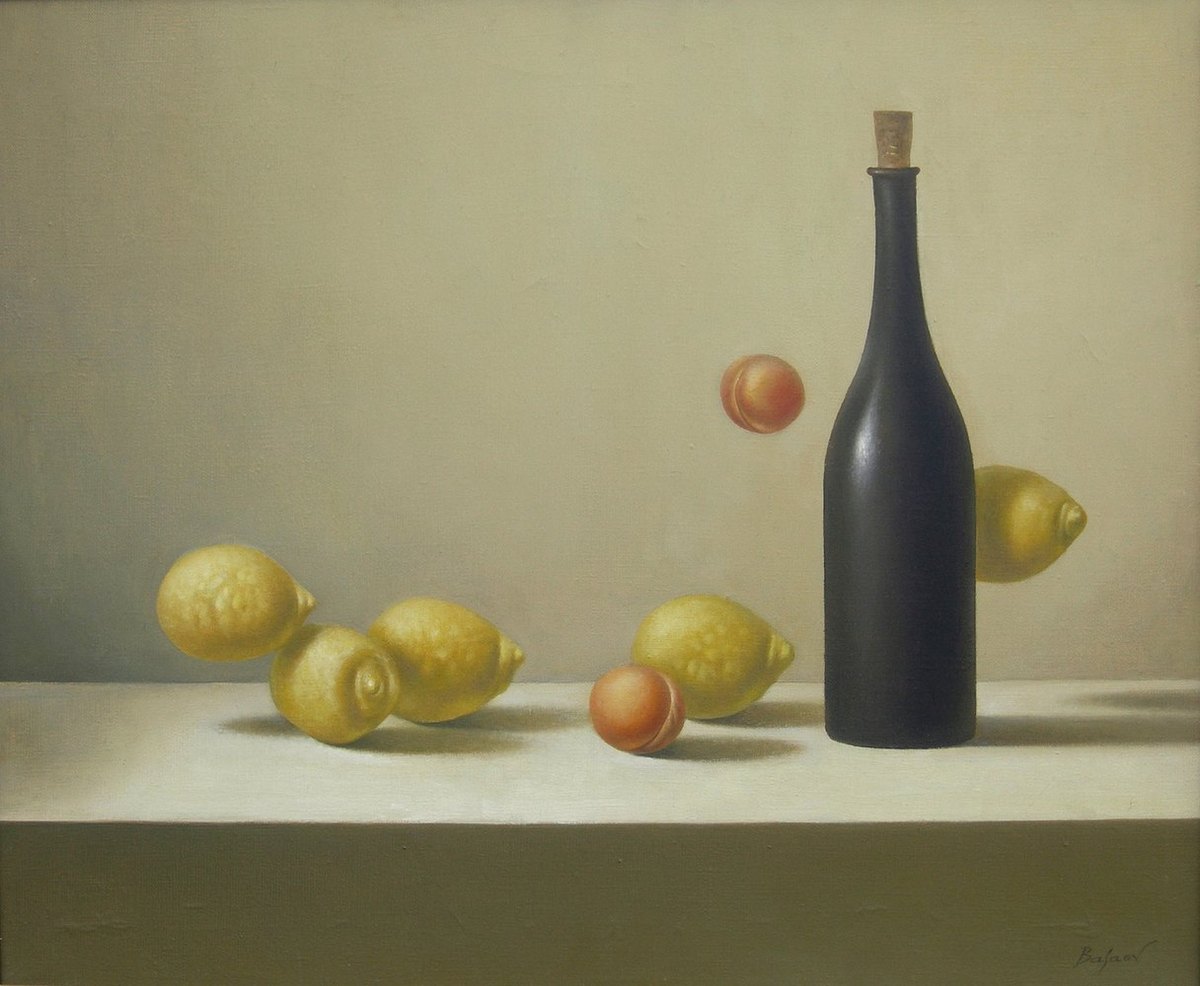
In Still Life with Lemons and a Bottle, Oleg Basaev develops his characteristic metaphysical language through an early metaphysical still life where fruit and vessel already defy ordinary gravity. The composition is not built as a narrative scene, but as a field of concentrated contemplation. Objects and forms are removed from everyday usefulness and placed in a conditional space where gravity, silence and memory begin to work according to another order. The viewer is invited not simply to recognize things, but to watch how they become signs: heavy matter turns into a bearer of time, a small shift in balance becomes an event, and a restrained colour range opens a philosophical depth behind the visible surface.
Within VerbArt Venice Digital Edition 2026, the work enters an international dialogue as an image of cultural memory and inner tension. Basaev does not illustrate Venice directly; rather, he speaks in a language close to the Venetian experience of stone, reflection, historical layering and fragile equilibrium. The artistic value of the work lies in its ability to combine academic clarity with symbolic ambiguity. Each object remains convincing as matter, yet at the same time becomes a model of human experience - movement and stillness, order and fracture, the desire for freedom and the weight of the past.
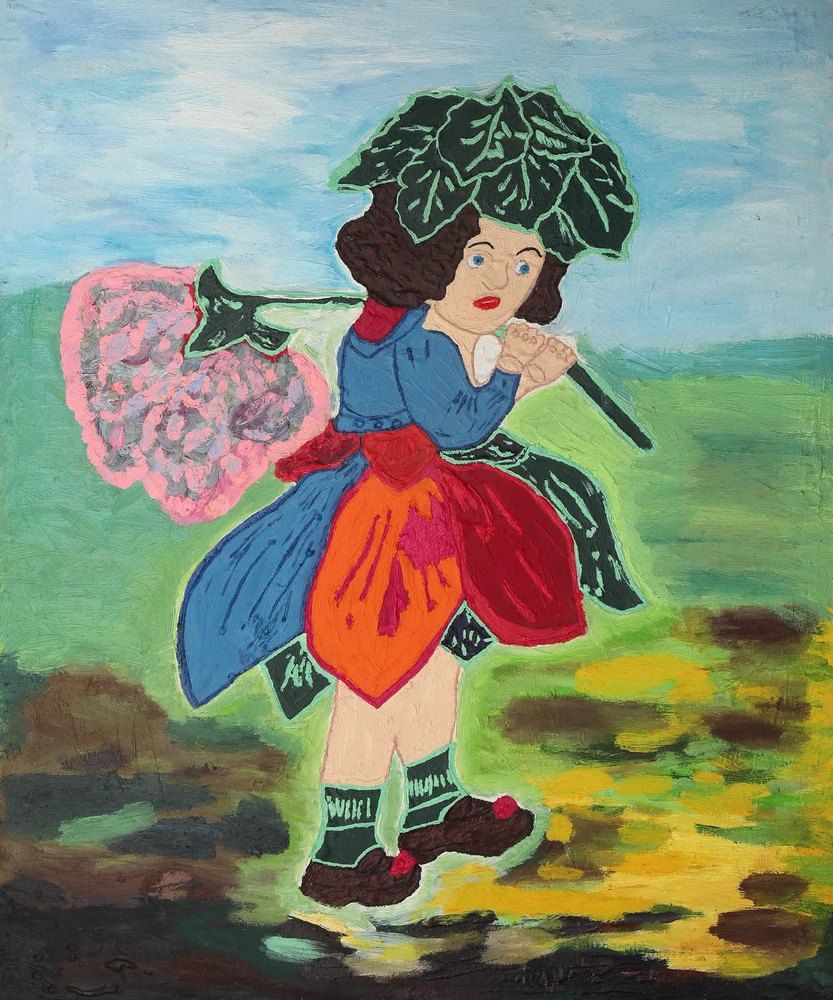
In Girl. It is born from a family story, from drawing, embroidery, wood, fabric, primer and paint - from the slow transformation of a handmade object into an image with its own spiritual biography. Burlakova’s art turns the object into a carrier of memory, omen and protection.
The Beginning of the Golden Road, Natalia Burlakova brings together personal memory, manual labour and the mythological depth of Nanai culture through a childhood embroidery reborn as painting, where a girl enters a bright road of renewal. The visible simplicity of the form preserves the warmth of childhood, household ritual and ancestral knowledge. The image is at once intimate and archetypal: it belongs to a particular family and to a wider world of beliefs about animals, fate, home and human vulnerability.
The work does not function as a decorative ethnic quotation. In the context of VerbArt Venice Digital Edition 2026, this work is important as testimony to a living culture that continues to speak through craft. Its artistic value lies in the fusion of naive clarity, material density and cultural depth, where each contour carries both personal affection and the echo of a collective tradition.
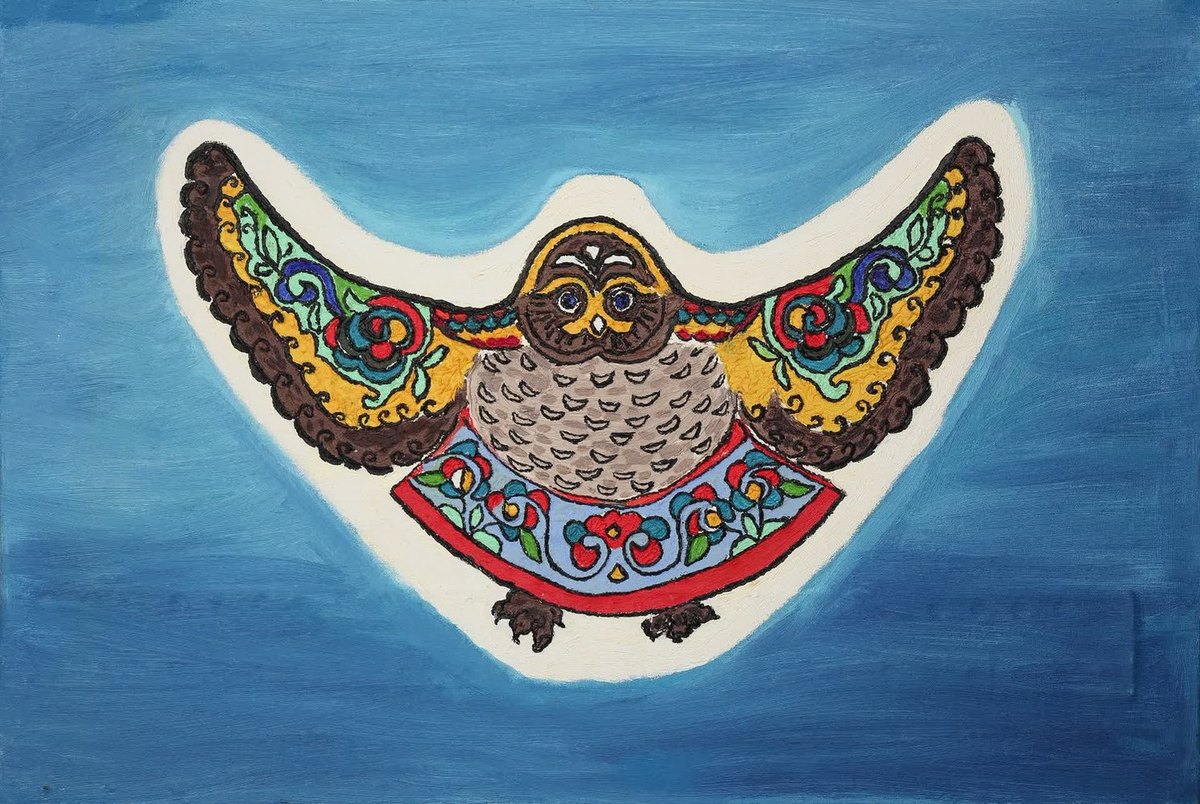
In The Owl Is Flying, Natalia Burlakova brings together personal memory, manual labour and the mythological depth of Nanai culture through an owl with outspread ornamental wings, carrying family memory and northern mythic resonance. The visible simplicity of the form preserves the warmth of childhood, household ritual and ancestral knowledge. The image is at once intimate and archetypal: it belongs to a particular family and to a wider world of beliefs about animals, fate, home and human vulnerability.
The work does not function as a decorative ethnic quotation. In the context of VerbArt Venice Digital Edition 2026, this work is important as testimony to a living culture that continues to speak through craft. Its artistic value lies in the fusion of naive clarity, material density and cultural depth, where each contour carries both personal affection and the echo of a collective tradition.
It is born from a family story, from drawing, embroidery, wood, fabric, primer and paint - from the slow transformation of a handmade object into an image with its own spiritual biography. Burlakova’s art turns the object into a carrier of memory, omen and protection.
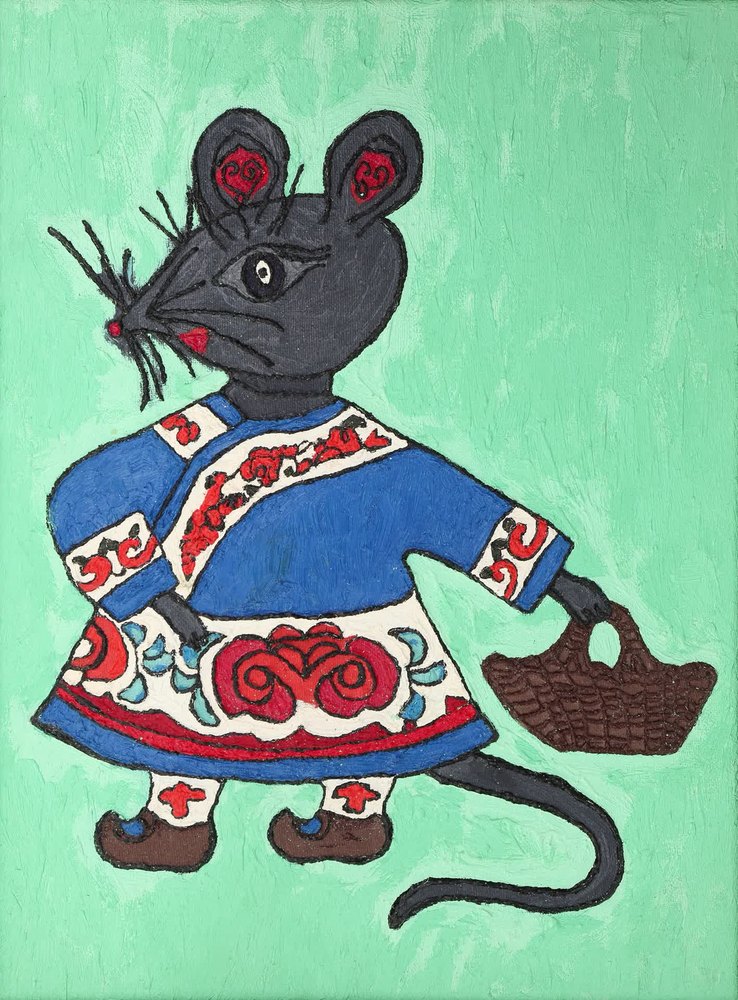
In Rat in a Nanai Robe, Natalia Burlakova brings together personal memory, manual labour and the mythological depth of Nanai culture through a folklore image of the rat as a creature connected with omens, wealth and household fate. The visible simplicity of the form preserves the warmth of childhood, household ritual and ancestral knowledge. The image is at once intimate and archetypal: it belongs to a particular family and to a wider world of beliefs about animals, fate, home and human vulnerability.
The work does not function as a decorative ethnic quotation. In the context of VerbArt Venice Digital Edition 2026, this work is important as testimony to a living culture that continues to speak through craft. Its artistic value lies in the fusion of naive clarity, material density and cultural depth, where each contour carries both personal affection and the echo of a collective tradition.
It is born from a family story, from drawing, embroidery, wood, fabric, primer and paint - from the slow transformation of a handmade object into an image with its own spiritual biography. Burlakova’s art turns the object into a carrier of memory, omen and protection.
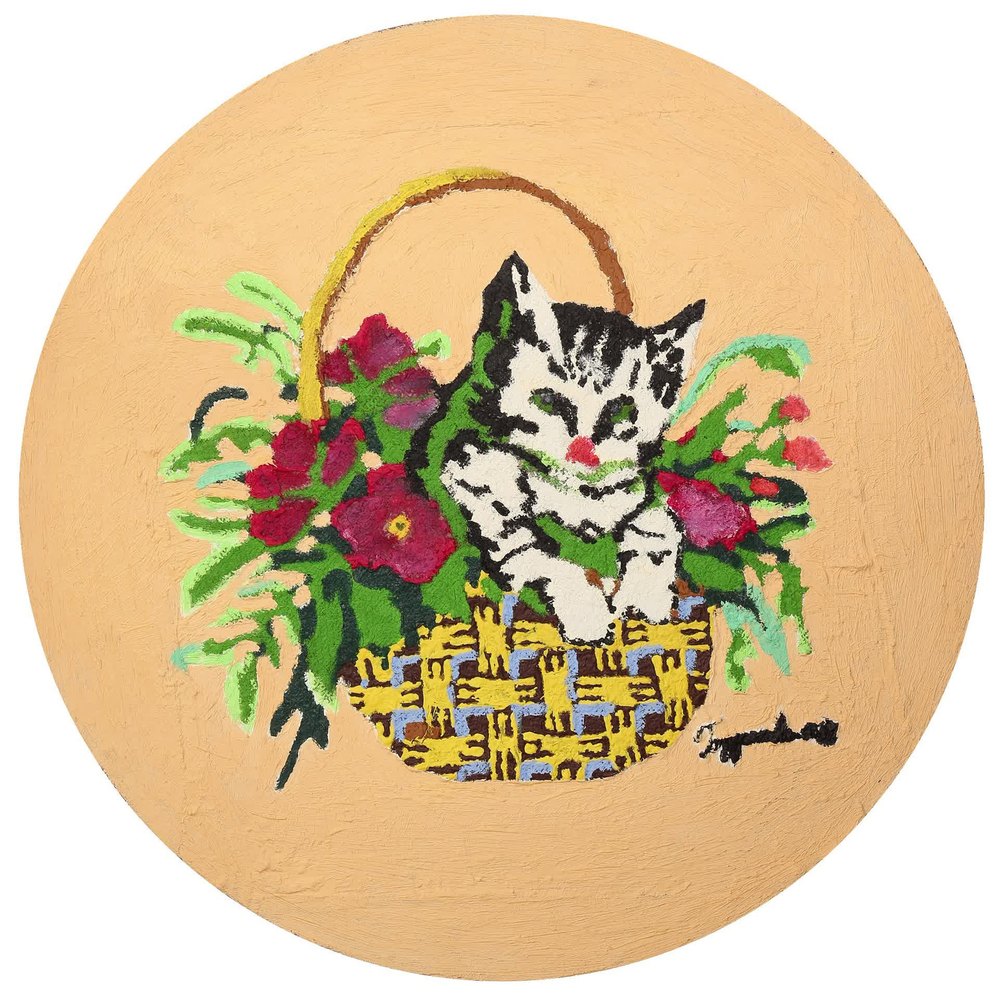
In Kitten in a Basket, Natalia Burlakova brings together personal memory, manual labour and the mythological depth of Nanai culture through a domestic image rooted in a mother’s drawing, embroidery and Nanai beliefs about the cat. The visible simplicity of the form preserves the warmth of childhood, household ritual and ancestral knowledge. The image is at once intimate and archetypal: it belongs to a particular family and to a wider world of beliefs about animals, fate, home and human vulnerability.
The work does not function as a decorative ethnic quotation. In the context of VerbArt Venice Digital Edition 2026, this work is important as testimony to a living culture that continues to speak through craft. Its artistic value lies in the fusion of naive clarity, material density and cultural depth, where each contour carries both personal affection and the echo of a collective tradition.
It is born from a family story, from drawing, embroidery, wood, fabric, primer and paint - from the slow transformation of a handmade object into an image with its own spiritual biography. Burlakova’s art turns the object into a carrier of memory, omen and protection.
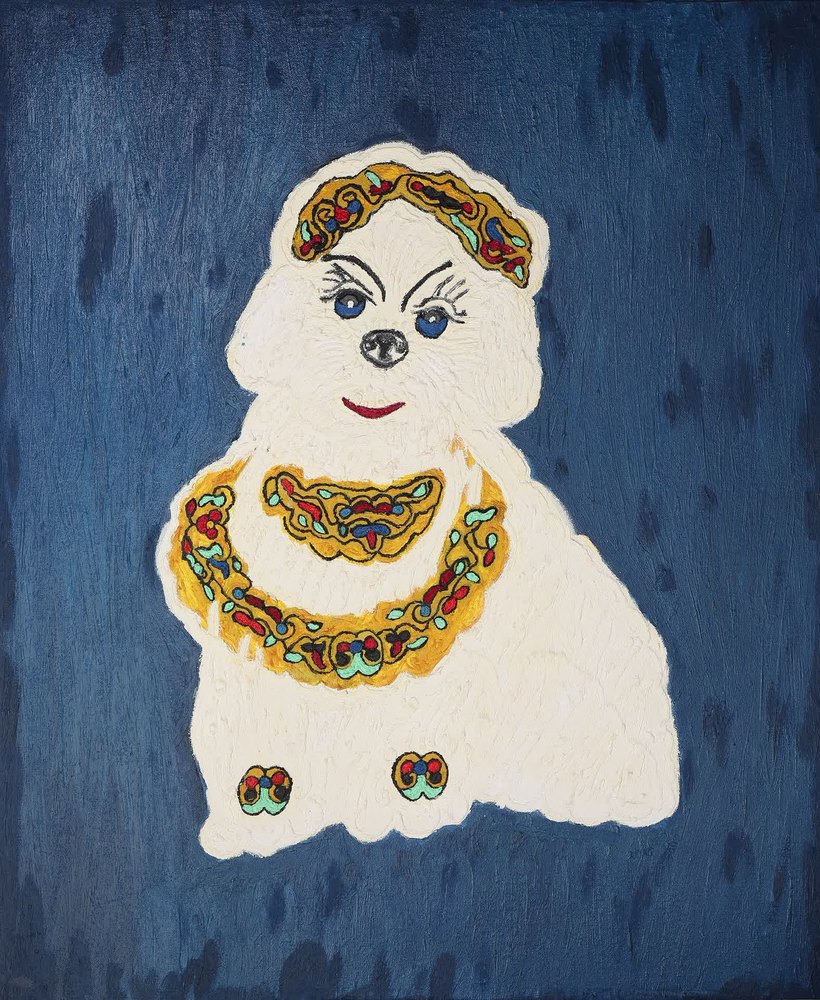
In The Emperor’s Tuzik, Natalia Burlakova brings together personal memory, manual labour and the mythological depth of Nanai culture through a beloved white dog transformed into a protective household image at the border of memory and myth. The visible simplicity of the form preserves the warmth of childhood, household ritual and ancestral knowledge. The image is at once intimate and archetypal: it belongs to a particular family and to a wider world of beliefs about animals, fate, home and human vulnerability.
The work does not function as a decorative ethnic quotation. In the context of VerbArt Venice Digital Edition 2026, this work is important as testimony to a living culture that continues to speak through craft. Its artistic value lies in the fusion of naive clarity, material density and cultural depth, where each contour carries both personal affection and the echo of a collective tradition.
It is born from a family story, from drawing, embroidery, wood, fabric, primer and paint - from the slow transformation of a handmade object into an image with its own spiritual biography. Burlakova’s art turns the object into a carrier of memory, omen and protection.
In On Lake Ladoga, Gennady Komarov turns to landscape as a form of grateful memory, addressing northern water, stone and light seen through the memory of a family journey. Within VerbArt Venice Digital Edition 2026, Komarov’s landscapes introduce a deeply lyrical and at the same time historically grounded line. The artistic importance of the work lies in its sincere connection between motif and memory: the viewer sees not merely a view, but a landscape that has passed through the artist’s life and has become a form of testimony.
His painting does not seek spectacular effect; it is built on attentive looking, on the emotional recognition of a place and on the desire to preserve what may disappear from ordinary memory. They show Russian nature not as an abstract symbol, but as a personal space shaped by time, loss and affection.
Nature in these works is not a background but a living participant in biography: fields, water, villages, snow, forest and sky become witnesses of childhood, friendship, family history and the experience of returning to the land. The brushwork keeps the surface alive, while colour carries the mood of season and place.
In Karacharovo, Gennady Komarov turns to landscape as a form of grateful memory, addressing the village of Ilya Muromets, where epic memory and the everyday rural landscape meet. Within VerbArt Venice Digital Edition 2026, Komarov’s landscapes introduce a deeply lyrical and at the same time historically grounded line. The artistic importance of the work lies in its sincere connection between motif and memory: the viewer sees not merely a view, but a landscape that has passed through the artist’s life and has become a form of testimony.
His painting does not seek spectacular effect; it is built on attentive looking, on the emotional recognition of a place and on the desire to preserve what may disappear from ordinary memory. They show Russian nature not as an abstract symbol, but as a personal space shaped by time, loss and affection.
Nature in these works is not a background but a living participant in biography: fields, water, villages, snow, forest and sky become witnesses of childhood, friendship, family history and the experience of returning to the land. The brushwork keeps the surface alive, while colour carries the mood of season and place.
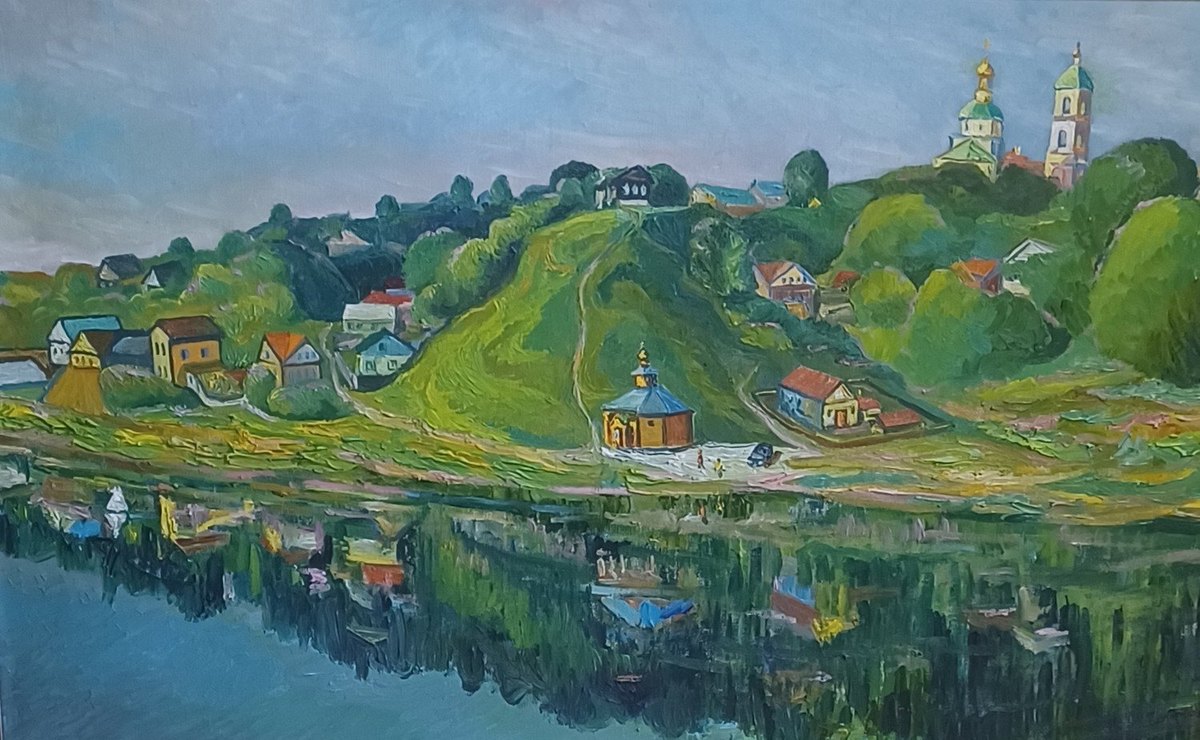
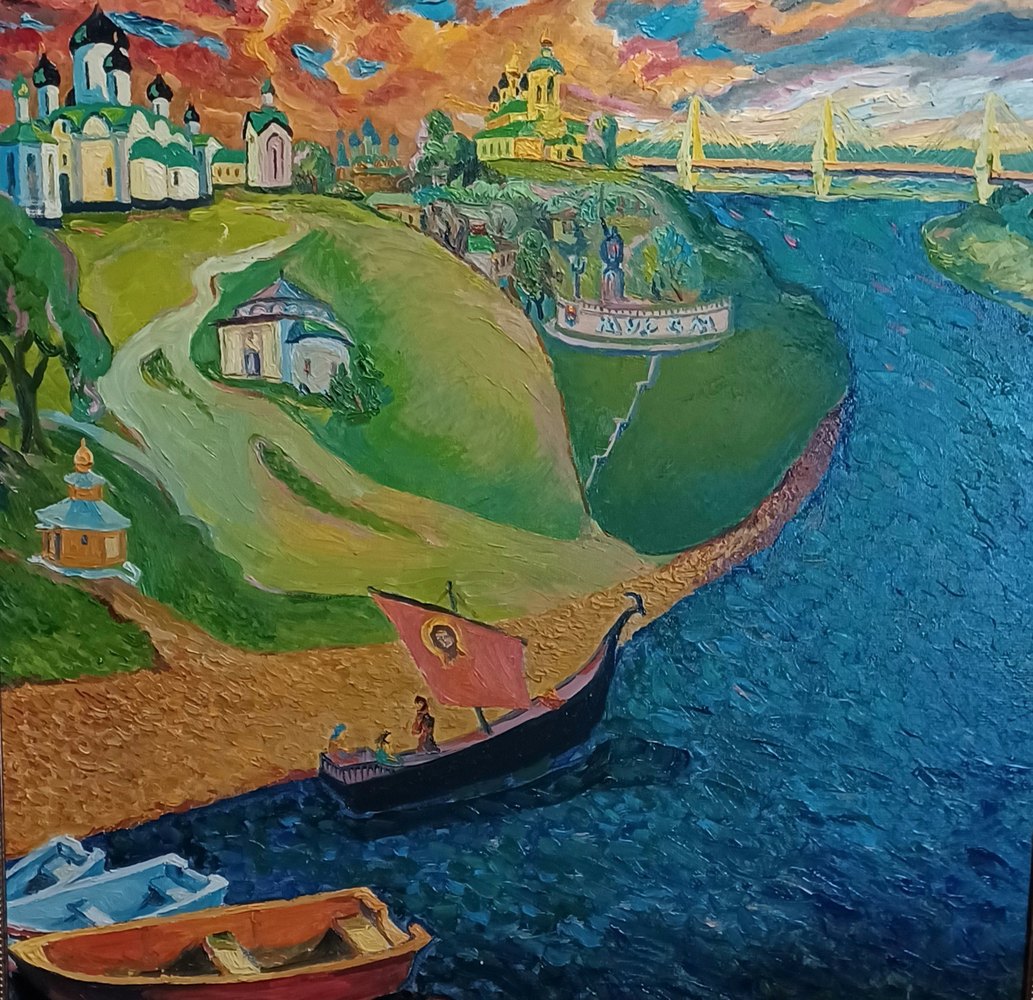
In Murom, Gennady Komarov turns to landscape as a form of grateful memory, addressing an ancient city panorama where childhood, history, churches and the Oka River form one memory. Within VerbArt Venice Digital Edition 2026, Komarov’s landscapes introduce a deeply lyrical and at the same time historically grounded line. The artistic importance of the work lies in its sincere connection between motif and memory: the viewer sees not merely a view, but a landscape that has passed through the artist’s life and has become a form of testimony.
His painting does not seek spectacular effect; it is built on attentive looking, on the emotional recognition of a place and on the desire to preserve what may disappear from ordinary memory. They show Russian nature not as an abstract symbol, but as a personal space shaped by time, loss and affection.
Nature in these works is not a background but a living participant in biography: fields, water, villages, snow, forest and sky become witnesses of childhood, friendship, family history and the experience of returning to the land. The brushwork keeps the surface alive, while colour carries the mood of season and place.
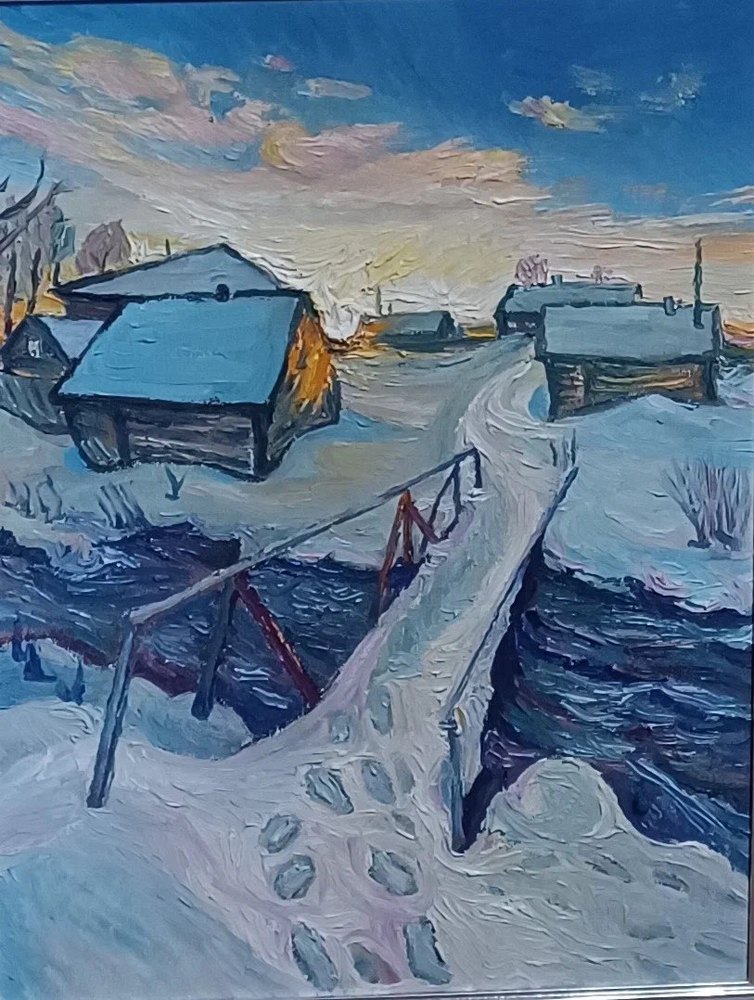
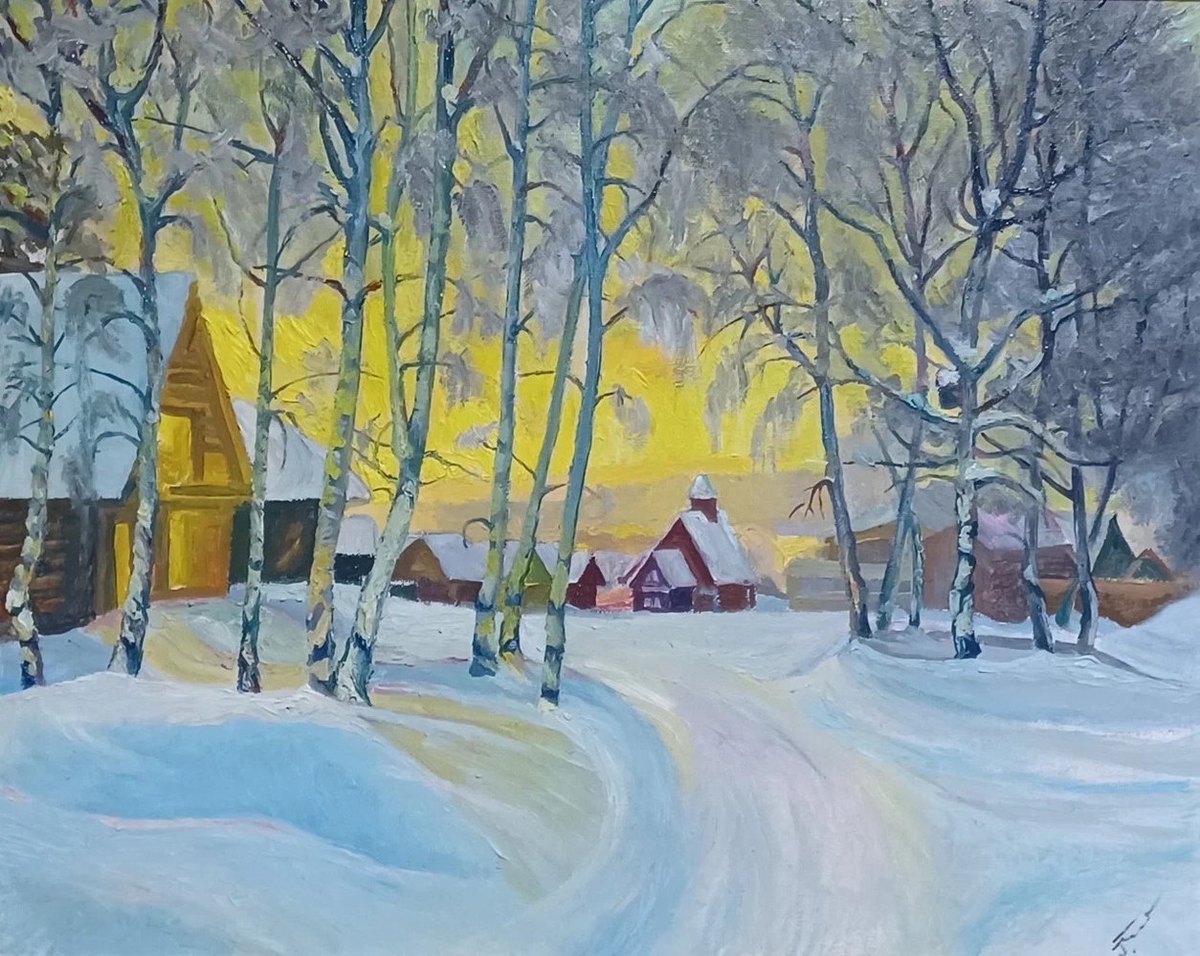
In Winter-20, Gennady Komarov turns to landscape as a form of grateful memory, addressing a winter image of a fading village and the silence of disappearing peasant Russia. Within VerbArt Venice Digital Edition 2026, Komarov’s landscapes introduce a deeply lyrical and at the same time historically grounded line. The artistic importance of the work lies in its sincere connection between motif and memory: the viewer sees not merely a view, but a landscape that has passed through the artist’s life and has become a form of testimony.
His painting does not seek spectacular effect; it is built on attentive looking, on the emotional recognition of a place and on the desire to preserve what may disappear from ordinary memory. They show Russian nature not as an abstract symbol, but as a personal space shaped by time, loss and affection.
Nature in these works is not a background but a living participant in biography: fields, water, villages, snow, forest and sky become witnesses of childhood, friendship, family history and the experience of returning to the land. The brushwork keeps the surface alive, while colour carries the mood of season and place.
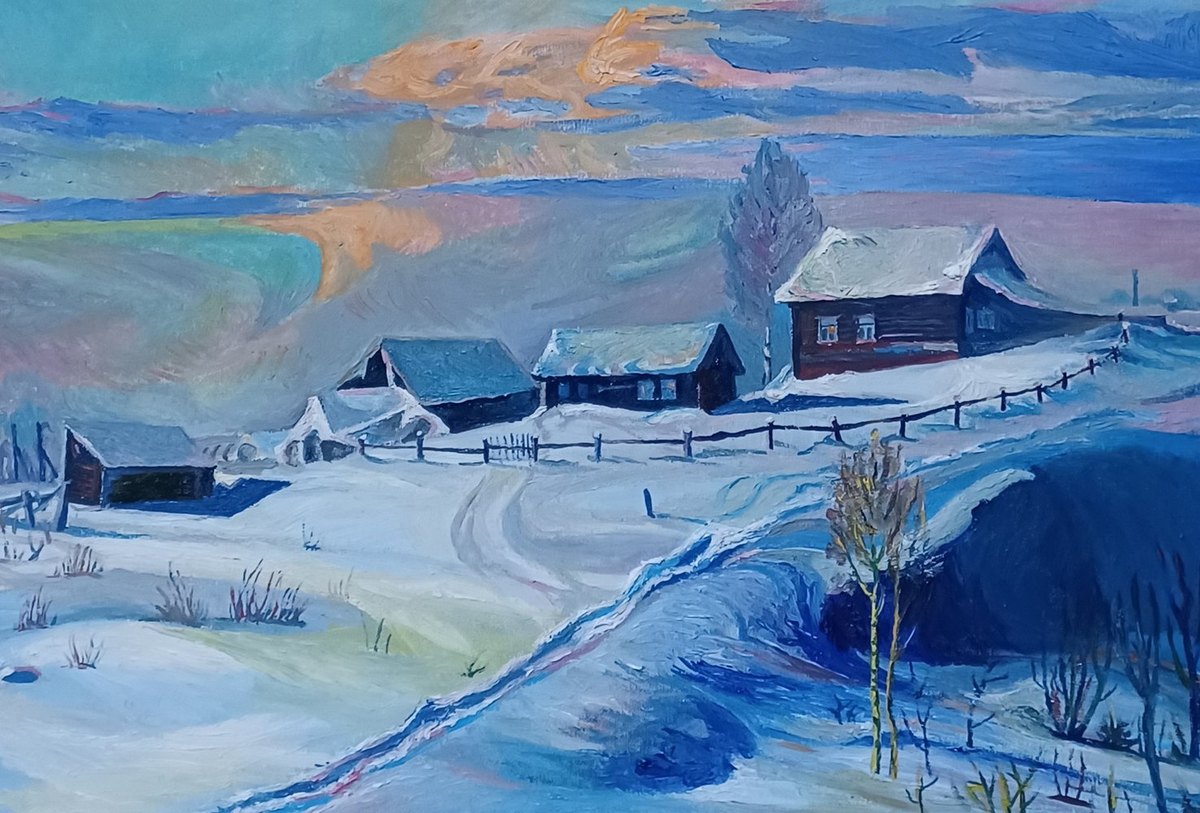
In Winter 3, Gennady Komarov turns to landscape as a form of grateful memory, addressing a small winter village near the Ušna River, read as a fragile trace of rural life. Within VerbArt Venice Digital Edition 2026, Komarov’s landscapes introduce a deeply lyrical and at the same time historically grounded line. The artistic importance of the work lies in its sincere connection between motif and memory: the viewer sees not merely a view, but a landscape that has passed through the artist’s life and has become a form of testimony.
His painting does not seek spectacular effect; it is built on attentive looking, on the emotional recognition of a place and on the desire to preserve what may disappear from ordinary memory. They show Russian nature not as an abstract symbol, but as a personal space shaped by time, loss and affection.
Nature in these works is not a background but a living participant in biography: fields, water, villages, snow, forest and sky become witnesses of childhood, friendship, family history and the experience of returning to the land. The brushwork keeps the surface alive, while colour carries the mood of season and place.
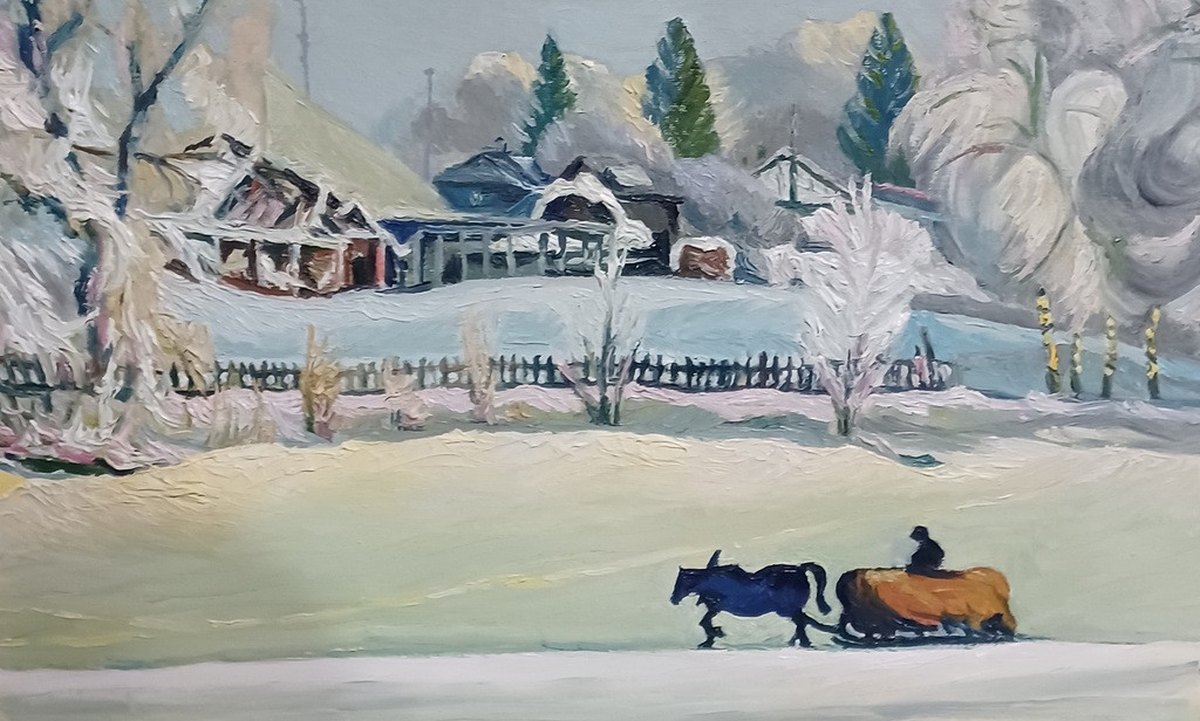
In Winter 15, Gennady Komarov turns to landscape as a form of grateful memory, addressing another winter meditation on dying villages and the vulnerable dignity of the countryside. Within VerbArt Venice Digital Edition 2026, Komarov’s landscapes introduce a deeply lyrical and at the same time historically grounded line. The artistic importance of the work lies in its sincere connection between motif and memory: the viewer sees not merely a view, but a landscape that has passed through the artist’s life and has become a form of testimony.
His painting does not seek spectacular effect; it is built on attentive looking, on the emotional recognition of a place and on the desire to preserve what may disappear from ordinary memory. They show Russian nature not as an abstract symbol, but as a personal space shaped by time, loss and affection.
Nature in these works is not a background but a living participant in biography: fields, water, villages, snow, forest and sky become witnesses of childhood, friendship, family history and the experience of returning to the land. The brushwork keeps the surface alive, while colour carries the mood of season and place.
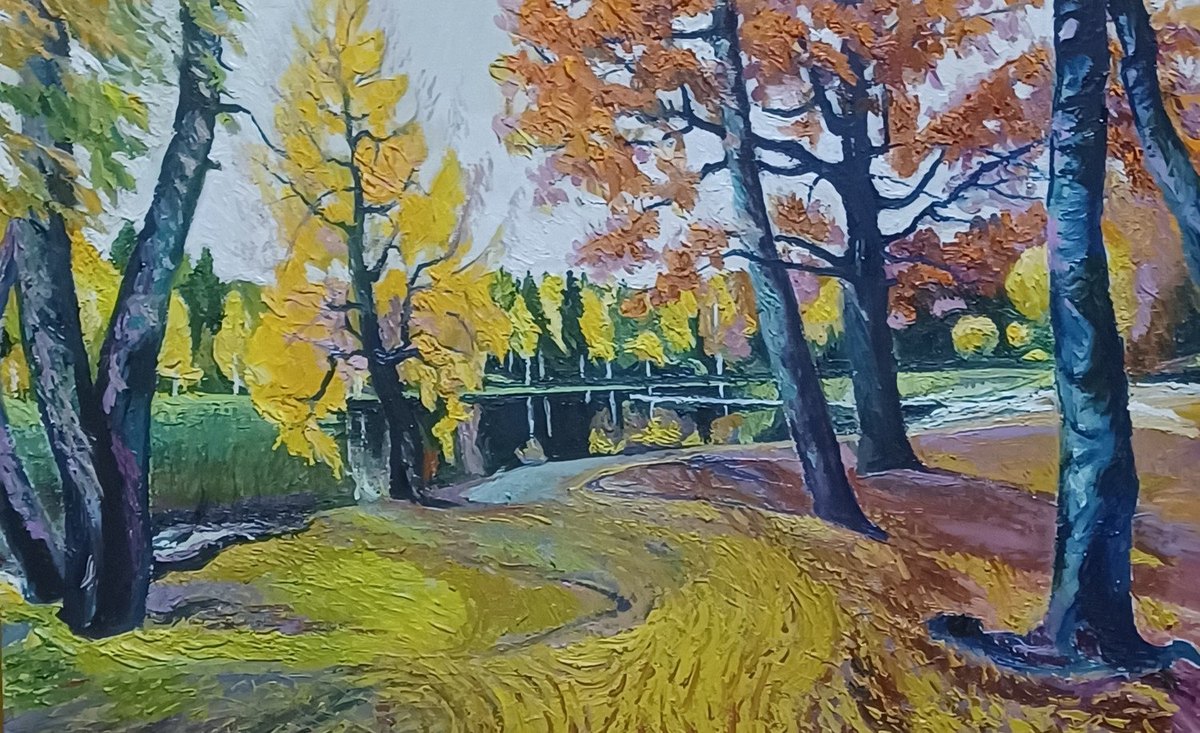
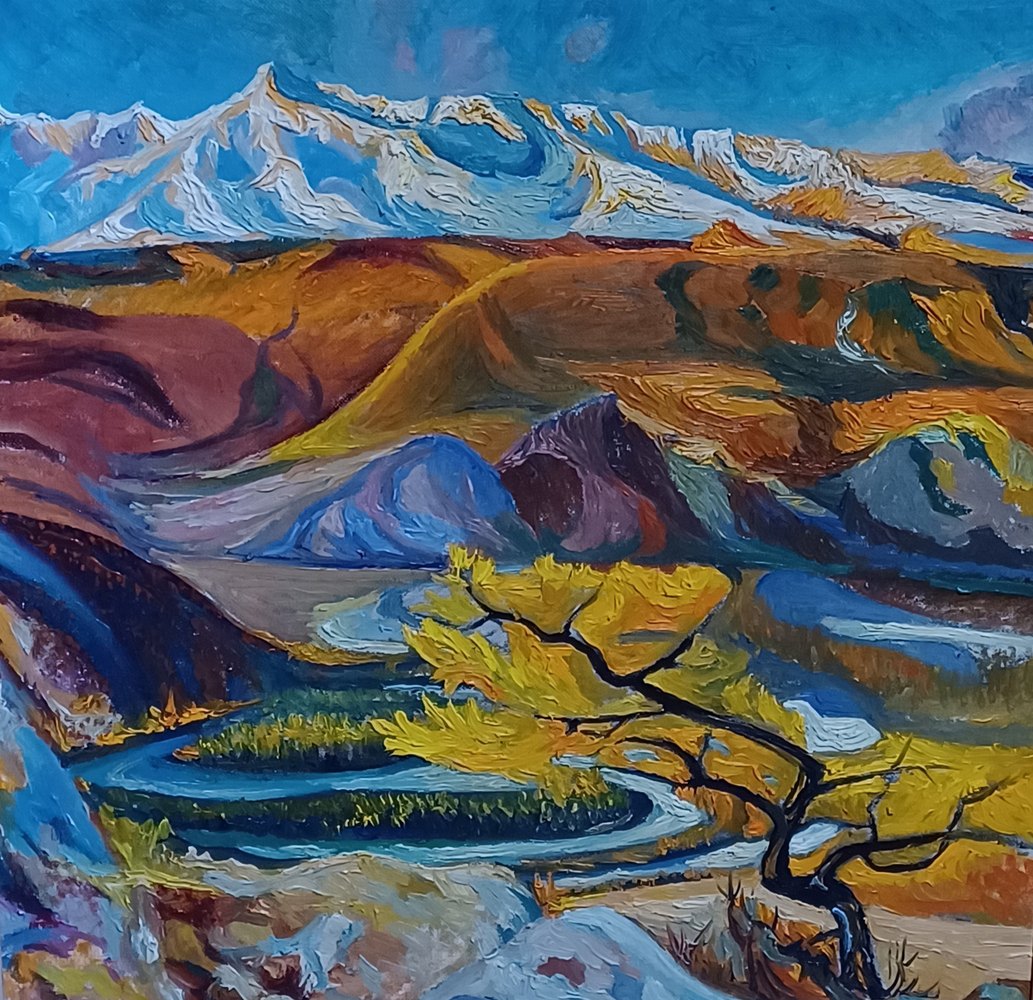
In Gold of Autumn 2, Gennady Komarov turns to landscape as a form of grateful memory, addressing wide autumn spaces above the Oka River, based on early studies of the Murom region. Within VerbArt Venice Digital Edition 2026, Komarov’s landscapes introduce a deeply lyrical and at the same time historically grounded line. The artistic importance of the work lies in its sincere connection between motif and memory: the viewer sees not merely a view, but a landscape that has passed through the artist’s life and has become a form of testimony.
His painting does not seek spectacular effect; it is built on attentive looking, on the emotional recognition of a place and on the desire to preserve what may disappear from ordinary memory. They show Russian nature not as an abstract symbol, but as a personal space shaped by time, loss and affection.
Nature in these works is not a background but a living participant in biography: fields, water, villages, snow, forest and sky become witnesses of childhood, friendship, family history and the experience of returning to the land. The brushwork keeps the surface alive, while colour carries the mood of season and place.
In Gold of Autumn 17, Gennady Komarov turns to landscape as a form of grateful memory, addressing a living village on the road from Murom to Vladimir, glowing in autumn colour. Within VerbArt Venice Digital Edition 2026, Komarov’s landscapes introduce a deeply lyrical and at the same time historically grounded line. The artistic importance of the work lies in its sincere connection between motif and memory: the viewer sees not merely a view, but a landscape that has passed through the artist’s life and has become a form of testimony.
His painting does not seek spectacular effect; it is built on attentive looking, on the emotional recognition of a place and on the desire to preserve what may disappear from ordinary memory. They show Russian nature not as an abstract symbol, but as a personal space shaped by time, loss and affection.
Nature in these works is not a background but a living participant in biography: fields, water, villages, snow, forest and sky become witnesses of childhood, friendship, family history and the experience of returning to the land. The brushwork keeps the surface alive, while colour carries the mood of season and place.
In Gold of Autumn 12, Gennady Komarov turns to landscape as a form of grateful memory, addressing the autumn transformation of nature around ancient Murom. Within VerbArt Venice Digital Edition 2026, Komarov’s landscapes introduce a deeply lyrical and at the same time historically grounded line. The artistic importance of the work lies in its sincere connection between motif and memory: the viewer sees not merely a view, but a landscape that has passed through the artist’s life and has become a form of testimony.
His painting does not seek spectacular effect; it is built on attentive looking, on the emotional recognition of a place and on the desire to preserve what may disappear from ordinary memory. They show Russian nature not as an abstract symbol, but as a personal space shaped by time, loss and affection.
Nature in these works is not a background but a living participant in biography: fields, water, villages, snow, forest and sky become witnesses of childhood, friendship, family history and the experience of returning to the land. The brushwork keeps the surface alive, while colour carries the mood of season and place.
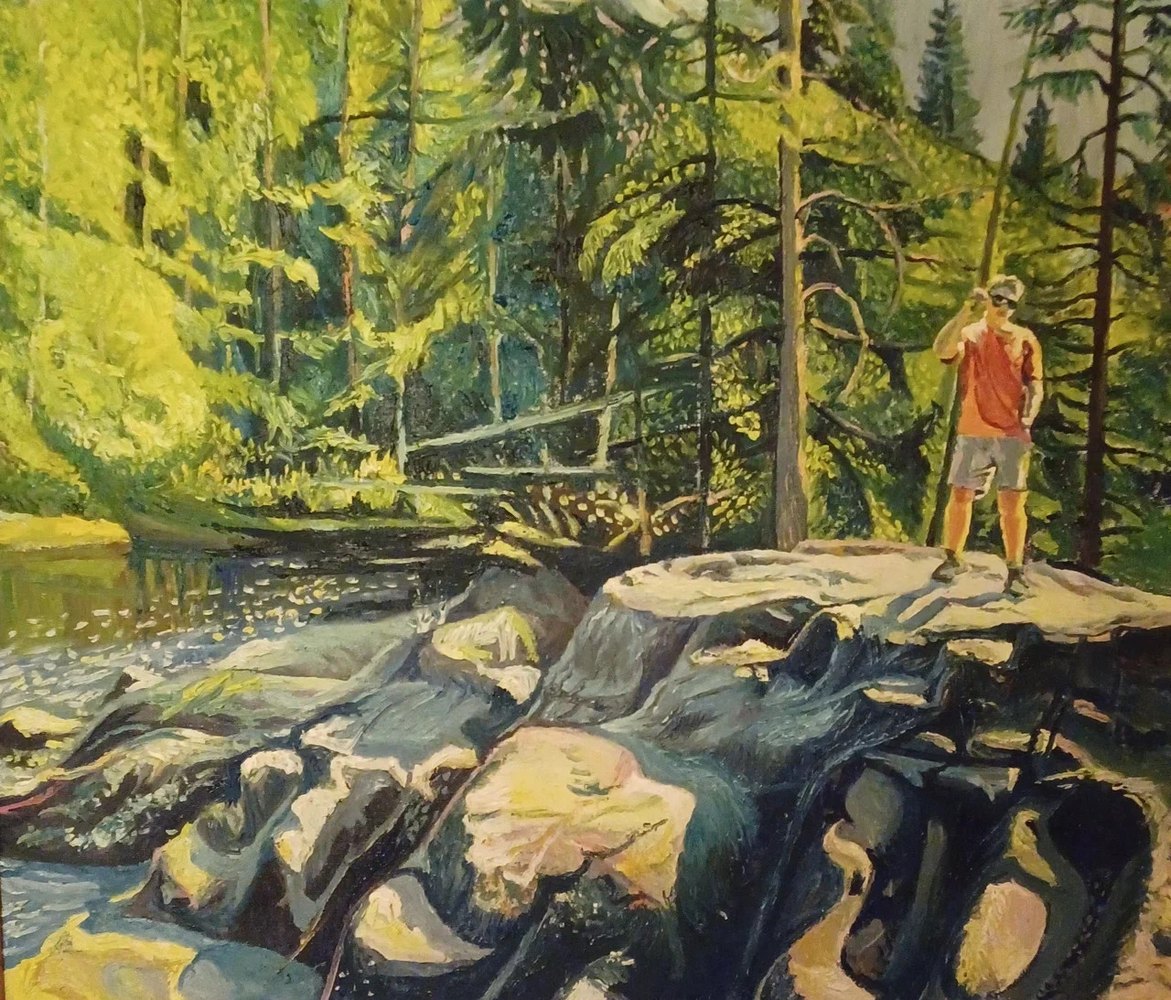
In Forest, Gennady Komarov turns to landscape as a form of grateful memory, addressing a forest corner of the Murom area, linked with Russian epic memory. Within VerbArt Venice Digital Edition 2026, Komarov’s landscapes introduce a deeply lyrical and at the same time historically grounded line. The artistic importance of the work lies in its sincere connection between motif and memory: the viewer sees not merely a view, but a landscape that has passed through the artist’s life and has become a form of testimony.
His painting does not seek spectacular effect; it is built on attentive looking, on the emotional recognition of a place and on the desire to preserve what may disappear from ordinary memory. They show Russian nature not as an abstract symbol, but as a personal space shaped by time, loss and affection.
Nature in these works is not a background but a living participant in biography: fields, water, villages, snow, forest and sky become witnesses of childhood, friendship, family history and the experience of returning to the land. The brushwork keeps the surface alive, while colour carries the mood of season and place.
In Lake at the Nearby Dacha, Gennady Komarov turns to landscape as a form of grateful memory, addressing a family place of strength where personal memory gathers around water. Within VerbArt Venice Digital Edition 2026, Komarov’s landscapes introduce a deeply lyrical and at the same time historically grounded line. The artistic importance of the work lies in its sincere connection between motif and memory: the viewer sees not merely a view, but a landscape that has passed through the artist’s life and has become a form of testimony.
His painting does not seek spectacular effect; it is built on attentive looking, on the emotional recognition of a place and on the desire to preserve what may disappear from ordinary memory. They show Russian nature not as an abstract symbol, but as a personal space shaped by time, loss and affection.
Nature in these works is not a background but a living participant in biography: fields, water, villages, snow, forest and sky become witnesses of childhood, friendship, family history and the experience of returning to the land. The brushwork keeps the surface alive, while colour carries the mood of season and place.
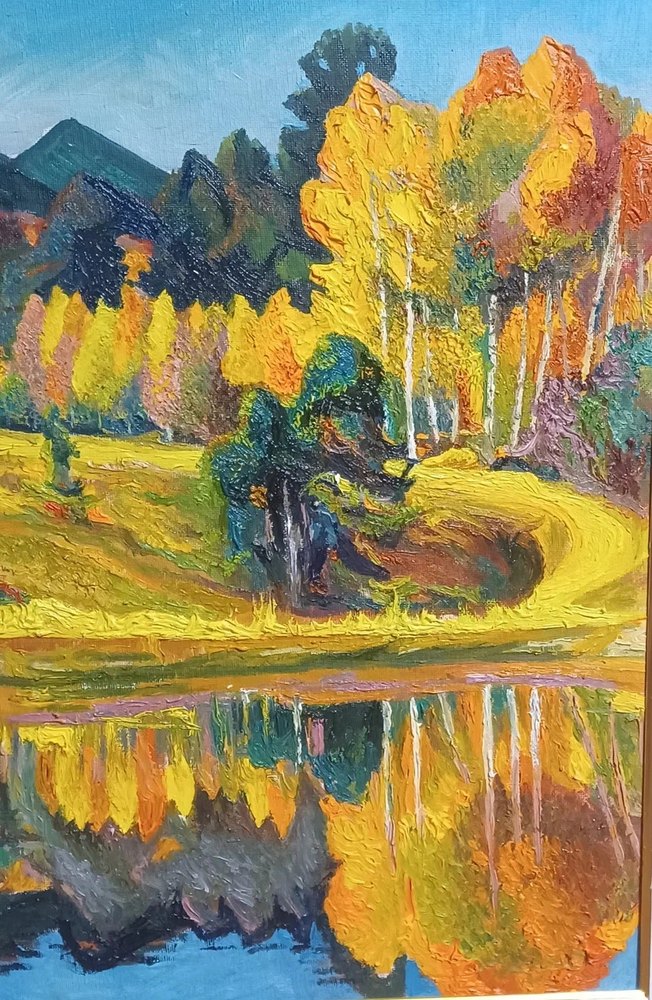
In Gold of Autumn 5, Gennady Komarov turns to landscape as a form of grateful memory, addressing autumn in the Zelenograd surroundings, rich with water, hills and woodland. Within VerbArt Venice Digital Edition 2026, Komarov’s landscapes introduce a deeply lyrical and at the same time historically grounded line. The artistic importance of the work lies in its sincere connection between motif and memory: the viewer sees not merely a view, but a landscape that has passed through the artist’s life and has become a form of testimony.
His painting does not seek spectacular effect; it is built on attentive looking, on the emotional recognition of a place and on the desire to preserve what may disappear from ordinary memory. They show Russian nature not as an abstract symbol, but as a personal space shaped by time, loss and affection.
Nature in these works is not a background but a living participant in biography: fields, water, villages, snow, forest and sky become witnesses of childhood, friendship, family history and the experience of returning to the land. The brushwork keeps the surface alive, while colour carries the mood of season and place.
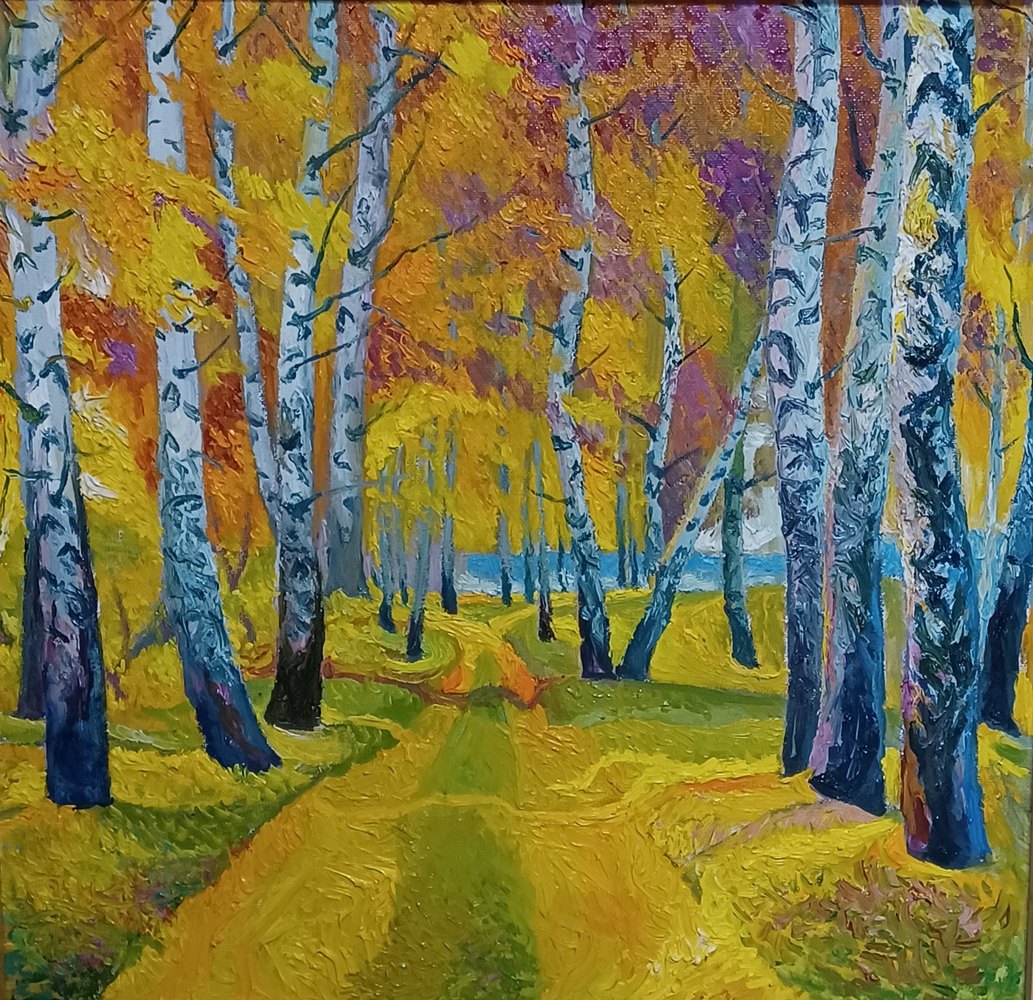
In Gold of Autumn 4, Gennady Komarov turns to landscape as a form of grateful memory, addressing the Khimki and Kurkino landscape, where birch groves and the Skhodnya valley echo in colour. Within VerbArt Venice Digital Edition 2026, Komarov’s landscapes introduce a deeply lyrical and at the same time historically grounded line. The artistic importance of the work lies in its sincere connection between motif and memory: the viewer sees not merely a view, but a landscape that has passed through the artist’s life and has become a form of testimony.
His painting does not seek spectacular effect; it is built on attentive looking, on the emotional recognition of a place and on the desire to preserve what may disappear from ordinary memory. They show Russian nature not as an abstract symbol, but as a personal space shaped by time, loss and affection.
Nature in these works is not a background but a living participant in biography: fields, water, villages, snow, forest and sky become witnesses of childhood, friendship, family history and the experience of returning to the land. The brushwork keeps the surface alive, while colour carries the mood of season and place.
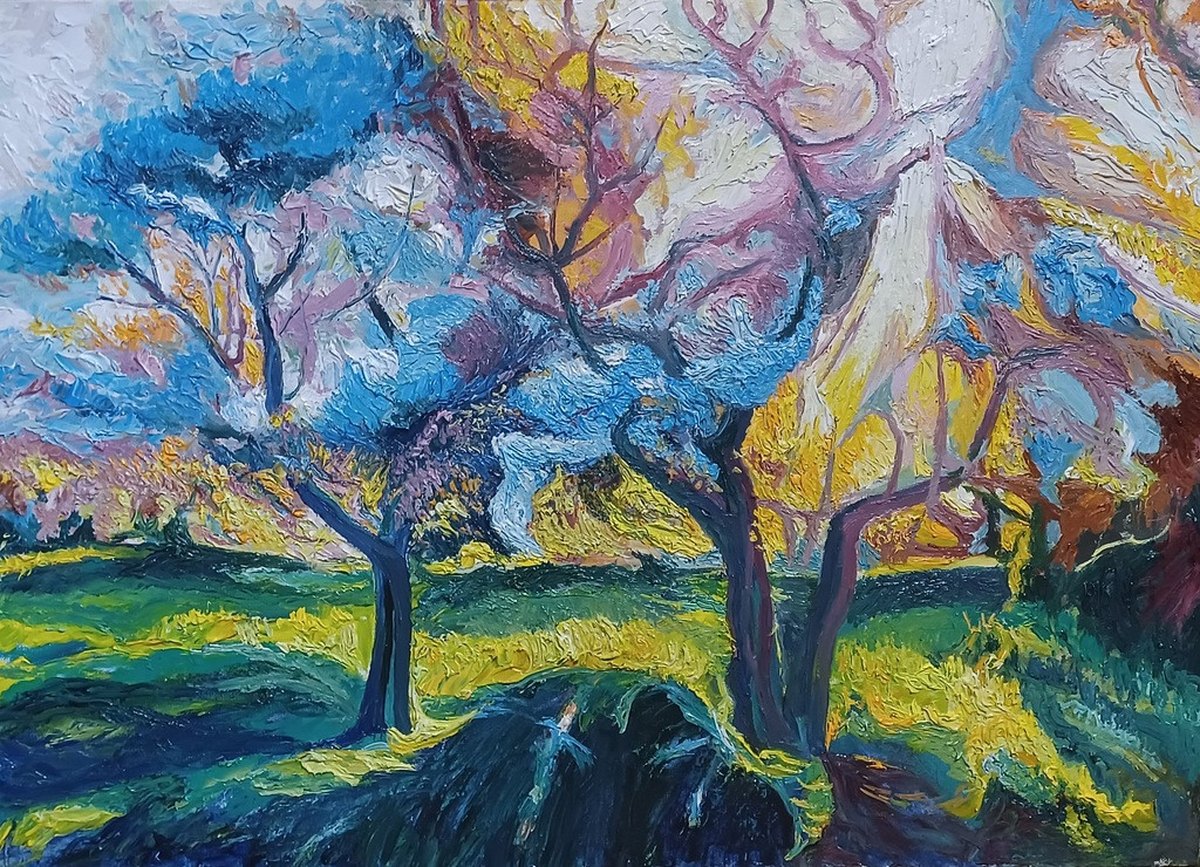
In Garden 1, Gennady Komarov turns to landscape as a form of grateful memory, addressing a remembered dacha garden, abundant, intimate and alive. Within VerbArt Venice Digital Edition 2026, Komarov’s landscapes introduce a deeply lyrical and at the same time historically grounded line. The artistic importance of the work lies in its sincere connection between motif and memory: the viewer sees not merely a view, but a landscape that has passed through the artist’s life and has become a form of testimony.
His painting does not seek spectacular effect; it is built on attentive looking, on the emotional recognition of a place and on the desire to preserve what may disappear from ordinary memory. They show Russian nature not as an abstract symbol, but as a personal space shaped by time, loss and affection.
Nature in these works is not a background but a living participant in biography: fields, water, villages, snow, forest and sky become witnesses of childhood, friendship, family history and the experience of returning to the land. The brushwork keeps the surface alive, while colour carries the mood of season and place.
In Snowy Winter of 2026, Gennady Komarov turns to landscape as a form of grateful memory, addressing the Lesnye Ozera settlement under snow, seen as an earthly paradise and a living home. Within VerbArt Venice Digital Edition 2026, Komarov’s landscapes introduce a deeply lyrical and at the same time historically grounded line. The artistic importance of the work lies in its sincere connection between motif and memory: the viewer sees not merely a view, but a landscape that has passed through the artist’s life and has become a form of testimony.
His painting does not seek spectacular effect; it is built on attentive looking, on the emotional recognition of a place and on the desire to preserve what may disappear from ordinary memory. They show Russian nature not as an abstract symbol, but as a personal space shaped by time, loss and affection.
Nature in these works is not a background but a living participant in biography: fields, water, villages, snow, forest and sky become witnesses of childhood, friendship, family history and the experience of returning to the land. The brushwork keeps the surface alive, while colour carries the mood of season and place.
In Winter 17, Gennady Komarov turns to landscape as a form of grateful memory, addressing a winter landscape of the Moscow and Vladimir regions and the Lesnye Ozera cycle. Within VerbArt Venice Digital Edition 2026, Komarov’s landscapes introduce a deeply lyrical and at the same time historically grounded line. The artistic importance of the work lies in its sincere connection between motif and memory: the viewer sees not merely a view, but a landscape that has passed through the artist’s life and has become a form of testimony.
His painting does not seek spectacular effect; it is built on attentive looking, on the emotional recognition of a place and on the desire to preserve what may disappear from ordinary memory. They show Russian nature not as an abstract symbol, but as a personal space shaped by time, loss and affection.
Nature in these works is not a background but a living participant in biography: fields, water, villages, snow, forest and sky become witnesses of childhood, friendship, family history and the experience of returning to the land. The brushwork keeps the surface alive, while colour carries the mood of season and place.
In Mountain Altai, Gennady Komarov turns to landscape as a form of grateful memory, addressing the majestic homeland of a late friend, reconstructed from photographs and memory. Within VerbArt Venice Digital Edition 2026, Komarov’s landscapes introduce a deeply lyrical and at the same time historically grounded line. The artistic importance of the work lies in its sincere connection between motif and memory: the viewer sees not merely a view, but a landscape that has passed through the artist’s life and has become a form of testimony.
His painting does not seek spectacular effect; it is built on attentive looking, on the emotional recognition of a place and on the desire to preserve what may disappear from ordinary memory. They show Russian nature not as an abstract symbol, but as a personal space shaped by time, loss and affection.
Nature in these works is not a background but a living participant in biography: fields, water, villages, snow, forest and sky become witnesses of childhood, friendship, family history and the experience of returning to the land. The brushwork keeps the surface alive, while colour carries the mood of season and place.
In Alpine Meadows. Nature in these works is not a background but a living participant in biography: fields, water, villages, snow, forest and sky become witnesses of childhood, friendship, family history and the experience of returning to the land. The brushwork keeps the surface alive, while colour carries the mood of season and place.
Mountain Altai, Gennady Komarov turns to landscape as a form of grateful memory, addressing high-mountain meadows in full bloom, a hymn to Altai’s generous beauty. Within VerbArt Venice Digital Edition 2026, Komarov’s landscapes introduce a deeply lyrical and at the same time historically grounded line. The artistic importance of the work lies in its sincere connection between motif and memory: the viewer sees not merely a view, but a landscape that has passed through the artist’s life and has become a form of testimony.
His painting does not seek spectacular effect; it is built on attentive looking, on the emotional recognition of a place and on the desire to preserve what may disappear from ordinary memory. They show Russian nature not as an abstract symbol, but as a personal space shaped by time, loss and affection.
In Kucherpinskoye Lake. Nature in these works is not a background but a living participant in biography: fields, water, villages, snow, forest and sky become witnesses of childhood, friendship, family history and the experience of returning to the land. The brushwork keeps the surface alive, while colour carries the mood of season and place.
Horses, Gennady Komarov turns to landscape as a form of grateful memory, addressing turquoise lake water, horses and mountain quiet held in a state of harmony. Within VerbArt Venice Digital Edition 2026, Komarov’s landscapes introduce a deeply lyrical and at the same time historically grounded line. The artistic importance of the work lies in its sincere connection between motif and memory: the viewer sees not merely a view, but a landscape that has passed through the artist’s life and has become a form of testimony.
His painting does not seek spectacular effect; it is built on attentive looking, on the emotional recognition of a place and on the desire to preserve what may disappear from ordinary memory. They show Russian nature not as an abstract symbol, but as a personal space shaped by time, loss and affection.
In Nature of Mountain Altai, Gennady Komarov turns to landscape as a form of grateful memory, addressing water, mountains and forest massifs of Altai gathered into a solemn landscape image. Within VerbArt Venice Digital Edition 2026, Komarov’s landscapes introduce a deeply lyrical and at the same time historically grounded line. The artistic importance of the work lies in its sincere connection between motif and memory: the viewer sees not merely a view, but a landscape that has passed through the artist’s life and has become a form of testimony.
His painting does not seek spectacular effect; it is built on attentive looking, on the emotional recognition of a place and on the desire to preserve what may disappear from ordinary memory. They show Russian nature not as an abstract symbol, but as a personal space shaped by time, loss and affection.
Nature in these works is not a background but a living participant in biography: fields, water, villages, snow, forest and sky become witnesses of childhood, friendship, family history and the experience of returning to the land. The brushwork keeps the surface alive, while colour carries the mood of season and place.
In The Chuya River, Gennady Komarov turns to landscape as a form of grateful memory, addressing the river and the legendary Chuya Highway, where road, song and mountain memory converge. Within VerbArt Venice Digital Edition 2026, Komarov’s landscapes introduce a deeply lyrical and at the same time historically grounded line. The artistic importance of the work lies in its sincere connection between motif and memory: the viewer sees not merely a view, but a landscape that has passed through the artist’s life and has become a form of testimony.
His painting does not seek spectacular effect; it is built on attentive looking, on the emotional recognition of a place and on the desire to preserve what may disappear from ordinary memory. They show Russian nature not as an abstract symbol, but as a personal space shaped by time, loss and affection.
Nature in these works is not a background but a living participant in biography: fields, water, villages, snow, forest and sky become witnesses of childhood, friendship, family history and the experience of returning to the land. The brushwork keeps the surface alive, while colour carries the mood of season and place.
In Aral Radiance, Vyacheslav Lee creates an ecological allegory of the Aral Sea catastrophe and the vulnerable future of humanity. For VerbArt Venice Digital Edition 2026, this work is significant as part of a project in which painting becomes a form of philosophical and emotional testimony. The value of the work lies in its ability to transform a private impulse into a contemporary visual metaphor.
His painting is not limited to a single plot or a straightforward symbol; it unfolds as a layered allegory in which irony, anxiety, fantasy and personal experience meet. Lee’s images are born from a biography that includes science, teaching, personal loss and a late, powerful return to art.
The artist often brings together incompatible elements - the everyday and the mythological, the comic and the tragic, the intimate and the global - in order to show the instability of the present and the difficulty of human self-definition in a rapidly changing world. This gives his painterly language a special density: colour and form become instruments for thinking about freedom, temptation, ecological danger, memory, power and hope.
1st place, XIII International Exhibition and Competition of Contemporary Art, SPBARTWEEK.RU, 5-10 July 2022 year. Saint Petersburg.
In Spring Promenade, Vyacheslav Lee creates a spring allegory of awakening, play and the clash of instinctive and creative forces. For VerbArt Venice Digital Edition 2026, this work is significant as part of a project in which painting becomes a form of philosophical and emotional testimony. The value of the work lies in its ability to transform a private impulse into a contemporary visual metaphor.
His painting is not limited to a single plot or a straightforward symbol; it unfolds as a layered allegory in which irony, anxiety, fantasy and personal experience meet. Lee’s images are born from a biography that includes science, teaching, personal loss and a late, powerful return to art.
The artist often brings together incompatible elements - the everyday and the mythological, the comic and the tragic, the intimate and the global - in order to show the instability of the present and the difficulty of human self-definition in a rapidly changing world. This gives his painterly language a special density: colour and form become instruments for thinking about freedom, temptation, ecological danger, memory, power and hope.
3rd place, XIII International Exhibition and Competition of Contemporary Art, SPBARTWEEK.RU, 5-10 July 2022 year. Saint Petersburg.
In Free Turkey, Vyacheslav Lee creates a fantastic act of liberation, where a ritual victim becomes an emblem of freedom. For VerbArt Venice Digital Edition 2026, this work is significant as part of a project in which painting becomes a form of philosophical and emotional testimony. The value of the work lies in its ability to transform a private impulse into a contemporary visual metaphor.
His painting is not limited to a single plot or a straightforward symbol; it unfolds as a layered allegory in which irony, anxiety, fantasy and personal experience meet. Lee’s images are born from a biography that includes science, teaching, personal loss and a late, powerful return to art.
The artist often brings together incompatible elements - the everyday and the mythological, the comic and the tragic, the intimate and the global - in order to show the instability of the present and the difficulty of human self-definition in a rapidly changing world. This gives his painterly language a special density: colour and form become instruments for thinking about freedom, temptation, ecological danger, memory, power and hope.
2nd place, <<Poeziia okruzhaiushchei real'nosti>> International Exhibition and Competition of Contemporary Art,2024
In Dacha Terem, Vyacheslav Lee creates a whimsical architectural organism between folk fairy tale, shell and self-built dream. For VerbArt Venice Digital Edition 2026, this work is significant as part of a project in which painting becomes a form of philosophical and emotional testimony. The value of the work lies in its ability to transform a private impulse into a contemporary visual metaphor.
His painting is not limited to a single plot or a straightforward symbol; it unfolds as a layered allegory in which irony, anxiety, fantasy and personal experience meet. Lee’s images are born from a biography that includes science, teaching, personal loss and a late, powerful return to art.
The artist often brings together incompatible elements - the everyday and the mythological, the comic and the tragic, the intimate and the global - in order to show the instability of the present and the difficulty of human self-definition in a rapidly changing world. This gives his painterly language a special density: colour and form become instruments for thinking about freedom, temptation, ecological danger, memory, power and hope.
3rd place, International Exhibition and Competition of Contemporary Art <<Poeziia okruzhaiushchei real'nosti>>,4-26 June 2024 year, Moscow
In Fading, Vyacheslav Lee creates a meditation on decline as a soft transition rather than defeat. His painting is not limited to a single plot or a straightforward symbol; it unfolds as a layered allegory in which irony, anxiety, fantasy and personal experience meet. The artist often brings together incompatible elements - the everyday and the mythological, the comic and the tragic, the intimate and the global - in order to show the instability of the present and the difficulty of human self-definition in a rapidly changing world.
For VerbArt Venice Digital Edition 2026, this work is significant as part of a project in which painting becomes a form of philosophical and emotional testimony. Lee’s images are born from a biography that includes science, teaching, personal loss and a late, powerful return to art. This gives his painterly language a special density: colour and form become instruments for thinking about freedom, temptation, ecological danger, memory, power and hope. The value of the work lies in its ability to transform a private impulse into a contemporary visual metaphor.
2nd place, SPBARTWEEK.RU, 6-11 August 2024 year. St. Petersburg Art Week
In Whisper, Vyacheslav Lee creates an abstract expressionist image of temptation, impulse and inner choice. His painting is not limited to a single plot or a straightforward symbol; it unfolds as a layered allegory in which irony, anxiety, fantasy and personal experience meet. The artist often brings together incompatible elements - the everyday and the mythological, the comic and the tragic, the intimate and the global - in order to show the instability of the present and the difficulty of human self-definition in a rapidly changing world.
For VerbArt Venice Digital Edition 2026, this work is significant as part of a project in which painting becomes a form of philosophical and emotional testimony. Lee’s images are born from a biography that includes science, teaching, personal loss and a late, powerful return to art. This gives his painterly language a special density: colour and form become instruments for thinking about freedom, temptation, ecological danger, memory, power and hope. The value of the work lies in its ability to transform a private impulse into a contemporary visual metaphor.
3rd place, XIII International Exhibition and Competition of Contemporary Art, SPBARTWEEK.RU, 5-10 July 2022 year. Saint Petersburg.
In Delivery of Spring, Vyacheslav Lee creates a complex allegory of pandemic, war, absurd motion and nature’s indifference. His painting is not limited to a single plot or a straightforward symbol; it unfolds as a layered allegory in which irony, anxiety, fantasy and personal experience meet. The artist often brings together incompatible elements - the everyday and the mythological, the comic and the tragic, the intimate and the global - in order to show the instability of the present and the difficulty of human self-definition in a rapidly changing world.
For VerbArt Venice Digital Edition 2026, this work is significant as part of a project in which painting becomes a form of philosophical and emotional testimony. Lee’s images are born from a biography that includes science, teaching, personal loss and a late, powerful return to art. This gives his painterly language a special density: colour and form become instruments for thinking about freedom, temptation, ecological danger, memory, power and hope. The value of the work lies in its ability to transform a private impulse into a contemporary visual metaphor.
1st place, XIII, International Exhibition and Competition of Contemporary Art, SPBARTWEEK.RU, 5-10 July 2022 year. Saint Petersburg.
In April Wetsuit, Vyacheslav Lee creates a fantasy of freedom in which a female figure moves between water, earth and sky. His painting is not limited to a single plot or a straightforward symbol; it unfolds as a layered allegory in which irony, anxiety, fantasy and personal experience meet. The artist often brings together incompatible elements - the everyday and the mythological, the comic and the tragic, the intimate and the global - in order to show the instability of the present and the difficulty of human self-definition in a rapidly changing world.
For VerbArt Venice Digital Edition 2026, this work is significant as part of a project in which painting becomes a form of philosophical and emotional testimony. Lee’s images are born from a biography that includes science, teaching, personal loss and a late, powerful return to art. This gives his painterly language a special density: colour and form become instruments for thinking about freedom, temptation, ecological danger, memory, power and hope. The value of the work lies in its ability to transform a private impulse into a contemporary visual metaphor.
2nd place, XIII International Exhibition and Competition of Contemporary Art, SPBARTWEEK.RU, 5-10 July 2022 year. Saint Petersburg.
In Newspapers and Soap, Vyacheslav Lee creates a modest still life of late Soviet memory, scarcity and domestic endurance. His painting is not limited to a single plot or a straightforward symbol; it unfolds as a layered allegory in which irony, anxiety, fantasy and personal experience meet. The artist often brings together incompatible elements - the everyday and the mythological, the comic and the tragic, the intimate and the global - in order to show the instability of the present and the difficulty of human self-definition in a rapidly changing world.
For VerbArt Venice Digital Edition 2026, this work is significant as part of a project in which painting becomes a form of philosophical and emotional testimony. Lee’s images are born from a biography that includes science, teaching, personal loss and a late, powerful return to art. This gives his painterly language a special density: colour and form become instruments for thinking about freedom, temptation, ecological danger, memory, power and hope. The value of the work lies in its ability to transform a private impulse into a contemporary visual metaphor.
2nd place, International Exhibition and Competition of Contemporary Art UNITED BY ART,26 October-23November, Mexico City, 2024 year
In Toro!, Vyacheslav Lee creates a philosophical corrida where the human will confronts animal force and mortality. His painting is not limited to a single plot or a straightforward symbol; it unfolds as a layered allegory in which irony, anxiety, fantasy and personal experience meet. The artist often brings together incompatible elements - the everyday and the mythological, the comic and the tragic, the intimate and the global - in order to show the instability of the present and the difficulty of human self-definition in a rapidly changing world.
For VerbArt Venice Digital Edition 2026, this work is significant as part of a project in which painting becomes a form of philosophical and emotional testimony. Lee’s images are born from a biography that includes science, teaching, personal loss and a late, powerful return to art. This gives his painterly language a special density: colour and form become instruments for thinking about freedom, temptation, ecological danger, memory, power and hope. The value of the work lies in its ability to transform a private impulse into a contemporary visual metaphor.
Silver Medal «ART. Excellence. Awards», 2025. International Academy of Contemporary Arts. Moscow 2025 year.
In Rider of the Apocalypse (Rider in the Stream), Vyacheslav Lee creates an apocalyptic image of technology, violence and the fragile hope of renewal. His painting is not limited to a single plot or a straightforward symbol; it unfolds as a layered allegory in which irony, anxiety, fantasy and personal experience meet. The artist often brings together incompatible elements - the everyday and the mythological, the comic and the tragic, the intimate and the global - in order to show the instability of the present and the difficulty of human self-definition in a rapidly changing world.
For VerbArt Venice Digital Edition 2026, this work is significant as part of a project in which painting becomes a form of philosophical and emotional testimony. Lee’s images are born from a biography that includes science, teaching, personal loss and a late, powerful return to art. This gives his painterly language a special density: colour and form become instruments for thinking about freedom, temptation, ecological danger, memory, power and hope. The value of the work lies in its ability to transform a private impulse into a contemporary visual metaphor.
2nd place, «RASSIAN ART WEEK», 8-13March 2022 year. Moscow
3rd place, XIII International Exhibition and Competition of Contemporary Art, SPBARTWEEK.RU, 5-10 July 2022 year. Saint Petersburg.
In Crown, Vyacheslav Lee creates a grotesque scene of creatures united by desire for power. His painting is not limited to a single plot or a straightforward symbol; it unfolds as a layered allegory in which irony, anxiety, fantasy and personal experience meet. The artist often brings together incompatible elements - the everyday and the mythological, the comic and the tragic, the intimate and the global - in order to show the instability of the present and the difficulty of human self-definition in a rapidly changing world.
For VerbArt Venice Digital Edition 2026, this work is significant as part of a project in which painting becomes a form of philosophical and emotional testimony. Lee’s images are born from a biography that includes science, teaching, personal loss and a late, powerful return to art. This gives his painterly language a special density: colour and form become instruments for thinking about freedom, temptation, ecological danger, memory, power and hope. The value of the work lies in its ability to transform a private impulse into a contemporary visual metaphor.
1st place, International Exhibition and Competition of Contemporary Art «Avant Garde Today»,13-21 April 2023 year, Moscow.
In MMA (Man, Man, Aphrodite), Vyacheslav Lee creates a metaphor of struggle for dignity, love and recognition. His painting is not limited to a single plot or a straightforward symbol; it unfolds as a layered allegory in which irony, anxiety, fantasy and personal experience meet. The artist often brings together incompatible elements - the everyday and the mythological, the comic and the tragic, the intimate and the global - in order to show the instability of the present and the difficulty of human self-definition in a rapidly changing world.
For VerbArt Venice Digital Edition 2026, this work is significant as part of a project in which painting becomes a form of philosophical and emotional testimony. Lee’s images are born from a biography that includes science, teaching, personal loss and a late, powerful return to art. This gives his painterly language a special density: colour and form become instruments for thinking about freedom, temptation, ecological danger, memory, power and hope. The value of the work lies in its ability to transform a private impulse into a contemporary visual metaphor.
1st place, Mezhdunarodnaia vystavka-konkurs Art-idei XXI veka <<Vsechestvo>> Moscow 18-24 August 2023
In Golden Angel. Change of Image, Vyacheslav Lee creates a transitional angelic figure suspended between mask, light and self-renewal. His painting is not limited to a single plot or a straightforward symbol; it unfolds as a layered allegory in which irony, anxiety, fantasy and personal experience meet. The artist often brings together incompatible elements - the everyday and the mythological, the comic and the tragic, the intimate and the global - in order to show the instability of the present and the difficulty of human self-definition in a rapidly changing world.
For VerbArt Venice Digital Edition 2026, this work is significant as part of a project in which painting becomes a form of philosophical and emotional testimony. Lee’s images are born from a biography that includes science, teaching, personal loss and a late, powerful return to art. This gives his painterly language a special density: colour and form become instruments for thinking about freedom, temptation, ecological danger, memory, power and hope. The value of the work lies in its ability to transform a private impulse into a contemporary visual metaphor.
3rd place, XXXIV International Exhibition and Competition of Traditional and Contemporary Art «RUSSIAN ART WEEK»,25-30 April 2023 year, Moscow.
In Abandoned Café, Vyacheslav Lee creates a ruined café as a memory of youth, transition and the passing of an era. His painting is not limited to a single plot or a straightforward symbol; it unfolds as a layered allegory in which irony, anxiety, fantasy and personal experience meet. The artist often brings together incompatible elements - the everyday and the mythological, the comic and the tragic, the intimate and the global - in order to show the instability of the present and the difficulty of human self-definition in a rapidly changing world.
For VerbArt Venice Digital Edition 2026, this work is significant as part of a project in which painting becomes a form of philosophical and emotional testimony. Lee’s images are born from a biography that includes science, teaching, personal loss and a late, powerful return to art. This gives his painterly language a special density: colour and form become instruments for thinking about freedom, temptation, ecological danger, memory, power and hope. The value of the work lies in its ability to transform a private impulse into a contemporary visual metaphor.
In Limbic System, Vyacheslav Lee creates a psychological portrait of thought, emotion and identity in the digital age. His painting is not limited to a single plot or a straightforward symbol; it unfolds as a layered allegory in which irony, anxiety, fantasy and personal experience meet. The artist often brings together incompatible elements - the everyday and the mythological, the comic and the tragic, the intimate and the global - in order to show the instability of the present and the difficulty of human self-definition in a rapidly changing world.
For VerbArt Venice Digital Edition 2026, this work is significant as part of a project in which painting becomes a form of philosophical and emotional testimony. Lee’s images are born from a biography that includes science, teaching, personal loss and a late, powerful return to art. This gives his painterly language a special density: colour and form become instruments for thinking about freedom, temptation, ecological danger, memory, power and hope. The value of the work lies in its ability to transform a private impulse into a contemporary visual metaphor.
3rd place, International Exhibition and Competition of Contemporary Art. <<Poeziia okruzhaiushchei real'nosti>>, 4-26 June 2024 year, Moscow.
In Evening Motif, Vyacheslav Lee creates a meeting with childhood memory through the light of a house at dusk. His painting is not limited to a single plot or a straightforward symbol; it unfolds as a layered allegory in which irony, anxiety, fantasy and personal experience meet. The artist often brings together incompatible elements - the everyday and the mythological, the comic and the tragic, the intimate and the global - in order to show the instability of the present and the difficulty of human self-definition in a rapidly changing world.
For VerbArt Venice Digital Edition 2026, this work is significant as part of a project in which painting becomes a form of philosophical and emotional testimony. Lee’s images are born from a biography that includes science, teaching, personal loss and a late, powerful return to art. This gives his painterly language a special density: colour and form become instruments for thinking about freedom, temptation, ecological danger, memory, power and hope. The value of the work lies in its ability to transform a private impulse into a contemporary visual metaphor.
In Lady with a Tulip, Vyacheslav Lee creates a mature female image where tenderness and lived experience become beauty. His painting is not limited to a single plot or a straightforward symbol; it unfolds as a layered allegory in which irony, anxiety, fantasy and personal experience meet. The artist often brings together incompatible elements - the everyday and the mythological, the comic and the tragic, the intimate and the global - in order to show the instability of the present and the difficulty of human self-definition in a rapidly changing world.
For VerbArt Venice Digital Edition 2026, this work is significant as part of a project in which painting becomes a form of philosophical and emotional testimony. Lee’s images are born from a biography that includes science, teaching, personal loss and a late, powerful return to art. This gives his painterly language a special density: colour and form become instruments for thinking about freedom, temptation, ecological danger, memory, power and hope. The value of the work lies in its ability to transform a private impulse into a contemporary visual metaphor.
3rd place, International Exhibition and Competition of Abstract Art «ABSTRACTUM»,23-29 March 2024 year, Moscow. ABSTRACTFESTIVAL.RU
In Pollination by Drone, Vyacheslav Lee creates a warning about technology that can either serve life or destroy it. His painting is not limited to a single plot or a straightforward symbol; it unfolds as a layered allegory in which irony, anxiety, fantasy and personal experience meet. The artist often brings together incompatible elements - the everyday and the mythological, the comic and the tragic, the intimate and the global - in order to show the instability of the present and the difficulty of human self-definition in a rapidly changing world.
For VerbArt Venice Digital Edition 2026, this work is significant as part of a project in which painting becomes a form of philosophical and emotional testimony. Lee’s images are born from a biography that includes science, teaching, personal loss and a late, powerful return to art. This gives his painterly language a special density: colour and form become instruments for thinking about freedom, temptation, ecological danger, memory, power and hope. The value of the work lies in its ability to transform a private impulse into a contemporary visual metaphor.
In Straits of the Middle East, Vyacheslav Lee creates a geopolitical allegory of oil, power, conflict and human shortsightedness. His painting is not limited to a single plot or a straightforward symbol; it unfolds as a layered allegory in which irony, anxiety, fantasy and personal experience meet. The artist often brings together incompatible elements - the everyday and the mythological, the comic and the tragic, the intimate and the global - in order to show the instability of the present and the difficulty of human self-definition in a rapidly changing world.
For VerbArt Venice Digital Edition 2026, this work is significant as part of a project in which painting becomes a form of philosophical and emotional testimony. Lee’s images are born from a biography that includes science, teaching, personal loss and a late, powerful return to art. This gives his painterly language a special density: colour and form become instruments for thinking about freedom, temptation, ecological danger, memory, power and hope. The value of the work lies in its ability to transform a private impulse into a contemporary visual metaphor.
In Wave, Olga Nikolaeva uses her authorial computer-digital technique to create an image devoted to the eternal movement of sea water forming the luminous line of the surf. The work is based on a realistic impulse, but the digital treatment gives the motif a heightened, almost dreamlike resonance. Nature, architecture, flowers, water and sky are not presented as passive decoration; they become spaces of attention, inviting the viewer to slow down and recognize the value of a living world that requires care and protection.
Within VerbArt Venice Digital Edition 2026, Nikolaeva’s works form the cycle “A World of Reflections of Being,” where digital art serves not cold technology, but memory, beauty and contemplation. The image remains accessible and emotionally clear, yet it also opens a symbolic dimension: each landscape or flower becomes a sign of vulnerability, renewal and human responsibility. The artistic value of the work lies in the delicate balance between technological method and lyrical feeling, between visual clarity and the quiet mystery of existence.
In Sea Wave, Olga Nikolaeva uses her authorial computer-digital technique to create an image devoted to a second variation on the sea wave as rhythm, breath and infinity. The work is based on a realistic impulse, but the digital treatment gives the motif a heightened, almost dreamlike resonance. Nature, architecture, flowers, water and sky are not presented as passive decoration; they become spaces of attention, inviting the viewer to slow down and recognize the value of a living world that requires care and protection.
Within VerbArt Venice Digital Edition 2026, Nikolaeva’s works form the cycle “A World of Reflections of Being,” where digital art serves not cold technology, but memory, beauty and contemplation. The image remains accessible and emotionally clear, yet it also opens a symbolic dimension: each landscape or flower becomes a sign of vulnerability, renewal and human responsibility. The artistic value of the work lies in the delicate balance between technological method and lyrical feeling, between visual clarity and the quiet mystery of existence.
In Mountain Lake, Olga Nikolaeva uses her authorial computer-digital technique to create an image devoted to a heavenly blue mountain lake framed by rocks and ancient stones. The work is based on a realistic impulse, but the digital treatment gives the motif a heightened, almost dreamlike resonance. Nature, architecture, flowers, water and sky are not presented as passive decoration; they become spaces of attention, inviting the viewer to slow down and recognize the value of a living world that requires care and protection.
Within VerbArt Venice Digital Edition 2026, Nikolaeva’s works form the cycle “A World of Reflections of Being,” where digital art serves not cold technology, but memory, beauty and contemplation. The image remains accessible and emotionally clear, yet it also opens a symbolic dimension: each landscape or flower becomes a sign of vulnerability, renewal and human responsibility. The artistic value of the work lies in the delicate balance between technological method and lyrical feeling, between visual clarity and the quiet mystery of existence.
In Gold of Domes, Olga Nikolaeva uses her authorial computer-digital technique to create an image devoted to golden domes as signs of cultural memory in cities and villages. The work is based on a realistic impulse, but the digital treatment gives the motif a heightened, almost dreamlike resonance. Nature, architecture, flowers, water and sky are not presented as passive decoration; they become spaces of attention, inviting the viewer to slow down and recognize the value of a living world that requires care and protection.
Within VerbArt Venice Digital Edition 2026, Nikolaeva’s works form the cycle “A World of Reflections of Being,” where digital art serves not cold technology, but memory, beauty and contemplation. The image remains accessible and emotionally clear, yet it also opens a symbolic dimension: each landscape or flower becomes a sign of vulnerability, renewal and human responsibility. The artistic value of the work lies in the delicate balance between technological method and lyrical feeling, between visual clarity and the quiet mystery of existence.
In Epiphany Frosts, Olga Nikolaeva uses her authorial computer-digital technique to create an image devoted to the severity of winter, blizzard and crystalline cold translated into digital image. The work is based on a realistic impulse, but the digital treatment gives the motif a heightened, almost dreamlike resonance. Nature, architecture, flowers, water and sky are not presented as passive decoration; they become spaces of attention, inviting the viewer to slow down and recognize the value of a living world that requires care and protection.
Within VerbArt Venice Digital Edition 2026, Nikolaeva’s works form the cycle “A World of Reflections of Being,” where digital art serves not cold technology, but memory, beauty and contemplation. The image remains accessible and emotionally clear, yet it also opens a symbolic dimension: each landscape or flower becomes a sign of vulnerability, renewal and human responsibility. The artistic value of the work lies in the delicate balance between technological method and lyrical feeling, between visual clarity and the quiet mystery of existence.
In Temple, Olga Nikolaeva uses her authorial computer-digital technique to create an image devoted to a sacred architectural image where golden domes become centers of light. The work is based on a realistic impulse, but the digital treatment gives the motif a heightened, almost dreamlike resonance. Nature, architecture, flowers, water and sky are not presented as passive decoration; they become spaces of attention, inviting the viewer to slow down and recognize the value of a living world that requires care and protection.
Within VerbArt Venice Digital Edition 2026, Nikolaeva’s works form the cycle “A World of Reflections of Being,” where digital art serves not cold technology, but memory, beauty and contemplation. The image remains accessible and emotionally clear, yet it also opens a symbolic dimension: each landscape or flower becomes a sign of vulnerability, renewal and human responsibility. The artistic value of the work lies in the delicate balance between technological method and lyrical feeling, between visual clarity and the quiet mystery of existence.
In Golden Domes, Olga Nikolaeva uses her authorial computer-digital technique to create an image devoted to a motif of domes that connects village, city and spiritual memory. The work is based on a realistic impulse, but the digital treatment gives the motif a heightened, almost dreamlike resonance. Nature, architecture, flowers, water and sky are not presented as passive decoration; they become spaces of attention, inviting the viewer to slow down and recognize the value of a living world that requires care and protection.
Within VerbArt Venice Digital Edition 2026, Nikolaeva’s works form the cycle “A World of Reflections of Being,” where digital art serves not cold technology, but memory, beauty and contemplation. The image remains accessible and emotionally clear, yet it also opens a symbolic dimension: each landscape or flower becomes a sign of vulnerability, renewal and human responsibility. The artistic value of the work lies in the delicate balance between technological method and lyrical feeling, between visual clarity and the quiet mystery of existence.
In Supermoon, Olga Nikolaeva uses her authorial computer-digital technique to create an image devoted to a rare celestial phenomenon transformed into a contemplative digital vision. The work is based on a realistic impulse, but the digital treatment gives the motif a heightened, almost dreamlike resonance. Nature, architecture, flowers, water and sky are not presented as passive decoration; they become spaces of attention, inviting the viewer to slow down and recognize the value of a living world that requires care and protection.
Within VerbArt Venice Digital Edition 2026, Nikolaeva’s works form the cycle “A World of Reflections of Being,” where digital art serves not cold technology, but memory, beauty and contemplation. The image remains accessible and emotionally clear, yet it also opens a symbolic dimension: each landscape or flower becomes a sign of vulnerability, renewal and human responsibility. The artistic value of the work lies in the delicate balance between technological method and lyrical feeling, between visual clarity and the quiet mystery of existence.
In Comet, Olga Nikolaeva uses her authorial computer-digital technique to create an image devoted to a dreamlike space of Morpheus, sleep and fantasy. The work is based on a realistic impulse, but the digital treatment gives the motif a heightened, almost dreamlike resonance. Nature, architecture, flowers, water and sky are not presented as passive decoration; they become spaces of attention, inviting the viewer to slow down and recognize the value of a living world that requires care and protection.
Within VerbArt Venice Digital Edition 2026, Nikolaeva’s works form the cycle “A World of Reflections of Being,” where digital art serves not cold technology, but memory, beauty and contemplation. The image remains accessible and emotionally clear, yet it also opens a symbolic dimension: each landscape or flower becomes a sign of vulnerability, renewal and human responsibility. The artistic value of the work lies in the delicate balance between technological method and lyrical feeling, between visual clarity and the quiet mystery of existence.
In On the Summit, Olga Nikolaeva uses her authorial computer-digital technique to create an image devoted to a solitary ascent into a realm of height, dream and inner achievement. The work is based on a realistic impulse, but the digital treatment gives the motif a heightened, almost dreamlike resonance. Nature, architecture, flowers, water and sky are not presented as passive decoration; they become spaces of attention, inviting the viewer to slow down and recognize the value of a living world that requires care and protection.
Within VerbArt Venice Digital Edition 2026, Nikolaeva’s works form the cycle “A World of Reflections of Being,” where digital art serves not cold technology, but memory, beauty and contemplation. The image remains accessible and emotionally clear, yet it also opens a symbolic dimension: each landscape or flower becomes a sign of vulnerability, renewal and human responsibility. The artistic value of the work lies in the delicate balance between technological method and lyrical feeling, between visual clarity and the quiet mystery of existence.
In Hurrah!, Olga Nikolaeva uses her authorial computer-digital technique to create an image devoted to an open, joyful composition filled with festive energy and trust. The work is based on a realistic impulse, but the digital treatment gives the motif a heightened, almost dreamlike resonance. Nature, architecture, flowers, water and sky are not presented as passive decoration; they become spaces of attention, inviting the viewer to slow down and recognize the value of a living world that requires care and protection.
Within VerbArt Venice Digital Edition 2026, Nikolaeva’s works form the cycle “A World of Reflections of Being,” where digital art serves not cold technology, but memory, beauty and contemplation. The image remains accessible and emotionally clear, yet it also opens a symbolic dimension: each landscape or flower becomes a sign of vulnerability, renewal and human responsibility. The artistic value of the work lies in the delicate balance between technological method and lyrical feeling, between visual clarity and the quiet mystery of existence.
In Fuji, Olga Nikolaeva uses her authorial computer-digital technique to create an image devoted to the iconic mountain as an image of calm, beauty and cultural distance. The work is based on a realistic impulse, but the digital treatment gives the motif a heightened, almost dreamlike resonance. Nature, architecture, flowers, water and sky are not presented as passive decoration; they become spaces of attention, inviting the viewer to slow down and recognize the value of a living world that requires care and protection.
Within VerbArt Venice Digital Edition 2026, Nikolaeva’s works form the cycle “A World of Reflections of Being,” where digital art serves not cold technology, but memory, beauty and contemplation. The image remains accessible and emotionally clear, yet it also opens a symbolic dimension: each landscape or flower becomes a sign of vulnerability, renewal and human responsibility. The artistic value of the work lies in the delicate balance between technological method and lyrical feeling, between visual clarity and the quiet mystery of existence.
In Zarechye, Olga Nikolaeva uses her authorial computer-digital technique to create an image devoted to quiet water, summer sky and greenery beyond the river. The work is based on a realistic impulse, but the digital treatment gives the motif a heightened, almost dreamlike resonance. Nature, architecture, flowers, water and sky are not presented as passive decoration; they become spaces of attention, inviting the viewer to slow down and recognize the value of a living world that requires care and protection.
Within VerbArt Venice Digital Edition 2026, Nikolaeva’s works form the cycle “A World of Reflections of Being,” where digital art serves not cold technology, but memory, beauty and contemplation. The image remains accessible and emotionally clear, yet it also opens a symbolic dimension: each landscape or flower becomes a sign of vulnerability, renewal and human responsibility. The artistic value of the work lies in the delicate balance between technological method and lyrical feeling, between visual clarity and the quiet mystery of existence.
In Suspension Bridge, Olga Nikolaeva uses her authorial computer-digital technique to create an image devoted to tree, water and a fragile crossing as a metaphor for connection. The work is based on a realistic impulse, but the digital treatment gives the motif a heightened, almost dreamlike resonance. Nature, architecture, flowers, water and sky are not presented as passive decoration; they become spaces of attention, inviting the viewer to slow down and recognize the value of a living world that requires care and protection.
Within VerbArt Venice Digital Edition 2026, Nikolaeva’s works form the cycle “A World of Reflections of Being,” where digital art serves not cold technology, but memory, beauty and contemplation. The image remains accessible and emotionally clear, yet it also opens a symbolic dimension: each landscape or flower becomes a sign of vulnerability, renewal and human responsibility. The artistic value of the work lies in the delicate balance between technological method and lyrical feeling, between visual clarity and the quiet mystery of existence.
In Bathing Place, Olga Nikolaeva uses her authorial computer-digital technique to create an image devoted to a quiet pond where nature is revealed in intimate closeness. The work is based on a realistic impulse, but the digital treatment gives the motif a heightened, almost dreamlike resonance. Nature, architecture, flowers, water and sky are not presented as passive decoration; they become spaces of attention, inviting the viewer to slow down and recognize the value of a living world that requires care and protection.
Within VerbArt Venice Digital Edition 2026, Nikolaeva’s works form the cycle “A World of Reflections of Being,” where digital art serves not cold technology, but memory, beauty and contemplation. The image remains accessible and emotionally clear, yet it also opens a symbolic dimension: each landscape or flower becomes a sign of vulnerability, renewal and human responsibility. The artistic value of the work lies in the delicate balance between technological method and lyrical feeling, between visual clarity and the quiet mystery of existence.
In Little River, Olga Nikolaeva uses her authorial computer-digital technique to create an image devoted to a narrow forest stream hidden in green shadow. The work is based on a realistic impulse, but the digital treatment gives the motif a heightened, almost dreamlike resonance. Nature, architecture, flowers, water and sky are not presented as passive decoration; they become spaces of attention, inviting the viewer to slow down and recognize the value of a living world that requires care and protection.
Within VerbArt Venice Digital Edition 2026, Nikolaeva’s works form the cycle “A World of Reflections of Being,” where digital art serves not cold technology, but memory, beauty and contemplation. The image remains accessible and emotionally clear, yet it also opens a symbolic dimension: each landscape or flower becomes a sign of vulnerability, renewal and human responsibility. The artistic value of the work lies in the delicate balance between technological method and lyrical feeling, between visual clarity and the quiet mystery of existence.
In Fireweed, Olga Nikolaeva uses her authorial computer-digital technique to create an image devoted to summer flowering as a sign of abundance, warmth and native field memory. The work is based on a realistic impulse, but the digital treatment gives the motif a heightened, almost dreamlike resonance. Nature, architecture, flowers, water and sky are not presented as passive decoration; they become spaces of attention, inviting the viewer to slow down and recognize the value of a living world that requires care and protection.
Within VerbArt Venice Digital Edition 2026, Nikolaeva’s works form the cycle “A World of Reflections of Being,” where digital art serves not cold technology, but memory, beauty and contemplation. The image remains accessible and emotionally clear, yet it also opens a symbolic dimension: each landscape or flower becomes a sign of vulnerability, renewal and human responsibility. The artistic value of the work lies in the delicate balance between technological method and lyrical feeling, between visual clarity and the quiet mystery of existence.
In Lilac, Olga Nikolaeva uses her authorial computer-digital technique to create an image devoted to flowering lilac as fragrance, memory and the emotional richness of spring. The work is based on a realistic impulse, but the digital treatment gives the motif a heightened, almost dreamlike resonance. Nature, architecture, flowers, water and sky are not presented as passive decoration; they become spaces of attention, inviting the viewer to slow down and recognize the value of a living world that requires care and protection.
Within VerbArt Venice Digital Edition 2026, Nikolaeva’s works form the cycle “A World of Reflections of Being,” where digital art serves not cold technology, but memory, beauty and contemplation. The image remains accessible and emotionally clear, yet it also opens a symbolic dimension: each landscape or flower becomes a sign of vulnerability, renewal and human responsibility. The artistic value of the work lies in the delicate balance between technological method and lyrical feeling, between visual clarity and the quiet mystery of existence.
In Red Roses, Olga Nikolaeva uses her authorial computer-digital technique to create an image devoted to red roses as an image of passion, vitality and inner concentration. The work is based on a realistic impulse, but the digital treatment gives the motif a heightened, almost dreamlike resonance. Nature, architecture, flowers, water and sky are not presented as passive decoration; they become spaces of attention, inviting the viewer to slow down and recognize the value of a living world that requires care and protection.
Within VerbArt Venice Digital Edition 2026, Nikolaeva’s works form the cycle “A World of Reflections of Being,” where digital art serves not cold technology, but memory, beauty and contemplation. The image remains accessible and emotionally clear, yet it also opens a symbolic dimension: each landscape or flower becomes a sign of vulnerability, renewal and human responsibility. The artistic value of the work lies in the delicate balance between technological method and lyrical feeling, between visual clarity and the quiet mystery of existence.
In Periwinkles, Olga Nikolaeva uses her authorial computer-digital technique to create an image devoted to modest flowers and soft light, the value of quiet beauty. The work is based on a realistic impulse, but the digital treatment gives the motif a heightened, almost dreamlike resonance. Nature, architecture, flowers, water and sky are not presented as passive decoration; they become spaces of attention, inviting the viewer to slow down and recognize the value of a living world that requires care and protection.
Within VerbArt Venice Digital Edition 2026, Nikolaeva’s works form the cycle “A World of Reflections of Being,” where digital art serves not cold technology, but memory, beauty and contemplation. The image remains accessible and emotionally clear, yet it also opens a symbolic dimension: each landscape or flower becomes a sign of vulnerability, renewal and human responsibility. The artistic value of the work lies in the delicate balance between technological method and lyrical feeling, between visual clarity and the quiet mystery of existence.
In Lily of the Valley, Olga Nikolaeva uses her authorial computer-digital technique to create an image devoted to fragile spring flowers as a sign of vulnerability and renewal. The work is based on a realistic impulse, but the digital treatment gives the motif a heightened, almost dreamlike resonance. Nature, architecture, flowers, water and sky are not presented as passive decoration; they become spaces of attention, inviting the viewer to slow down and recognize the value of a living world that requires care and protection.
Within VerbArt Venice Digital Edition 2026, Nikolaeva’s works form the cycle “A World of Reflections of Being,” where digital art serves not cold technology, but memory, beauty and contemplation. The image remains accessible and emotionally clear, yet it also opens a symbolic dimension: each landscape or flower becomes a sign of vulnerability, renewal and human responsibility. The artistic value of the work lies in the delicate balance between technological method and lyrical feeling, between visual clarity and the quiet mystery of existence.
In Guardians. The Long Way Home, Yuri Poberezhny develops the graphic cycle “Guardians” through a parable of return, gates, birds and invisible support on the path home. Executed in ink and pen on paper, the sheet builds its meaning not through colour, but through the density of line, the rhythm of hatching and the expressive pause between figures. The guardian image does not impose a miracle from outside; it appears as a silent companion, a delicate sign that a human being is not completely alone before fate, memory, temptation or darkness.
In the context of VerbArt Venice Digital Edition 2026, this work reveals the spiritual and humanistic depth of Poberezhny’s graphics. The artist transfers sacred motifs into a living, intimate space where biblical, folkloric and everyday images can coexist naturally. His monochrome world is not poor in expression; on the contrary, it demands slow looking and turns each line into a trace of time. The artistic significance of the sheet lies in its ability to make invisible support visible, to speak about moral choice and inner dignity without pathos, through the quiet power of drawing.
In Guardians. Burden, Yuri Poberezhny develops the graphic cycle “Guardians” through the heaviness of fate carried by a human being under the silent presence of a guardian. Executed in ink and pen on paper, the sheet builds its meaning not through colour, but through the density of line, the rhythm of hatching and the expressive pause between figures. The guardian image does not impose a miracle from outside; it appears as a silent companion, a delicate sign that a human being is not completely alone before fate, memory, temptation or darkness.
In the context of VerbArt Venice Digital Edition 2026, this work reveals the spiritual and humanistic depth of Poberezhny’s graphics. The artist transfers sacred motifs into a living, intimate space where biblical, folkloric and everyday images can coexist naturally. His monochrome world is not poor in expression; on the contrary, it demands slow looking and turns each line into a trace of time. The artistic significance of the sheet lies in its ability to make invisible support visible, to speak about moral choice and inner dignity without pathos, through the quiet power of drawing.
In Guardians. Someone Spilled the Milk, Yuri Poberezhny develops the graphic cycle “Guardians” through earthly hay, night sky and the Milky Way joined in a scene of cosmic tenderness. Executed in ink and pen on paper, the sheet builds its meaning not through colour, but through the density of line, the rhythm of hatching and the expressive pause between figures. The guardian image does not impose a miracle from outside; it appears as a silent companion, a delicate sign that a human being is not completely alone before fate, memory, temptation or darkness.
In the context of VerbArt Venice Digital Edition 2026, this work reveals the spiritual and humanistic depth of Poberezhny’s graphics. The artist transfers sacred motifs into a living, intimate space where biblical, folkloric and everyday images can coexist naturally. His monochrome world is not poor in expression; on the contrary, it demands slow looking and turns each line into a trace of time. The artistic significance of the sheet lies in its ability to make invisible support visible, to speak about moral choice and inner dignity without pathos, through the quiet power of drawing.
In Guardians. Kupala Night, Yuri Poberezhny develops the graphic cycle “Guardians” through Kupala night, fern and the thinning border between visible and invisible worlds. Executed in ink and pen on paper, the sheet builds its meaning not through colour, but through the density of line, the rhythm of hatching and the expressive pause between figures. The guardian image does not impose a miracle from outside; it appears as a silent companion, a delicate sign that a human being is not completely alone before fate, memory, temptation or darkness.
In the context of VerbArt Venice Digital Edition 2026, this work reveals the spiritual and humanistic depth of Poberezhny’s graphics. The artist transfers sacred motifs into a living, intimate space where biblical, folkloric and everyday images can coexist naturally. His monochrome world is not poor in expression; on the contrary, it demands slow looking and turns each line into a trace of time. The artistic significance of the sheet lies in its ability to make invisible support visible, to speak about moral choice and inner dignity without pathos, through the quiet power of drawing.
In Guardians. Walking in the Dark, Yuri Poberezhny develops the graphic cycle “Guardians” through a figure moving through darkness with a guardian nearby, turning fear into a path. Executed in ink and pen on paper, the sheet builds its meaning not through colour, but through the density of line, the rhythm of hatching and the expressive pause between figures. The guardian image does not impose a miracle from outside; it appears as a silent companion, a delicate sign that a human being is not completely alone before fate, memory, temptation or darkness.
In the context of VerbArt Venice Digital Edition 2026, this work reveals the spiritual and humanistic depth of Poberezhny’s graphics. The artist transfers sacred motifs into a living, intimate space where biblical, folkloric and everyday images can coexist naturally. His monochrome world is not poor in expression; on the contrary, it demands slow looking and turns each line into a trace of time. The artistic significance of the sheet lies in its ability to make invisible support visible, to speak about moral choice and inner dignity without pathos, through the quiet power of drawing.
In Guardians. Guess by Daisies, Yuri Poberezhny develops the graphic cycle “Guardians” through an elderly woman, flowers and the city transformed into a small miracle of hope. Executed in ink and pen on paper, the sheet builds its meaning not through colour, but through the density of line, the rhythm of hatching and the expressive pause between figures. The guardian image does not impose a miracle from outside; it appears as a silent companion, a delicate sign that a human being is not completely alone before fate, memory, temptation or darkness.
In the context of VerbArt Venice Digital Edition 2026, this work reveals the spiritual and humanistic depth of Poberezhny’s graphics. The artist transfers sacred motifs into a living, intimate space where biblical, folkloric and everyday images can coexist naturally. His monochrome world is not poor in expression; on the contrary, it demands slow looking and turns each line into a trace of time. The artistic significance of the sheet lies in its ability to make invisible support visible, to speak about moral choice and inner dignity without pathos, through the quiet power of drawing.
In Guardians. Threads, Yuri Poberezhny develops the graphic cycle “Guardians” through threads of destiny, memory and unseen connection between earthly and higher worlds. Executed in ink and pen on paper, the sheet builds its meaning not through colour, but through the density of line, the rhythm of hatching and the expressive pause between figures. The guardian image does not impose a miracle from outside; it appears as a silent companion, a delicate sign that a human being is not completely alone before fate, memory, temptation or darkness.
In the context of VerbArt Venice Digital Edition 2026, this work reveals the spiritual and humanistic depth of Poberezhny’s graphics. The artist transfers sacred motifs into a living, intimate space where biblical, folkloric and everyday images can coexist naturally. His monochrome world is not poor in expression; on the contrary, it demands slow looking and turns each line into a trace of time. The artistic significance of the sheet lies in its ability to make invisible support visible, to speak about moral choice and inner dignity without pathos, through the quiet power of drawing.
In Guardians. Barcodes, Yuri Poberezhny develops the graphic cycle “Guardians” through a modern Tower of Babel where the world is coded, counted and spiritually endangered. Executed in ink and pen on paper, the sheet builds its meaning not through colour, but through the density of line, the rhythm of hatching and the expressive pause between figures. The guardian image does not impose a miracle from outside; it appears as a silent companion, a delicate sign that a human being is not completely alone before fate, memory, temptation or darkness.
In the context of VerbArt Venice Digital Edition 2026, this work reveals the spiritual and humanistic depth of Poberezhny’s graphics. The artist transfers sacred motifs into a living, intimate space where biblical, folkloric and everyday images can coexist naturally. His monochrome world is not poor in expression; on the contrary, it demands slow looking and turns each line into a trace of time. The artistic significance of the sheet lies in its ability to make invisible support visible, to speak about moral choice and inner dignity without pathos, through the quiet power of drawing.
In Guardians. Ask the Daisy for Advice, Yuri Poberezhny develops the graphic cycle “Guardians” through a quiet garden scene of intuition, innocence and spiritual trust. Executed in ink and pen on paper, the sheet builds its meaning not through colour, but through the density of line, the rhythm of hatching and the expressive pause between figures. The guardian image does not impose a miracle from outside; it appears as a silent companion, a delicate sign that a human being is not completely alone before fate, memory, temptation or darkness.
In the context of VerbArt Venice Digital Edition 2026, this work reveals the spiritual and humanistic depth of Poberezhny’s graphics. The artist transfers sacred motifs into a living, intimate space where biblical, folkloric and everyday images can coexist naturally. His monochrome world is not poor in expression; on the contrary, it demands slow looking and turns each line into a trace of time. The artistic significance of the sheet lies in its ability to make invisible support visible, to speak about moral choice and inner dignity without pathos, through the quiet power of drawing.
In Gossip. A Foolish Tongue, Yuri Poberezhny develops the graphic cycle “Guardians” through a social allegory of speech, gossip and invisible harm made visible by line. Executed in ink and pen on paper, the sheet builds its meaning not through colour, but through the density of line, the rhythm of hatching and the expressive pause between figures. The guardian image does not impose a miracle from outside; it appears as a silent companion, a delicate sign that a human being is not completely alone before fate, memory, temptation or darkness.
In the context of VerbArt Venice Digital Edition 2026, this work reveals the spiritual and humanistic depth of Poberezhny’s graphics. The artist transfers sacred motifs into a living, intimate space where biblical, folkloric and everyday images can coexist naturally. His monochrome world is not poor in expression; on the contrary, it demands slow looking and turns each line into a trace of time. The artistic significance of the sheet lies in its ability to make invisible support visible, to speak about moral choice and inner dignity without pathos, through the quiet power of drawing.
In Guardians. Confrontation, Yuri Poberezhny develops the graphic cycle “Guardians” through a human figure and guardian resisting a wave of sharp darkness. Executed in ink and pen on paper, the sheet builds its meaning not through colour, but through the density of line, the rhythm of hatching and the expressive pause between figures. The guardian image does not impose a miracle from outside; it appears as a silent companion, a delicate sign that a human being is not completely alone before fate, memory, temptation or darkness.
In the context of VerbArt Venice Digital Edition 2026, this work reveals the spiritual and humanistic depth of Poberezhny’s graphics. The artist transfers sacred motifs into a living, intimate space where biblical, folkloric and everyday images can coexist naturally. His monochrome world is not poor in expression; on the contrary, it demands slow looking and turns each line into a trace of time. The artistic significance of the sheet lies in its ability to make invisible support visible, to speak about moral choice and inner dignity without pathos, through the quiet power of drawing.
Mary’s Little Donkey. Based on the Work by Z. Gunhild
In Mary’s Little Donkey. Based on the Work by Z. Gunhild, Yuri Poberezhny develops the graphic cycle “Guardians” through the journey of the Holy Family turned into a tender book-like universe. Executed in ink and pen on paper, the sheet builds its meaning not through colour, but through the density of line, the rhythm of hatching and the expressive pause between figures. The guardian image does not impose a miracle from outside; it appears as a silent companion, a delicate sign that a human being is not completely alone before fate, memory, temptation or darkness.
In the context of VerbArt Venice Digital Edition 2026, this work reveals the spiritual and humanistic depth of Poberezhny’s graphics. The artist transfers sacred motifs into a living, intimate space where biblical, folkloric and everyday images can coexist naturally. His monochrome world is not poor in expression; on the contrary, it demands slow looking and turns each line into a trace of time. The artistic significance of the sheet lies in its ability to make invisible support visible, to speak about moral choice and inner dignity without pathos, through the quiet power of drawing.
In Temptation, Yuri Poberezhny develops the graphic cycle “Guardians” through the Eden story reconsidered through chamber graphic language and symbolic detail. Executed in ink and pen on paper, the sheet builds its meaning not through colour, but through the density of line, the rhythm of hatching and the expressive pause between figures. The guardian image does not impose a miracle from outside; it appears as a silent companion, a delicate sign that a human being is not completely alone before fate, memory, temptation or darkness.
In the context of VerbArt Venice Digital Edition 2026, this work reveals the spiritual and humanistic depth of Poberezhny’s graphics. The artist transfers sacred motifs into a living, intimate space where biblical, folkloric and everyday images can coexist naturally. His monochrome world is not poor in expression; on the contrary, it demands slow looking and turns each line into a trace of time. The artistic significance of the sheet lies in its ability to make invisible support visible, to speak about moral choice and inner dignity without pathos, through the quiet power of drawing.
In Unexpected News, Yuri Poberezhny develops the graphic cycle “Guardians” through the Annunciation read as a delicate meeting of surprise, grace and human trembling. Executed in ink and pen on paper, the sheet builds its meaning not through colour, but through the density of line, the rhythm of hatching and the expressive pause between figures. The guardian image does not impose a miracle from outside; it appears as a silent companion, a delicate sign that a human being is not completely alone before fate, memory, temptation or darkness.
In the context of VerbArt Venice Digital Edition 2026, this work reveals the spiritual and humanistic depth of Poberezhny’s graphics. The artist transfers sacred motifs into a living, intimate space where biblical, folkloric and everyday images can coexist naturally. His monochrome world is not poor in expression; on the contrary, it demands slow looking and turns each line into a trace of time. The artistic significance of the sheet lies in its ability to make invisible support visible, to speak about moral choice and inner dignity without pathos, through the quiet power of drawing.
In The Wrong Door, Yuri Poberezhny develops the graphic cycle “Guardians” through a sacred messenger, an error of entry and the ironic fragility of human routes. His monochrome world is not poor in expression; on the contrary, it demands slow looking and turns each line into a trace of time.
Executed in ink and pen on paper, the sheet builds its meaning not through colour, but through the density of line, the rhythm of hatching and the expressive pause between figures. The artistic significance of the sheet lies in its ability to make invisible support visible, to speak about moral choice and inner dignity without pathos, through the quiet power of drawing.
The guardian image does not impose a miracle from outside; it appears as a silent companion, a delicate sign that a human being is not completely alone before fate, memory, temptation or darkness.
In the context of VerbArt Venice Digital Edition 2026, this work reveals the spiritual and humanistic depth of Poberezhny’s graphics.
The artist transfers sacred motifs into a living, intimate space where biblical, folkloric and everyday images can coexist naturally.
In Guardians. Little Socks, Yuri Poberezhny develops the graphic cycle “Guardians” through a pregnant woman, knitting and an angel helper in the quietest domestic sacredness. Executed in ink and pen on paper, the sheet builds its meaning not through colour, but through the density of line, the rhythm of hatching and the expressive pause between figures. The guardian image does not impose a miracle from outside; it appears as a silent companion, a delicate sign that a human being is not completely alone before fate, memory, temptation or darkness.
In the context of VerbArt Venice Digital Edition 2026, this work reveals the spiritual and humanistic depth of Poberezhny’s graphics. The artist transfers sacred motifs into a living, intimate space where biblical, folkloric and everyday images can coexist naturally. His monochrome world is not poor in expression; on the contrary, it demands slow looking and turns each line into a trace of time. The artistic significance of the sheet lies in its ability to make invisible support visible, to speak about moral choice and inner dignity without pathos, through the quiet power of drawing.
Conclusion
VerbArt Venice Digital Edition 2026 does not close an exhibition in the usual sense, but opens a space for further artistic presence. This book is conceived as a form of prolonged dialogue: between artist and viewer, between personal biography and cultural memory, between the local experience of Russia and Kazakhstan and the broad international context of contemporary art.
The authors presented in this edition differ in age, artistic school, technique and inner intonation. Yet they are united by one essential quality: for them, art is not an external occupation, a chance hobby or a decorative gesture. It is a way to understand the world, preserve memory, experience time, speak of pain and hope, see a symbol in a simple object, a destiny in a landscape, spiritual movement in a line and a state of the soul in colour.
In Oleg Basaev’s works the object world is freed from everyday function and becomes a philosophical model of reality. His stones, vessels, pipes, fruits and architectural forms exist in a space of metaphysical silence, where familiar gravity is disrupted and the hidden dramaturgy of things is revealed. Yuri Poberezhny turns to graphics as a language of inner contemplation: his “Guardians” speak of invisible support, the human path, solitude, faith, temptation, memory and moral choice. Vyacheslav Lee brings together personal history, intellectual irony, the anxiety of modernity and the fantastic freedom of painterly thought. His works become a response to an era in which the human being must search anew for support amid social, ecological and spiritual upheavals.
Olga Nikolaeva, working in her authorial computer-digital technique, creates a world of reflections of being, where nature, architecture, flowers, water, sky and imaginary spaces remind us of the need for a careful gaze at the surrounding world. Natalia Burlakova returns the viewer to Nanai mythological memory, to craft, family tradition, and the symbolism of animals, objects and protective signs. Her works are important not only as artistic images, but also as testimony to a living connection with the culture of indigenous peoples. Gennady Komarov speaks through landscape about small homeland, memory of place, Russian nature, disappearing villages, family history and grateful return to the land that formed the human being.
In this diversity a unified artistic map of the project takes shape. It shows that contemporary art from Russia and Kazakhstan cannot be reduced to a single direction, style or fashionable formula. It exists as a space of personal voices, deep themes and independent artistic worlds. Metaphysical still life, philosophical graphics, digital landscape, ethno-cultural image, expressive allegory and lyrical Russian nature can stand side by side here. This very coexistence makes the project alive and convincing.
The Venetian context gives the book special meaning. Venice has always been a city of encounters - of cultures, languages, traditions, artistic schools and historical epochs. VerbArt Venice Digital Edition 2026 continues this idea in a contemporary format, turning the book and digital publication into an independent exhibition space. The works gathered here receive the opportunity to move beyond a short-lived event and continue their motion in cultural memory, search systems, libraries, private collections, and professional and public attention.
This book is not an ending, but the beginning of a further path. It records an important moment: the artists presented in the project have already created their own worlds, but each of these worlds remains open to new readings. Their works will return to the viewer differently - through time, through changes of context, through new gazes and new questions.
VerbArt Venice Digital Edition 2026 affirms a simple but fundamental idea: art preserves the human being in history. It makes visible what can disappear from everyday memory but must not be lost. It connects the personal and the collective, the earthly and the symbolic, the national and the universal. And as long as the artist continues to create and the viewer continues to look closely, artistic dialogue remains alive.
VerbArt
Thank you for reading our book to the end.
info@verbart.ruIf you would like to cooperate with VerbArt, purchase this book in a printed collectible edition released in a limited run, or learn more about our projects, you can contact us by phone: +7 925 008 3339 or by e-mail: info@verbart.ru.
We also invite artists, galleries, collectors and art lovers to participate in VerbArt projects.
VerbArt publishes books on art, author monographs, exhibition catalogues and special collectible editions. Our books are presented in global distribution systems and on digital platforms, helping artists remain visible beyond a single exhibition or online event. A book becomes a long-term cultural medium: it can be read, given as a gift, collected and rediscovered many years later.
VerbArt is a space where art becomes a book, and the book continues the life of the artwork.